

Story Highlights
- President Donald Trump visited a Mack Trucks plant in Macungie, Pennsylvania, to promote his economic agenda before the midterms.
- Trump touted falling oil prices, manufacturing investment and new Pennsylvania jobs as signs that affordability is improving.
- He also floated wanting to run again in 2028, reviving debate over the constitutional two-term limit.
What Happened
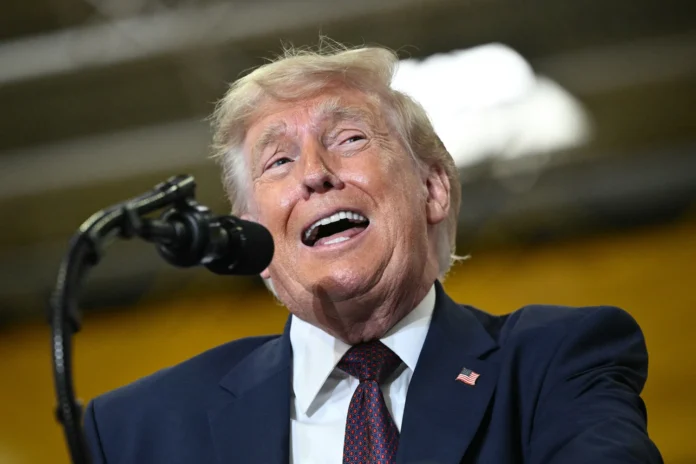
President Donald Trump returned to Pennsylvania with a campaign-style speech aimed at blue-collar voters, factory workers and Republicans defending competitive House seats.
Speaking at a Mack Trucks facility in Macungie, Trump framed the visit around jobs, energy prices and American manufacturing.
The plant sits in Pennsylvania’s 7th Congressional District, where Republican Rep. Ryan Mackenzie is running for reelection in a closely watched midterm race.
- Trump praised Mack Trucks as a symbol of American industrial strength.
- He brought Mackenzie on stage and urged voters to keep him in Congress.
- He said the administration had helped create 32,000 new jobs in Pennsylvania.
Trump argued that his economic agenda is beginning to deliver results.
He pointed to falling oil prices, lower gas prices and new investments in Pennsylvania manufacturing, including pharmaceutical and medical-device projects.
He said that as oil prices fall, other costs tied to transportation, production and household budgets should follow.
The speech also included a familiar Trump-style political flourish.
At one point, Trump said he would “like to run” again in 2028, a remark that immediately drew attention because the 22nd Amendment limits presidents to two elected terms.
Trump has made similar comments before, often mixing humor, provocation and political messaging.
Still, the remark gave critics a fresh opening to argue that he is testing constitutional boundaries.
Why It Matters
The Pennsylvania stop matters because it shows how Trump wants Republicans to campaign in the midterms.
His message is simple: the administration is rebuilding American industry, lowering energy costs and protecting workers from foreign competition.
That is a strong message in industrial districts where voters care about factory jobs and household affordability.
- Republicans want to make the midterms about jobs and manufacturing.
- Democrats want to make them about inflation, tariffs and the cost of the Iran conflict.
- Pennsylvania’s 7th District is exactly the kind of seat that could decide House control.
The oil-price argument is especially important.
Trump is trying to show voters that the economic pressure caused by the Iran conflict is easing.
If oil and gas prices keep falling, he can argue that his foreign policy produced both strength abroad and relief at home.
If prices rise again, Democrats will likely blame the administration’s Iran strategy and tariff agenda for keeping costs high.
That makes Pennsylvania a testing ground for the national Republican message.
Trump is betting that voters will respond to visible signs of improvement before November.
Political and Public Context
Trump’s third-term comment adds a different layer to the story.
For supporters, the remark may be treated as classic Trump showmanship — a way to energize the crowd, frustrate opponents and remind voters that he still dominates Republican politics.
For critics, it is more serious because the Constitution clearly bars a president from being elected to a third term.
- The 22nd Amendment limits presidents to two elected terms.
- Trump’s comment gives Democrats a constitutional-norms argument.
- Republicans are more likely to keep the focus on jobs, oil prices and manufacturing.
Reuters reported that Trump’s visit came as he resumed campaign efforts in a closely divided Pennsylvania district amid inflation and Iran-war pressure.
Fox Business reported Trump highlighted manufacturing job gains, Mack Trucks, and major Pennsylvania investments from companies including Eli Lilly, Nokia and B. Braun.
That combination shows the two-track nature of Trump’s midterm strategy.
He wants voters focused on economic improvement, while Democrats want attention on inflation, war costs and statements like the third-term remark.
What Happens Next
Trump is likely to repeat this message in other industrial battlegrounds.
Expect more visits to factories, energy facilities, trucking hubs and manufacturing communities in states like Pennsylvania, Ohio, Michigan and Wisconsin.
The White House will keep arguing that lower oil prices and new investment prove the economy is turning.
- Watch whether oil prices continue falling before the midterms.
- Monitor whether Pennsylvania voters credit Trump for manufacturing investment.
- Follow whether Democrats use the third-term remark in campaign ads.
- Track whether Mackenzie and other vulnerable Republicans fully embrace Trump’s message.
For Trump, the best outcome is that voters see lower prices before Election Day and connect those changes to his policies.
For Republicans, the Pennsylvania speech offers a ready-made campaign template: jobs, factories, energy and tax relief.
For Democrats, the countermessage is that Trump’s policies have created uncertainty, raised costs and distracted from household affordability.
The third-term comment may dominate headlines, but the deeper political test is economic.
If voters believe conditions are improving, Trump’s Pennsylvania pitch could help Republicans stabilize their midterm position.
If voters still feel squeezed, even falling oil prices may not be enough to overcome economic pessimism.
Sources
- NBC News: Trump Touts U.S. Economy and Oil Prices in Pennsylvania
- Reuters: Trump Tests Rust Belt Pitch in Pennsylvania
- Fox Business: Trump Visits Mack Trucks Plant in Battleground Pennsylvania District
- PBS NewsHour/AP: Trump Touts Economy in Pennsylvania After Iran Agreement
- Spectrum News: Trump Touts Falling Oil Prices and Economy at Pennsylvania Rally
