

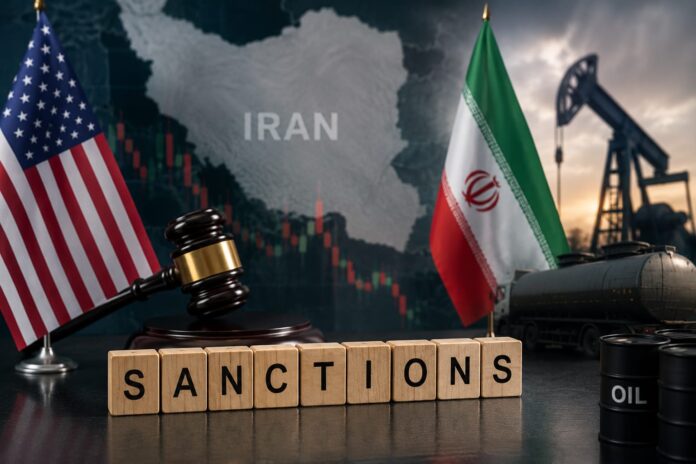
Story Highlights
- The Trump administration is preparing a comprehensive wave of secondary economic sanctions targeting Iran and entities conducting business with Tehran
- Treasury Secretary Scott Bessent has characterized the initiative as an economic offensive designed to pressure third-party nations into severing ties with the Iranian regime
- The strategy represents a shift toward financial pressure after months of military operations in the Middle East
- The administration aims to weaken Iran’s economy and nuclear program while bringing the regional conflict toward resolution
What Happened
The Trump administration is preparing to launch a significant new round of economic sanctions targeting Iran and the countries that do business with it. This initiative marks a strategic pivot in how the administration plans to address the ongoing regional crisis, moving from military-focused efforts toward comprehensive economic pressure designed to isolate the Iranian regime from the global financial system.
The Treasury Department, under Secretary Scott Bessent’s leadership, is expected to introduce secondary sanctions that would target foreign entities maintaining economic relationships with Iran. These measures are intended to force third-party nations and businesses to choose between access to Western markets and maintaining ties with Tehran, effectively strangling the Iranian economy by cutting off its international commerce.
- Treasury Secretary Scott Bessent characterized the initiative as an economic offensive in recent statements to the Financial Times
- The administration has described the military campaign as having significantly dismantled Iran’s military capabilities and weakened its nuclear program over the preceding months
- Secondary sanctions would target entities and nations conducting business with Iran rather than directly sanctioning Iranian entities
- The strategy aims to bring the regional conflict toward conclusion by applying maximum economic pressure on the regime
Why It Matters
The shift toward economic sanctions represents a critical strategic decision point for the administration’s approach to the Iran crisis. Rather than continuing solely military operations, which have proven costly and sustained for over six months, the new sanctions regime seeks to leverage America’s control over the global financial system to achieve policy objectives. This approach aligns with longstanding principles of using economic leverage to modify adversary behavior without continued military escalation.
The economic pressure strategy addresses multiple concerns simultaneously. It aims to weaken Iran’s ability to fund regional proxy forces and weapons programs while avoiding the indefinite military commitment that has characterized recent operations. By forcing countries to choose between economic relationships with Iran and access to Western markets, the administration believes it can create international consensus for isolating the Tehran regime. The Treasury Department’s characterization of these measures as an unprecedented financial offensive suggests confidence that economic pressure will prove more effective than continued military operations alone.
- Economic sanctions offer a path to achieving strategic objectives without the sustained military costs and personnel deployment of ongoing operations
- Third-party nations and businesses will face immediate pressure to cease Iranian commerce or forfeit access to Western financial systems
- The strategy targets Iran’s ability to finance weapons development, regional proxy networks, and nuclear advancement programs
- International economic isolation could reduce Iranian government resources available for military expansion and regional destabilization efforts
Political and Public Context
The administration’s shift toward economic sanctions occurs against a backdrop of significant domestic political considerations. The ongoing military engagement has extended for an extended period with substantial financial commitments, while attention on the home front increasingly focuses on economic conditions and affordability. Public sentiment regarding military involvement abroad has traditionally constrained policy options, particularly as midterm elections approach and voters evaluate competing priorities.
The administration’s decision to emphasize economic tools reflects confidence in their effectiveness while addressing domestic concerns about the scope and duration of military commitments. Previous administrations have employed sanctions regimes against adversarial nations with varying degrees of success, and the Trump administration’s approach builds on established precedent while claiming to introduce unprecedented scale and coordination. The emphasis on financial pressure also aligns with the administration’s broader foreign policy philosophy of achieving American objectives through economic strength and leverage rather than sustained military presence.
- The administration emphasizes military achievements in degrading Iranian capabilities during the preceding months of operations
- Economic policy has emerged as a central concern for voters approaching elections, with shifting perceptions of party competency on financial matters
- Sanctions strategies have been employed historically by multiple administrations facing similar regional adversaries
- The new approach seeks to demonstrate resolution of the crisis through economic means rather than indefinite military engagement
Experts say new US sanctions on Iran, dubbed "Operation Economic Outcast," signal that Washington's war on Iran has failed to force Tehran into ending it, as munitions stocks are depleted nearly six months in.
🔗 https://t.co/qjx73WThYE pic.twitter.com/TA0CcT6hCD
— Al Jazeera English (@AJEnglish) August 25, 2026
What Happens Next
The administration expects secondary sanctions to take effect imminently, with the Treasury Department likely to announce specific targeted entities and implementation timelines. The success of this strategy will depend significantly on international compliance, as third-party nations must choose between maintaining economic relationships with Iran or preserving access to Western financial systems. The administration will likely coordinate closely with allied nations and financial institutions to ensure comprehensive enforcement of the sanctions regime.
The coming weeks and months will reveal whether economic pressure proves sufficient to achieve the administration’s strategic objectives regarding Iranian behavior and the regional crisis. Officials will monitor Iranian economic performance, government revenues, and the regime’s ability to fund military programs and regional proxies. Additionally, the administration will assess whether third-party nations comply with sanctions requirements or attempt to circumvent them through alternative arrangements. Success in this domain could validate the administration’s strategic shift and provide a template for addressing similar challenges in other regions.
- Treasury Department to announce specific entities and implementation details of secondary sanctions regime
- International compliance with sanctions requirements will determine the economic pressure’s effectiveness on Iranian regime behavior
- Administration will monitor Iranian government revenues and military spending capacity in response to sanctions
- Strategic outcome will inform administration’s approach to similar economic pressure campaigns against adversarial nations
