

Story Highlights
- President Trump’s meeting with Xi Jinping has ignited a debate within the GOP regarding engagement with China.
- Some Republican leaders express concern over the optics of welcoming a Chinese leader amid ongoing tensions.
- The White House defends the meeting as a necessary step in diplomatic relations.
- Trump’s approach to foreign policy continues to draw both support and criticism from within his party.
What Happened
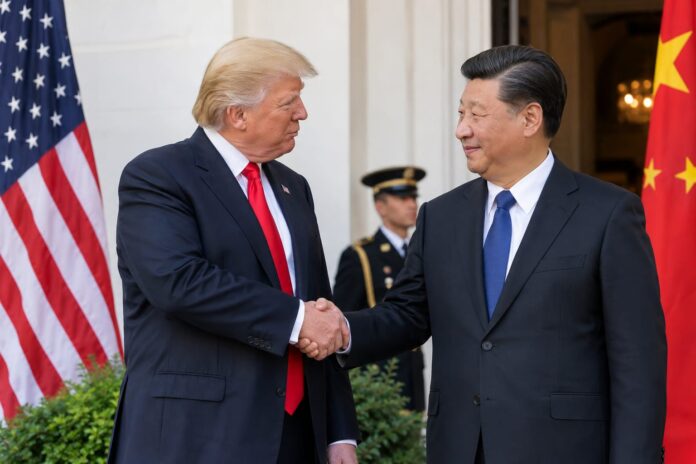
In a significant diplomatic move, President Donald Trump welcomed Chinese President Xi Jinping to Joint Base Andrews, marking the first time a sitting U.S. president has hosted a foreign dignitary at this location since 2015. The meeting, which took place on September 23, 2026, was characterized by a lavish welcome, including a red carpet ceremony that has drawn mixed reactions from Republican lawmakers. While some see this as a necessary diplomatic gesture, others view it as a troubling signal given the ongoing tensions between the United States and China.
Senate Armed Services Chair Roger Wicker, R-Miss., was particularly vocal in his criticism, stating that he would have advised against such a warm reception for Xi, given the numerous issues the U.S. faces with the Chinese Communist Party (CCP). His sentiments were echoed by other Republican senators, including Thom Tillis of North Carolina and John Cornyn of Texas, who expressed their unease about the optics of the meeting.
- Trump met Xi at Joint Base Andrews on September 23, 2026.
- Wicker criticized the meeting, suggesting it undermines the GOP’s anti-communism message.
- Sen. Tillis highlighted the contradiction between Trump’s campaign promises and the meeting’s optics.
- White House spokeswoman Anna Kelly defended the meeting as a reciprocal gesture following Xi’s earlier visit to the U.S.
Why It Matters
The meeting between Trump and Xi is emblematic of the broader challenges facing the Republican Party as it navigates its stance on China. While some party members advocate for a hardline approach against the CCP, others recognize the importance of diplomatic engagement in addressing complex global issues. This division could have significant implications for the GOP’s strategy as it heads into the midterm elections, where maintaining a united front is crucial.
Critics within the party argue that rolling out the red carpet for Xi sends a mixed message to voters who are concerned about China’s growing influence and aggressive policies. The optics of such a meeting could potentially alienate the party’s base, which has rallied around Trump’s tough stance on China. Conversely, proponents of the meeting argue that engaging with adversaries is essential for advancing U.S. interests and fostering stability in international relations.
- The GOP faces internal divisions that could impact its electoral strategy.
- Voter perception of the meeting may influence support for Republican candidates.
- Engagement with China could lead to potential diplomatic breakthroughs.
- Trump’s leadership style continues to shape the party’s approach to foreign policy.
Political and Public Context
The backdrop of this meeting is a complex landscape of U.S.-China relations, characterized by trade disputes, military tensions, and human rights concerns. The Trump administration has consistently taken a hardline stance against China, emphasizing the need to protect American interests and counteract the CCP’s influence. However, the necessity of diplomacy cannot be overlooked, especially in an era where global challenges require collaborative solutions.
Historically, U.S. presidents have engaged with adversaries to foster dialogue and mitigate conflicts. The meeting with Xi can be seen as a continuation of this tradition, albeit one that raises questions about the GOP’s messaging and coherence. As the party grapples with its identity in the face of shifting political dynamics, the outcome of this meeting may serve as a litmus test for its future direction.
- Previous U.S. presidents have engaged with adversaries, including Nixon’s visit to China.
- The Trump administration has prioritized an America-first approach in foreign policy.
- Concerns over China’s human rights record continue to be a focal point for critics.
- The GOP’s messaging on China has evolved in response to changing global dynamics.
GOP senators dismayed by Trump embrace of Xi after China helped Iran target US troopshttps://t.co/rKnRbEfY2b
— The Hill (@thehill) September 25, 2026
What Happens Next
Looking ahead, the implications of Trump’s meeting with Xi will likely unfold in several ways. The GOP must navigate the delicate balance between advocating for a strong stance against China while also recognizing the importance of diplomatic engagement. As the midterm elections approach, party leaders will need to address the concerns raised by dissenting voices within their ranks to maintain voter support.
Furthermore, the outcomes of this meeting could influence future U.S.-China relations, particularly in areas such as trade, security, and climate change. The president’s ability to leverage this meeting for tangible benefits will be closely scrutinized by both supporters and critics alike. As the political landscape continues to evolve, the GOP’s response to this meeting will be pivotal in shaping its narrative and strategy moving forward.
- Republican leaders will need to unify their messaging on China.
- Future diplomatic engagements with China may be influenced by the outcomes of this meeting.
- Voter reactions to the meeting will be monitored closely as midterms approach.
- Open questions remain regarding the effectiveness of Trump’s diplomatic approach.
