

Story Highlights
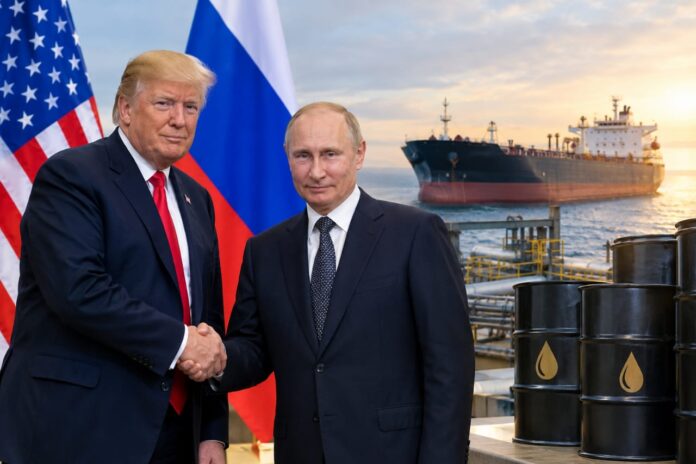
- President Trump announced that Russian President Putin will release hundreds of thousands of tons of diesel fuel onto the global market
- The Treasury Department issued a temporary general license easing sanctions on Russian diesel through April 7, 2027
- Diesel prices have surged nearly 70% since Russia’s invasion of Ukraine, creating significant inflationary pressures
- The agreement aims to stabilize fuel prices and reduce costs for American consumers and businesses
What Happened
President Trump announced on Friday that Russian President Putin would immediately release hundreds of thousands of tons of diesel fuel onto the global market as part of a coordinated effort to bring down fuel prices. The Treasury Department simultaneously directed the Office of Foreign Assets Control to issue a temporary general license permitting the supply of Russian diesel to global markets through April 7, 2027. This authorization allows the sale, delivery, offloading, and importation of Russian diesel fuel, including into the United States.
Putin indicated Russia’s readiness to supply oil and petroleum products to both American and global markets. Russian deputy prime minister Alexander Novak stated that his country would immediately begin lifting its export ban as a result of the agreement. Trump made the announcement on Truth Social, emphasizing that the action would help bring diesel prices down immediately.
The agreement represents a significant shift in the administration’s approach to Russian energy sanctions, which had been widely applied since Russia’s invasion of Ukraine in February 2022. The move addresses mounting economic pressures stemming from constrained global energy supplies and their cascading effects on inflation.
- Treasury Department issued temporary general license authorizing Russian diesel imports through April 7, 2027
- Russian President Putin committed to immediately lift the country’s diesel export ban
- Hundreds of thousands of tons of diesel fuel expected to reach global markets immediately
- Trump announced the agreement on Truth Social, citing price reduction as primary objective
Why It Matters
Diesel fuel powers the transportation and logistics infrastructure that underpins American commerce, from trucking to construction to agriculture. Since the onset of conflict in Ukraine, diesel prices have surged nearly 70 percent, creating cascading inflationary effects throughout the economy. When diesel prices spike, these costs ripple through supply chains, raising prices for consumers on groceries, goods, and services across all sectors.
By unlocking Russian diesel supplies, the administration directly addresses the root cause of price inflation in energy markets. Lower diesel prices translate into reduced transportation costs, decreased logistics expenses for businesses, and ultimately lower prices for consumers at the pump and in retail settings. Economists have warned that the sustained price increases pose significant risks to economic stability, making this agreement a potential intervention in broader inflationary trends.
The agreement particularly benefits small businesses and the trucking industry, which operate on thin profit margins and are highly sensitive to fuel costs. Lower energy prices could enable these sectors to maintain competitiveness while reducing financial pressure on their operations.
- Lower diesel prices expected to reduce inflation in transportation and logistics sectors
- Supply chain costs anticipated to decrease, leading to lower retail prices on goods and services
- Small businesses and trucking industry positioned to benefit from reduced fuel expenses
- Economists have warned of wide-ranging inflationary effects from sustained diesel price hikes
Political and Public Context
The diesel fuel agreement reflects the Trump administration’s pragmatic approach to balancing sanctions with economic consequences. Trump has publicly urged Ukrainian President Zelenskyy to cease targeting Russian energy infrastructure, arguing that such strikes directly contribute to higher diesel prices worldwide. The Kremlin imposed a diesel fuel export ban in July following Ukrainian attacks on Russian energy assets, which the administration views as a contributing factor to global fuel scarcity.
On September 14, Trump claimed that Zelenskyy and Putin had agreed to stop targeting energy infrastructure. However, Zelenskyy denied making such a commitment, stating he would only stop striking oil and gas targets if Russia agreed to reciprocate with similar restraint. Despite these diplomatic complications, the Trump administration pursued negotiations with Russian leadership to increase supply. The Kremlin has continued its own escalation of attacks on Ukrainian infrastructure during the same period, creating a complex diplomatic environment.
This agreement also reflects broader debates within the administration about the effectiveness and economic costs of comprehensive sanctions regimes. The administration appears to view targeted sanctions easing as a viable tool to address specific economic problems while maintaining broader strategic postures.
- Trump administration has urged cessation of attacks on Russian energy infrastructure to stabilize fuel prices
- Zelenskyy denied agreeing to stop targeting Russian energy assets without Russian reciprocation
- Kremlin imposed diesel export ban in July following Ukrainian attacks on energy facilities
- Administration views targeted sanctions relief as mechanism to address economic problems
President Trump called for Ukraine to replace Volodymyr Zelenskiy as president and railed against attacks on Russian oil infrastructure, a day after announcing a diesel supply deal with Russia https://t.co/DWorQx89x0 pic.twitter.com/e9HX0Vu6dD
— Reuters (@Reuters) October 11, 2026
What Happens Next
The temporary general license remains in effect through April 7, 2027, providing a window for Russian diesel to flow to global markets. The administration will monitor whether the influx of supply produces the anticipated downward pressure on prices. Success will depend on whether Russia can overcome infrastructure constraints and export logistics challenges in delivering the promised volumes.
Future developments will hinge on diplomatic progress between the principal parties to the Ukraine conflict. If energy infrastructure targeting continues despite preliminary agreements, the supply benefits could be substantially diminished. Conversely, if the agreement contributes to broader de-escalation, benefits could extend beyond fuel prices to encompass other economic sectors and geopolitical considerations.
The market will closely watch initial deliveries and price movements to assess whether the agreement achieves its stated objectives. Any failure to deliver promised volumes or achieve price reductions could prompt renewed calls for stricter sanctions enforcement.
- Temporary general license remains active through April 7, 2027, with effectiveness to be monitored
- Russian diesel flow to global markets expected to begin immediately with volumes to be tracked
- Diplomatic developments regarding energy infrastructure targeting will determine sustainability of supply benefits
- Market observers will assess price movements and supply volumes in coming weeks to evaluate agreement success
