

Story Highlights
- President Trump’s proposed $1.8 billion anti-weaponization fund has stalled amid concerns from Senate Republicans.
- Several GOP senators questioned the fund’s rollout, oversight, and connection to a broader immigration enforcement package.
- Federal court action has added legal pressure as the administration works to defend the proposal.
What Happened
President Donald Trump’s proposed $1.8 billion anti-weaponization fund has stalled after facing pushback from Senate Republicans and new legal challenges in federal court.
The fund was designed to compensate individuals who say they were unfairly targeted by the Justice Department or federal authorities during the Biden administration. Supporters of the proposal argue that Americans who experienced politically motivated treatment by federal agencies should have a formal path to seek relief.
However, the fund’s rollout created immediate concern among some Republican lawmakers, particularly because it became connected to a larger immigration enforcement package that the White House wanted Congress to advance.
The Senate had been preparing to move forward with legislation aimed at funding Immigration and Customs Enforcement and the Border Patrol through the end of Trump’s term. That effort slowed after lawmakers raised questions about the anti-weaponization fund, including how it would operate, who would qualify, and what oversight would be in place.
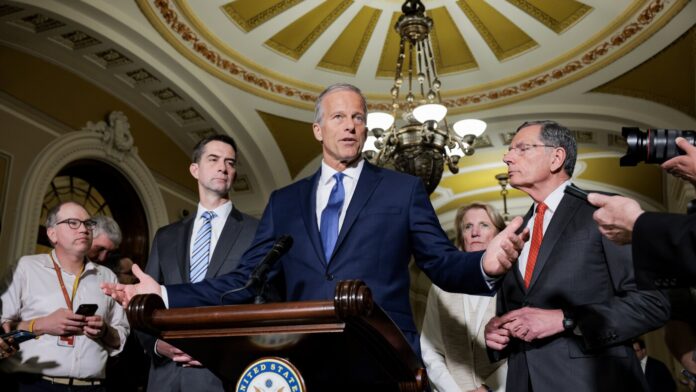
Senate Majority Leader John Thune said he was not given advance notice about the fund, suggesting that congressional leaders wanted more consultation before being asked to support the proposal. Other Republican senators also raised concerns after a closed-door briefing with Justice Department officials.
Senator Mitch McConnell criticized the fund sharply, arguing that it could end up compensating individuals involved in violence against law enforcement. His comments reflected a broader concern among some Republicans that the proposal could become politically difficult to defend without clearer rules and safeguards.
Two federal court actions also increased pressure on the fund. One judge temporarily blocked parts of the program from moving forward, while another ordered the administration to respond to claims connected to the proposal. The legal process is expected to continue as the White House defends its authority to pursue the fund.
Why It Matters
The dispute places the Trump administration in a difficult position as it attempts to advance one of its major second-term priorities: stronger immigration enforcement.
The broader legislative package tied to the dispute would provide major funding for ICE and border security operations. For Trump and his allies, that funding is central to delivering on campaign promises related to immigration, deportations, and border control.
At the same time, several Republican senators appear reluctant to move forward without more clarity on the anti-weaponization fund. Their concerns focus on spending authority, eligibility standards, and whether the program has enough congressional oversight.
The disagreement shows that even with Republican control, the White House still needs to manage internal party concerns carefully. Senate Republicans who support Trump’s immigration agenda may still object to specific spending provisions if they believe the details have not been properly explained.
Political and Budget Context
The proposed fund comes as Republicans are debating how to balance aggressive enforcement priorities with concerns about federal spending and legal process.
The administration has framed the fund as a corrective measure for Americans who believe they were targeted by federal agencies for political reasons. The Justice Department has pointed to examples involving parents, religious groups, and public officials whose records or activities allegedly came under scrutiny during the previous administration.
Critics, including some Republicans, want clearer answers on how claims would be reviewed and whether taxpayer money would be distributed through a process authorized by Congress. Those questions are likely to remain central as the legal challenge moves forward.
The controversy also affects the administration’s relationship with Senate Republicans. Passing major legislation requires tight coordination between the White House and congressional leaders, and the fund’s sudden emergence appears to have complicated that process.
What Happens Next
The White House now faces several options. It can continue defending the fund as part of a broader push to address alleged government weaponization, revise the proposal to satisfy skeptical senators, or separate the issue from the immigration package to keep border funding moving.
If the administration can address concerns about oversight and eligibility, the fund may regain support from some Republicans. If not, the proposal could remain stalled while the courts consider the legal challenges against it.
For now, the anti-weaponization fund remains a flashpoint inside the Republican Party, with Trump’s immigration agenda, Senate GOP unity, and executive authority all caught in the same fight.
Sources
Trump’s ‘anti-weaponization fund’ is stalled, and some allies are urging him to scrap it entirely
