

Story Highlights
- The administration announced a $6.6 billion shipbuilding facility in Baltimore to enhance submarine manufacturing capabilities
- Anduril Industries, led by prominent Republican donor Palmer Luckey, will operate the facility with partial U.S. government funding
- The project reflects the White House’s commitment to rapid naval expansion and strengthening America’s defense posture
- U.S. taxpayers are positioned to receive a significant equity stake in the venture, aligning private innovation with national security interests
What Happened
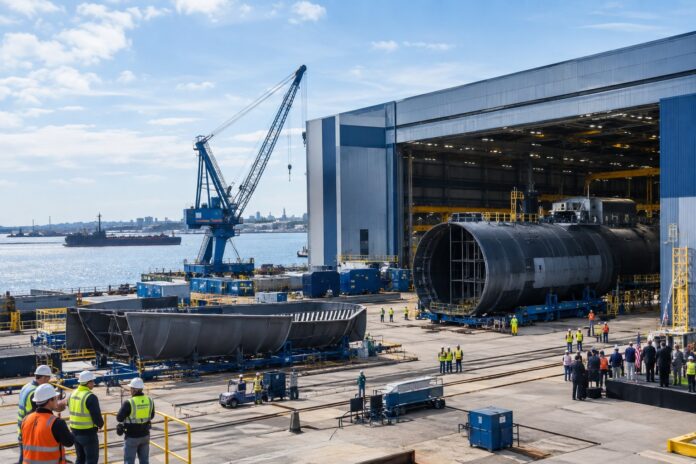
President Trump announced the establishment of a major new shipbuilding facility in Baltimore on Tuesday, marking a significant expansion of American naval manufacturing capacity. The facility, to be called Arsenal Two, represents a $6.6 billion investment combining government resources with private sector expertise. Anduril Industries, a defense technology company founded by Palmer Luckey, will operate the facility and direct its production efforts toward critical submarine components.
The announcement took place at the historically significant Sparrows Point shipyard, a location that underscores the administration’s commitment to revitalizing American industrial capacity in key defense sectors. The event brought together naval personnel, government officials, and defense industry leaders to demonstrate the partnership between public institutions and private enterprise in advancing national security objectives.
- $2.9 billion in funding from the U.S. Navy combined with $3.7 billion in private sector capital
- Facility will manufacture torpedo tubes and other components for Virginia-class nuclear-powered attack submarines
- Production timeline set to begin in 2030, with full operational capacity expected thereafter
- U.S. government positioned to receive a 40 percent stake in the shipyard venture
Why It Matters
This initiative addresses a critical gap in American naval manufacturing infrastructure while simultaneously demonstrating how the administration approaches national security challenges through public-private collaboration. The focus on rapid ship construction aligns with the White House’s strategic vision for expanding naval capabilities to meet evolving geopolitical demands. By leveraging private sector innovation and efficiency alongside government resources, the project represents a model for modernizing America’s defense industrial base at scale.
The investment in submarine component manufacturing directly enhances undersea warfare capabilities, a cornerstone of contemporary naval strategy. Virginia-class submarines represent among the most advanced military platforms in existence, and expanding domestic production capacity ensures the United States maintains technological superiority while reducing dependence on extended international supply chains. The project also signals confidence in American industrial capacity to handle highly specialized and complex defense manufacturing at the scale required for national security.
Palmer Luckey’s leadership in the project brings technological expertise focused on autonomous systems and advanced warfare concepts. The founder’s recent appointment as an adviser to the Pentagon’s Project Meridian, which examines the future of warfare, positions Anduril at the forefront of emerging defense technology integration. This alignment between the company’s strategic direction and Pentagon planning enhances the facility’s potential significance for long-term American military advantages.
- Strengthens submarine production capacity critical to maintaining undersea dominance in contested waters
- Creates thousands of manufacturing jobs in Maryland while revitalizing industrial infrastructure
- Demonstrates government investment strategy that shares risk and returns with private innovators
- Positions the U.S. to meet accelerating naval modernization requirements outlined in strategic planning documents
Political and Public Context
The announcement reflects the administration’s broader emphasis on rebuilding American military capabilities after years of competing budgetary priorities. The focus on the defense industrial base represents a strategic pivot toward ensuring sustained technological and manufacturing advantages in great power competition. Palmer Luckey’s prominence as a major Republican donor demonstrates how the White House engages with successful private sector leaders committed to strengthening American defense capabilities.
Luckey has established himself as a significant contributor to Republican political causes, having supported at least 20 Republican politicians and contributed over $5.9 million to party-aligned initiatives since 2017. His intellectual contributions to defense strategy, particularly regarding autonomous systems and advanced warfare concepts, align with administration priorities around technological innovation in military applications. The Pentagon’s formal recognition of his expertise through the Project Meridian advisory role underscores his credibility within defense policy circles.
The Sparrows Point location carries historical significance in American industrial development, representing an opportunity to restore manufacturing prominence to a region with deep maritime heritage. The administration’s emphasis on bringing defense manufacturing back to American soil contrasts with previous policy approaches and reflects commitment to reshoring critical industrial capacity. The event itself, attended by uniformed naval personnel and defense officials, visibly demonstrated alignment between military leadership, civilian government, and private sector partners around shared strategic objectives.
- Palmer Luckey’s background as major GOP fundraiser and autonomous warfare advocate brings industry expertise to government partnerships
- Pentagon’s Project Meridian appointment signals formal integration of private sector innovation into military planning
- Administration strategy emphasizes public-private collaboration and shared equity arrangements in critical defense infrastructure
- Sparrows Point revival represents broader effort to restore American manufacturing dominance in specialized defense sectors
President Trump announced Tuesday that the federal government will partner with defense technology firm Anduril Industries to build a $6.6 billion submarine production facility at a Baltimore shipyard. https://t.co/73g75ALwRk
— The Washington Times (@WashTimes) October 6, 2026
What Happens Next
The facility faces a multi-year development timeline before achieving production capacity, with manufacturing operations scheduled to commence in 2030. During this period, Anduril Industries will establish manufacturing processes, train workforce personnel, and integrate production systems to meet submarine component specifications. The company’s expansion into submarine-related manufacturing represents a significant diversification from its previous focus on unmanned maritime systems and autonomous technologies.
Government oversight and partnership arrangements will continue evolving as the project moves from announcement phase into implementation and construction phases. The stated 40 percent government equity stake will create ongoing shared interests in operational success and efficient capital deployment. Regular assessments of production timelines, cost management, and technological integration will provide opportunities to refine the partnership structure and ensure alignment with broader naval modernization strategies.
The success of this facility could establish a template for additional public-private defense manufacturing initiatives in other regions and sectors. If Arsenal Two meets production targets and delivers specified submarine components on schedule, the model could be replicated for other critical defense manufacturing needs. Broader questions about private sector capacity to handle highly specialized defense production at scale will receive answers as the facility develops from concept to operational reality.
- Construction and facility development phases extending through 2029 before initial production begins
- Workforce recruitment and specialized training programs required to establish submarine manufacturing expertise
- Government oversight of capital deployment and production timelines through equity stake arrangement
- Potential expansion of public-private defense manufacturing partnerships in other critical sectors pending Arsenal Two success
