

Story Highlights
- President Trump acknowledged respecting former President Biden’s pardon of Dr. Anthony Fauci, describing the pardon power as among the most significant tools a president possesses.
- The president raised doubts about whether Biden personally signed the pardon, pointing to the use of an autopen device as a potential legal complication.
- Fauci invoked the Fifth Amendment 111 times during a Senate hearing examining his role in the nation’s COVID-19 pandemic response.
- Senator Rand Paul announced plans to pursue a contempt of Congress vote against Fauci following the hearing.
What Happened
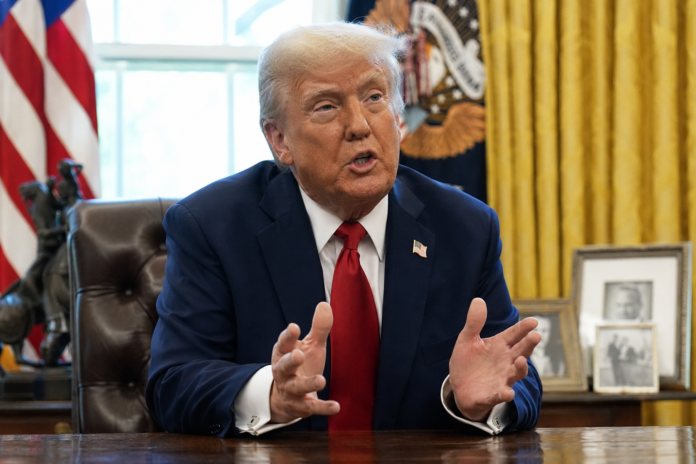
Speaking to reporters in the Oval Office on Wednesday, President Trump addressed Biden’s last-minute pardon of Dr. Anthony Fauci, expressing a measured acknowledgment of its legal weight. The president characterized the pardon power as arguably the most consequential authority a sitting president holds, and indicated he respects its application even when exercised by a predecessor with whom he has significant policy disagreements.
The remarks came on the same day Fauci appeared before the Senate Homeland Security and Governmental Affairs Committee for a three-hour hearing focused on his handling of the COVID-19 pandemic. Rather than answer questions from Republican senators, Fauci invoked his Fifth Amendment right against self-incrimination 111 times. Trump described the spectacle as terrible, and reflected on his own complicated history with the longtime health official, noting that he inherited Fauci from previous administrations dating back to the 1980s and frequently disagreed with his recommendations during the pandemic.
- Biden issued the pardon on his final day in office, covering potential federal offenses between January 1, 2014, and January 19, 2025.
- Fauci served a 38-year tenure leading the National Institute of Allergy and Infectious Diseases before retiring.
- The Senate hearing was chaired by Senator Rand Paul of Kentucky, who released thousands of pages of Fauci’s diary entries ahead of the session.
- Trump told reporters he believed he would have been forced to shut down the entire country had he followed Fauci’s guidance during the pandemic.
Why It Matters
The president’s comments reflect his broader and consistent engagement with questions of accountability surrounding pandemic-era decision-making. While he stopped short of pursuing further legal action against Fauci himself, his administration has kept the spotlight on officials who shaped controversial COVID-19 policies that affected every American. By respecting the pardon’s legitimacy while simultaneously raising questions about how it was signed, the White House threads a careful needle — honoring constitutional norms without fully closing the door on scrutiny.
The autopen controversy is not merely procedural. His administration has argued that Biden’s use of an autopen to execute official acts — including pardons and executive orders — may render those documents legally questionable. That argument, if sustained in any future legal proceeding, could have far-reaching implications for how the Biden-era pardons are ultimately treated under law.
- Americans who lost loved ones or livelihoods during the pandemic remain deeply invested in accountability for those who shaped the response.
- The autopen challenge could affect not only the Fauci pardon but other Biden pardons issued in the final days of his presidency.
- Republican lawmakers pressing the accountability issue gain political momentum from Fauci’s refusal to answer questions under oath.
- The hearing reinforced the Trump administration’s narrative that pandemic-era health bureaucrats escaped meaningful oversight for years.
Political and Public Context
Fauci’s tenure as the public face of the COVID-19 response made him one of the most polarizing figures in recent American political history. To many conservatives, his shifting guidance on masks, lockdowns, and school closures represented government overreach at its worst. President Trump, who clashed with Fauci publicly during his first term, has maintained that his instincts during the pandemic were often more accurate than those of the public health establishment — a view that has only grown more widespread as post-pandemic assessments continue to emerge.
Senator Paul, long one of Fauci’s most vocal critics, used the hearing to amplify long-standing concerns about potential misrepresentations made to Congress regarding gain-of-function research. The release of Fauci’s diary entries added thousands of pages of previously unseen material to an already extensive public record. Fauci, in his opening remarks, framed Paul’s pursuit of him as politically motivated rather than a legitimate exercise of congressional oversight — a characterization Republicans flatly rejected.
- Senator Rand Paul has pledged to bring a contempt of Congress vote against Fauci before the committee as early as next week.
- Biden’s pardon covered more than a decade of potential federal exposure for Fauci, an unusually broad protective measure.
- Multiple other presidents have used autopens to sign official documents, though the practice remains contested in the current political climate.
- Fauci’s Fifth Amendment invocations came despite holding a Biden pardon widely understood to offer substantial legal protection.
What Happens Next
The Senate committee’s next move will be closely watched. Senator Paul has made clear he intends to escalate the matter with a formal contempt vote, which would mark a significant step in holding pandemic-era officials accountable through congressional mechanisms. Whether that effort succeeds will depend on committee dynamics and broader Republican appetite for continued investigation.
Meanwhile, the legal status of Biden’s autopen-signed pardon remains an open and genuinely unsettled question. The White House has signaled it views those documents skeptically, and any future legal challenge to their validity could thrust Fauci back into legal jeopardy. For now, the president has chosen to acknowledge the pardon’s power while keeping the constitutional question alive — a posture consistent with his administration’s careful and deliberate approach to accountability.
- A contempt of Congress vote against Fauci could be held in the Senate Homeland Security Committee as early as next week.
- Any legal challenge to the autopen pardon’s validity would likely require litigation before federal courts to resolve.
- Further document releases from Fauci’s pandemic-era records may surface as congressional investigations continue.
- The administration’s position on autopen pardons could set precedents affecting presidential pardon authority going forward.
