

Story Highlights
- Trump described Iran’s latest counterproposal as “simply unacceptable,” saying Tehran failed to include any commitment to ending its nuclear program.
- The U.S. administration announced a new round of sanctions against Iran and the president convened a meeting with top military commanders to discuss next steps.
- Oil prices have surged from $2.98 per gallon at the war’s outset to $4.52, costing American consumers an estimated $20 billion in additional fuel costs.
What Happened
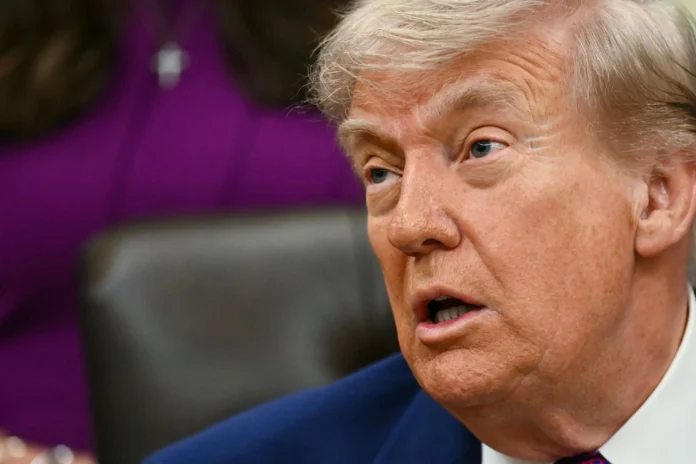
President Donald Trump declared this week that the U.S. ceasefire with Iran is on “massive life support,” a stark assessment that came after he reviewed and rejected Tehran’s latest counterproposal to end more than two months of active hostilities. Speaking from the Oval Office, Trump was unsparing in his characterization of Iran’s response: “After reading that piece of garbage they sent, I didn’t even finish reading it.”
The ceasefire between the United States and Iran, which took effect in early April 2026 following mediation by Pakistan, has been strained almost from its inception. Both sides have accused the other of violations, and the core disagreements that led to the conflict have not been resolved. Iran closed the Strait of Hormuz in response to U.S. military strikes, and the United States imposed its own naval blockade on Iranian ports in retaliation, cutting off a critical artery for global oil shipments and triggering an economic shockwave that has driven fuel prices to multi-year highs.
The U.S. proposal to Iran had demanded, among other conditions, an end to Iran’s nuclear enrichment program, reductions in its missile capabilities, the reopening of the Strait of Hormuz, and restrictions on Iranian support for regional proxies such as Hezbollah. Iran rejected those terms, with its foreign ministry insisting that the question of uranium enrichment was “not on the agenda of discussions or negotiations” at this stage and would only be addressed in later phases of any potential deal.
Iran’s own counterproposal called for an end to all military operations on all fronts — including Israeli operations in Lebanon — a lifting of international sanctions, war reparations, and international recognition of Iranian sovereignty over the Strait of Hormuz. Iran’s foreign ministry described its terms as “both reasonable and generous.” Trump disagreed emphatically.
Following the exchange, the administration announced new sanctions targeting more than 30 individuals, entities, and vessels linked to Iran’s oil shipping network. Energy Secretary Chris Wright also issued a pointed warning, stating that if it became clear in the coming days that there was no viable path to a negotiated settlement, the U.S. would “go back to the military method to open the strait.” Trump said he would meet with his top military commanders to assess next steps, while simultaneously signaling on Fox News that he was still focused on a diplomatic solution. “They’re going to fold,” he told the network.
Why It Matters
The stakes in the U.S.-Iran standoff are extraordinarily high — not only for the Middle East but for the American economy and for global energy markets. The Strait of Hormuz is one of the most strategically critical waterways on the planet, through which approximately 20 percent of the world’s oil supply normally flows. The partial closure of the strait, combined with the U.S. naval blockade on Iranian ports, has disrupted that flow substantially, contributing directly to the sharp rise in fuel prices that is straining American household budgets.
The political dimension is equally significant. Trump launched military operations against Iran alongside Israel in late February 2026, framing the campaign as necessary to end Iran’s nuclear ambitions and dismantle its regional proxy network. The president repeatedly predicted that Iran would quickly capitulate and accept terms, setting a series of deadlines — at least five between late March and late April — that came and went without a deal. Each missed deadline has chipped away at the administration’s credibility and given Democratic critics an opening to argue that the war has become a strategic miscalculation.
At the same time, the nuclear question lies at the heart of the impasse. Trump’s stated bottom line — that Iran cannot have a nuclear weapon — is a legitimate and broadly supported national security objective. The complication is that Iran has refused to relinquish its enriched uranium stockpile or accept limits on enrichment as a precondition for ending hostilities. Without movement on that core issue, it is difficult to see how any lasting ceasefire framework can be constructed that satisfies Washington’s minimum requirements.
Economic and Global Context
The economic ripple effects of the Iran conflict are measurable and growing. Gasoline prices in the United States rose from approximately $2.98 per gallon when the war began to $4.52 as of mid-May 2026, according to figures cited in Oval Office briefings. Analysts estimate that spike alone is costing American consumers roughly $20 billion collectively. Diesel prices — a critical input for truckers, farmers, and railroad operators — are approaching all-time highs, with knock-on effects across food prices, freight costs, and retail supply chains.
Global energy markets have also been rattled. Brent crude oil briefly topped $100 a barrel during the period of peak ceasefire uncertainty, a price level that has historically been associated with broader economic slowdowns. Countries heavily dependent on oil imports — particularly in Europe and Asia — have been scrambling to diversify supply sources, with limited success given the scale of the disruption. Saudi Arabia and Gulf states have increased production to partially offset the loss of Iranian supply, but they have been unable to fully compensate.
China’s role adds another layer of complexity. Beijing has been the largest buyer of Iranian crude oil, providing Tehran with a crucial economic lifeline even as Western sanctions have escalated. Trump pressed Xi Jinping on this issue during their Beijing summit this week, and both leaders stated agreement that Iran should not have nuclear weapons. But China has not publicly committed to cutting off Iranian oil purchases, and without that lever, Washington’s economic pressure campaign faces structural limits.
Implications
The administration now faces a genuine dilemma with no easy exits. Resuming military strikes against Iran carries the risk of a wider regional conflict, potential Hezbollah retaliation from Lebanon, and a further disruption to global oil markets that would deepen economic pain for American consumers ahead of the November 2026 midterm elections. Continuing to extend the ceasefire while Iran refuses to accept nuclear concessions risks looking like diplomatic capitulation to the very adversary Trump promised to confront.
For Republican lawmakers in competitive districts, the trajectory of the Iran conflict has become an increasing liability. With gasoline prices at multi-year highs, inflation concerns back in the headlines, and no clear victory in sight, the war is complicating the party’s economic messaging at a critical electoral juncture. Trump’s approval rating on the economy has fallen sharply during his second term, and the Iran war is a significant contributing factor.
For Iran, the strategy of delay and attrition appears to be working in the short term. By refusing to make nuclear concessions upfront and insisting on a phased approach that leaves enrichment discussions for later, Tehran has managed to extend the ceasefire without substantively changing its position. Whether that approach is sustainable — and whether Trump ultimately decides to resume strikes — will likely determine the conflict’s outcome over the coming weeks.
Sources
“Trump says Iran ceasefire is on ‘life support,’ calls latest proposal ‘garbage'”
