

Story Highlights
- Senate Majority Leader John Thune appreciates the message in President Trump’s new ads.
- Thune raises concerns about the use of taxpayer dollars for political messaging.
- The White House defends the ads as patriotic reminders rather than campaign promotions.
- Critics warn that using taxpayer money for political ads could lead to serious ethical violations.
What Happened
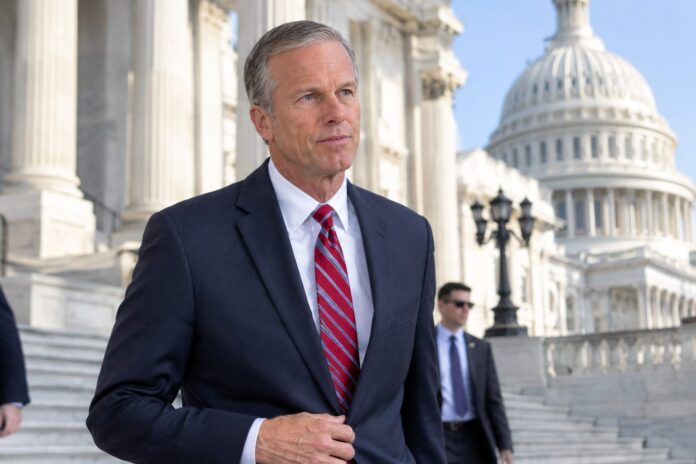
In a recent statement, Senate Majority Leader John Thune expressed his support for the message conveyed in President Trump’s new advertisements, which call for the removal of ‘communists, Marxists, and fascists’ from positions of power. However, Thune also voiced significant concerns regarding the funding of these ads, emphasizing that taxpayer dollars should not be used to promote political messages. This statement came as Thune walked into the Capitol, highlighting the ongoing tension between political messaging and the ethical use of government resources.
The ads, which aired over the weekend during popular television programs such as ‘Fox News Sunday’ and various NFL and college football games, carry a disclaimer stating they are ‘Paid for by the U.S. Government.’ This has raised eyebrows among political analysts and lawmakers alike, as it closely resembles the political ads Trump ran during his 2024 presidential campaign. Thune’s remarks reflect a growing concern among some Republicans about the implications of using government funds for what many perceive as political campaigning.
- Senate Majority Leader John Thune (R-S.D.) made his comments on Monday.
- The ads aired during major television events, including NFL games.
- Thune’s concerns echo sentiments from various political analysts and advocacy groups.
- Richard Painter, a former White House ethics lawyer, suggested the funding could be an impeachable offense.
Why It Matters
The implications of Thune’s comments extend beyond mere political rhetoric. The use of taxpayer money for political messaging raises fundamental questions about the integrity of government spending and the ethical boundaries that should exist between public service and political campaigning. Thune’s assertion that such ads should not be funded by taxpayers resonates with a broader concern among conservatives about the potential for government resources to be misused for partisan purposes.
Moreover, the White House’s defense of the ads as patriotic reminders rather than campaign promotions adds another layer of complexity to the situation. By framing the ads in this manner, the administration seeks to position itself as a defender of American values, emphasizing the importance of national pride and unity. However, critics argue that this justification does not absolve the administration from the ethical responsibility of ensuring that taxpayer dollars are not used for political gain.
- The controversy highlights the ongoing debate over the ethical use of taxpayer funds.
- It raises questions about the separation of government resources from political campaigns.
- Critics warn that such practices could undermine public trust in government.
- Supporters of Trump argue that the ads serve a vital purpose in promoting national unity.
Political and Public Context
This situation is not occurring in a vacuum. The political landscape in the United States has been increasingly polarized, with both parties often accusing each other of unethical practices. The use of government resources for political messaging is a contentious issue that has been debated for years, with various precedents set by past administrations. The current controversy surrounding Trump’s ads is reminiscent of previous instances where government funds were scrutinized for their use in political contexts.
Furthermore, the involvement of advocacy groups like Common Cause, which has issued warnings about the potential for authoritarian self-promotion, underscores the seriousness of the issue. Their concerns reflect a broader sentiment among watchdog organizations that seek to hold government officials accountable for their actions. As the midterm elections approach, the scrutiny of political messaging will likely intensify, making it crucial for lawmakers to navigate these waters carefully.
- Previous administrations have faced similar scrutiny over the use of government funds for political purposes.
- Common Cause and other advocacy groups continue to monitor government spending closely.
- The political landscape remains highly polarized, affecting perceptions of ethical behavior.
- Calls for transparency in government spending are likely to grow as elections approach.
What Happens Next
The future of Trump’s advertisements and the ongoing debate over their funding will likely unfold in the coming weeks as the midterm elections draw nearer. Lawmakers, particularly those in the Republican Party, will need to address the concerns raised by Thune and others to maintain public trust. The potential for further scrutiny from both political opponents and advocacy groups means that the administration may need to reassess its approach to political messaging.
As the situation develops, it will be essential for the White House to clarify its stance on the use of taxpayer dollars for political ads. This could involve providing more transparency regarding the funding sources and the intended purpose of the advertisements. Additionally, lawmakers may need to consider legislative measures to prevent the misuse of government resources for political gain in the future.
- Lawmakers may introduce legislation to address the ethical use of taxpayer funds.
- The White House could issue further clarifications regarding the ads.
- Public opinion will likely play a significant role in shaping the administration’s response.
- Future political messaging strategies may be reevaluated to avoid similar controversies.
