

Story Highlights
- Seven female beluga whales arrived at SeaWorld San Antonio as part of an international relocation effort from a closed Canadian theme park
- The transfer represents the largest beluga whale relocation ever completed in the United States
- The whales are acclimating to their new habitat under careful veterinary monitoring and specialized care
- Seventeen additional whales remain at the Canadian facility with plans for future relocations to facilities across North America and Europe
What Happened
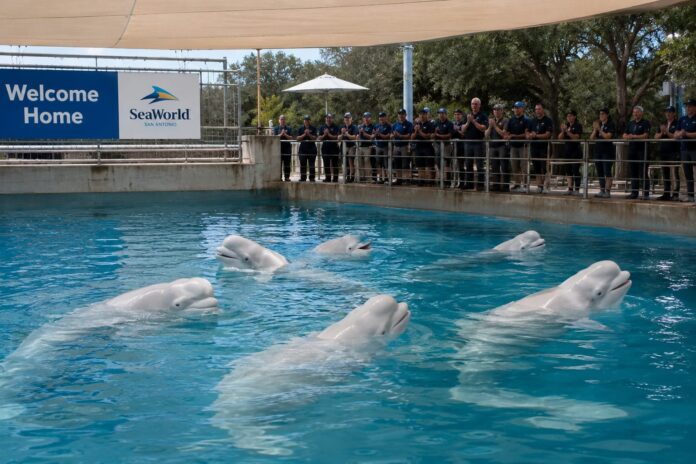
Seven female beluga whales arrived at SeaWorld San Antonio on Tuesday, marking the second group of mammals to be relocated from Marineland, a shuttered Canadian theme park. The animals, identified as Xena, Gemini, Skyla, Meeka, Eve, Neva, and Calypso, completed a nearly 2,000-mile journey from the Niagara Falls facility using specialized, water-filled transport units loaded onto flatbed trucks and a cargo plane. This relocation represents a historic achievement in marine mammal conservation efforts within the United States.
The seven whales are currently housed in a private habitat away from public view, where caretakers are providing comprehensive veterinary care, nutrition support, and behavioral monitoring as they adjust to their new environment. The second group joins Frankie and Botts, two male beluga whales that completed the same relocation during the first transport effort last month. The males are reportedly acclimating well and are being gradually introduced to the existing whale population at SeaWorld San Antonio.
- Seven female beluga whales arrived at SeaWorld San Antonio from Marineland in Niagara Falls, Canada
- The journey spanned nearly 2,000 miles using specialized water-filled transport containers and aircraft
- This represents the largest beluga whale transfer ever completed in the United States
- The animals are receiving comprehensive veterinary care and behavioral monitoring in a private acclimation habitat
Why It Matters
The successful relocation of these beluga whales addresses an urgent conservation need following Marineland’s closure in 2024. The Canadian theme park indicated that it lacked the financial resources necessary to continue providing appropriate care for the animals in its possession. Without relocation or additional funding, park officials stated they would have no alternative but to euthanize the remaining whales, making this international effort a critical intervention in marine mammal welfare and conservation.
The National Oceanic and Atmospheric Administration approved the relocation initiative in July, acknowledging that no other facilities in Canada possessed the capacity to provide the belugas with adequate husbandry or medical treatment. This authorization underscores the significance of American aquariums and marine facilities stepping forward to provide sanctuary for these animals. The successful completion of two major transport operations demonstrates the logistical capability and coordination required to move large marine mammals across significant distances while maintaining their health and wellbeing.
- The relocation prevents potential euthanasia of dozens of beluga whales left without adequate care resources
- NOAA recognized that no Canadian facilities could provide necessary medical treatment and husbandry for the whales
- The effort represents international cooperation in marine mammal conservation and animal welfare
- Successful transports establish protocols and expertise for future large-scale marine mammal relocations
Political and Public Context
The relocation of beluga whales from Marineland reflects broader concerns about the sustainability and ethics of marine mammal facilities operating in North America. Marineland’s closure and subsequent inability to care for its animals have prompted discussions about regulatory oversight, funding mechanisms, and the long-term responsibility of theme parks toward animals in their care. The international scope of this relocation effort demonstrates coordination among multiple jurisdictions and institutions to resolve a complex animal welfare crisis.
The involvement of SeaWorld San Antonio, the Shedd Aquarium in Chicago, and planned facilities in Georgia, San Diego, and Spain illustrates the distributed nature of modern marine mammal care networks. This coordinated approach spreads the responsibility and resources necessary to maintain the health of relocated animals across multiple institutions. The successful transport of these whales may serve as a model for future international animal relocations and could influence policy discussions regarding theme park closures and animal welfare protections.
- Marineland closed to the public in 2024 after determining it could not sustain animal care operations
- Four whales from the first transport were relocated to the Shedd Aquarium in Chicago
- Seventeen additional whales remain at Marineland with planned relocations to facilities in multiple states and Spain
- NOAA approval in July provided regulatory authorization for the international relocation efforts
From Canada to Texas. Seven beluga whales are now safe and sound at SeaWorld San Antonio after being rescued from a closed marine park in Canada that could no longer care for them. https://t.co/ILYMUXiKkk
— FOX 11 Los Angeles (@FOXLA) August 6, 2026
What Happens Next
Seventeen beluga whales remain at Marineland and are scheduled for relocation to aquariums in Georgia, Chicago, San Diego, and Spain, though official timelines have not yet been announced for these transfers. The success of the first two transport operations may expedite planning for subsequent relocations, as facility managers and regulatory agencies have now demonstrated the logistical framework and safety protocols necessary to move large marine mammals across continental distances. Caretakers at SeaWorld San Antonio will continue monitoring the acclimation process for the newly arrived whales while coordinating with other facilities to prepare for receiving additional animals.
The coming months will reveal whether the established relocation model can be replicated efficiently for the remaining animals at Marineland. Facility officials and conservation organizations may face additional challenges in coordinating transports to international destinations, particularly the planned relocations to facilities in Spain. Ongoing veterinary care and behavioral monitoring of the relocated whales will provide valuable data for marine mammal conservation efforts and may inform future protocols for large-scale animal relocations within North America and beyond.
- Seventeen beluga whales remain at Marineland awaiting relocation to multiple facilities
- Planned destinations include facilities in Georgia, Chicago, San Diego, and Spain
- No official timeline has been announced for the remaining relocations
- Continued monitoring of the seven newly arrived whales will inform protocols for future transports
