

Story Highlights
- Putin has escalated nuclear rhetoric and military posturing amid the Ukraine conflict.
- Leaders like India’s Modi and China’s Xi have privately urged Putin to avoid nuclear escalation.
- Experts warn that continued US support for Ukraine is crucial to deter Russian aggression.
- Concerns persist over how the US and allies would respond to Russian nuclear use.
What Happened
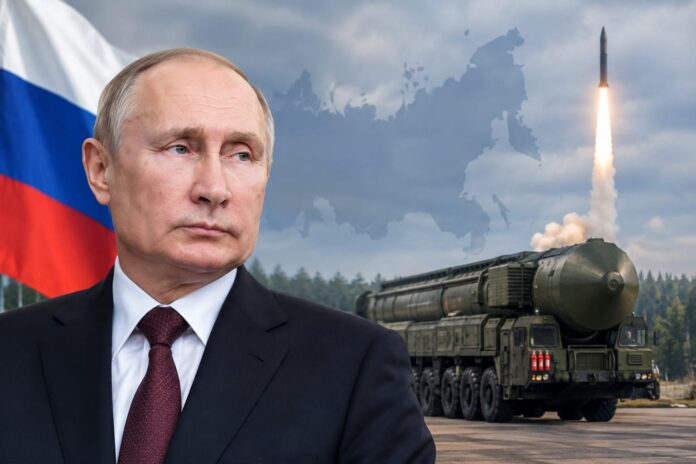
In recent months, Russian President Vladimir Putin has intensified nuclear posturing as the war in Ukraine continues into its fifth year. While Putin has not directly stated he would use nuclear weapons to end the conflict, his administration has taken steps suggesting Moscow is prepared to consider such an option if deemed necessary for military objectives. These actions include updating Russia’s nuclear doctrine, moving nuclear weapons to Belarus, and conducting tactical nuclear drills in response to increased Ukrainian drone attacks.
Putin’s associates, particularly Dmitry Medvedev, the former Russian president and current deputy chairman of the Russian National Security Council, have been more explicit in their threats. Medvedev has repeatedly warned that Russia could resort to nuclear weapons if Ukrainian offensives succeed or if Russian patience is exhausted. These statements have heightened concerns among Western officials and military leaders about the potential for escalation and the adequacy of the international response.
- Putin approved an updated nuclear doctrine, lowering the threshold for nuclear use.
- Russian tactical nuclear weapons have been moved to Belarus, a close ally bordering Ukraine.
- Major nuclear drills were conducted by Russia amid increased Ukrainian attacks.
- Dmitry Medvedev publicly threatened nuclear use in July 2023 and again in early 2024.
Why It Matters
The escalation of nuclear threats by Russia has significant implications for global security, especially for the United States and its European allies. The possibility of nuclear weapons being used in the Ukraine conflict, even at a tactical level, would represent a dramatic and dangerous shift in modern warfare. Such an event could trigger a broader conflict, destabilize the region, and undermine decades of nuclear nonproliferation efforts.
For the United States, the situation presents a complex challenge. There is pressure to continue supporting Ukraine with military aid, intelligence, and diplomatic backing to ensure Russian aggression does not go unchecked. At the same time, there are concerns about the risks of escalation and the potential for direct confrontation with Russia. European officials have expressed fears that the US might either refrain from responding to a Russian nuclear strike, leaving Ukraine and its supporters vulnerable, or respond in kind, risking a wider nuclear exchange.
Experts argue that sustained US support for Ukraine is essential to deter further Russian aggression and to reassure European allies of America’s commitment to collective security. Without continued assistance, Ukraine’s ability to resist Russian advances could be severely compromised, potentially emboldening Moscow and other adversaries to pursue similar tactics elsewhere.
- Potential for nuclear escalation threatens European and global security.
- US credibility as a security partner is at stake in the eyes of allies.
- Failure to support Ukraine could embolden other authoritarian regimes.
- Ukrainian resistance depends heavily on ongoing Western assistance.
Political and Public Context
Since the start of the Ukraine conflict in 2014 and its escalation in 2022, Russia has repeatedly used nuclear rhetoric as a tool of intimidation. The Kremlin’s updated nuclear doctrine, which appears to lower the threshold for nuclear use, has raised alarms among Western analysts. The movement of Russian nuclear weapons to Belarus marks the first time since the Cold War that such arms have been stationed outside Russia, signaling a willingness to escalate tensions in the region.
International leaders have sought to dissuade Putin from considering nuclear options. Indian Prime Minister Narendra Modi and Chinese President Xi Jinping have both reportedly warned Putin against nuclear escalation, with Modi’s interventions in 2022 and 2024 believed to have influenced the Russian leader’s calculations. While Moscow has denied some of these reports, Western officials, including those from Poland, have confirmed that such diplomatic efforts took place.
Despite these warnings, concerns remain high among European military and civilian leaders. Recent meetings with Finnish and French officials reveal a growing fear that Putin may eventually act on his threats, especially as the war shows no signs of ending. The uncertainty surrounding the US response to a potential Russian nuclear strike adds to the anxiety, with officials divided over whether Washington would intervene directly or leave Ukraine and its European supporters to manage the crisis alone.
- Russia’s nuclear doctrine was updated to lower the threshold for use.
- Belarus now hosts Russian tactical nuclear weapons for the first time since the Cold War.
- Modi and Xi have both privately urged Putin to avoid nuclear escalation.
- European officials are increasingly concerned about the risk of nuclear use in Ukraine.
Putin won't likely use nukes, but Kyiv still needs US assistance #TheHill https://t.co/SzWAtBXpEo
— #TuckFrump (@realTuckFrumper) October 2, 2026
What Happens Next
Looking ahead, the trajectory of the Ukraine conflict and the risk of nuclear escalation will depend on several factors. The continued resolve of the US and its allies to support Ukraine militarily and diplomatically will be critical in deterring further Russian aggression. Ongoing diplomatic efforts by international leaders, including those from India and China, may also play a role in influencing Putin’s decision-making.
Within Ukraine, the ability to sustain resistance against Russian advances will hinge on the flow of Western aid, including advanced weaponry, intelligence sharing, and economic support. Any reduction in US assistance could weaken Ukraine’s position and increase the likelihood of Russia pressing its advantage, potentially resorting to more extreme measures if conventional tactics fail.
Meanwhile, Western governments must prepare for a range of scenarios, including the possibility of a Russian tactical nuclear strike. This includes developing contingency plans for military, diplomatic, and humanitarian responses, as well as coordinating closely with NATO allies to ensure a unified approach. The international community will also need to monitor developments in Belarus, where the presence of Russian nuclear weapons adds another layer of complexity to the regional security environment.
- US Congress and administration debates on future Ukraine aid packages.
- Continued diplomatic outreach by India, China, and European leaders to Moscow.
- NATO planning for potential escalation scenarios, including nuclear contingencies.
- Monitoring of Russian military movements and nuclear deployments in Belarus.
