

Story Highlights
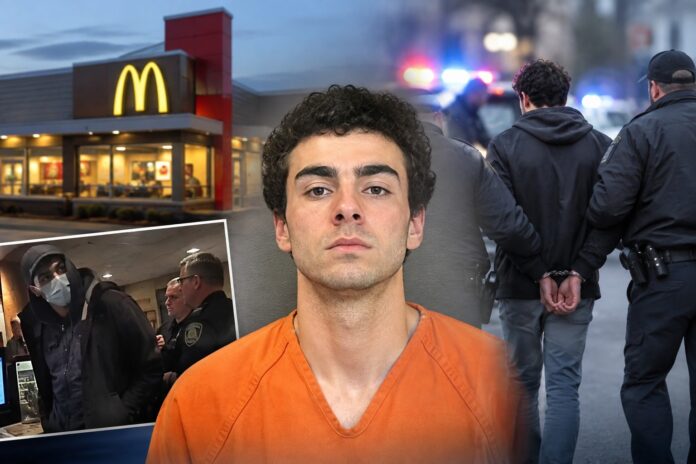
- Police body camera footage captures Luigi Mangione’s arrest at a Pennsylvania McDonald’s.
- Officers found a gun, magazine, and silencer in Mangione’s backpack during the arrest.
- Mangione used fake identification at a hostel before being recognized from police-released photos.
- The arrest and evidence are central to ongoing federal and state legal proceedings.
What Happened
On December 9, 2024, Pennsylvania police arrested Luigi Mangione at a McDonald’s in Altoona, five days after the fatal shooting of UnitedHealthcare CEO Brian Thompson in Manhattan. Newly released police body camera footage shows officers approaching Mangione, who was wearing a face mask. Officers asked him to lower his mask and quickly identified him as the suspect wanted for Thompson’s murder. This recognition followed the circulation of Mangione’s photos to the public, which led to his identification and arrest.
During the arrest, officers searched Mangione’s backpack and found a gun magazine. At the police station, further searches uncovered a handgun, a silencer, and additional items, including a gun magazine hidden in underwear and a journal with handwritten notes. Mangione’s cellphone was found in a Faraday bag, along with a checklist and plans for future actions, suggesting premeditation. He initially used the false name “Mark Rosario” at a local hostel but eventually provided his real identity to police.
- Luigi Mangione was arrested on December 9, 2024, in Altoona, Pennsylvania.
- UnitedHealthcare CEO Brian Thompson was killed on December 4, 2024, in Manhattan.
- Police found a gun, magazine, silencer, and handwritten notes in Mangione’s possession.
- Mangione initially used fake identification but later gave his real name to police.
Why It Matters
The release of the police body camera footage is significant for public transparency and accountability in a high-profile case. The footage documents law enforcement’s approach and the discovery of weapons, highlighting the risks officers faced during the arrest. The presence of a silencer and other items in Mangione’s possession underscores the potential threat he posed.
This case has broader implications for public safety, corporate security, and the legal system. The murder of a prominent CEO in a public setting has raised concerns about the safety of high-profile individuals and the effectiveness of event security. The legal proceedings, involving both federal and state charges, have sparked debate about double jeopardy and the challenges of prosecuting complex crimes across jurisdictions.
- Body camera footage reinforces public confidence in law enforcement transparency.
- Corporate leaders may reevaluate security protocols at public events.
- The case raises questions about legal frameworks for prosecuting high-profile crimes.
- Victims’ families and the community are directly affected by the investigation’s outcome.
Political and Public Context
The arrest of Luigi Mangione and the release of body camera footage occur amid ongoing national discussions about police transparency. Body cameras have become standard for many departments, providing objective records of police interactions, especially in high-profile or violent cases. Such footage often plays a crucial role in court and public discourse.
Brian Thompson, the victim, was a prominent healthcare executive, and his murder while en route to an investor conference drew significant attention. Security footage showed Mangione approaching Thompson from behind and opening fire. Mangione’s use of fake identification and possession of weapons suggest a level of planning that has alarmed both investigators and the public.
Legal proceedings have been complicated. Mangione pleaded guilty to federal stalking charges in August, admitting he posed as an investor to track Thompson. His state trial for second-degree murder has been delayed due to a double jeopardy motion, highlighting the complexities of prosecuting crimes that cross federal and state lines.
- Body camera footage is a key tool for law enforcement transparency nationwide.
- Thompson’s murder has impacted the healthcare and business sectors.
- Mangione’s actions have raised concerns about security gaps.
- Legal debates over double jeopardy and jurisdiction are ongoing.
Dramatic new bodycam footage shows moment cops realize they got Luigi Mangione: 'It's f-king him' https://t.co/LExEtcFDml pic.twitter.com/dGfp1Pa6BY
— New York Post (@nypost) October 2, 2026
What Happens Next
The future of the Mangione case hinges on the outcome of the double jeopardy motion. The state trial, originally set for September, has been postponed to allow prosecutors to respond to the defense’s argument that state charges should be dismissed due to Mangione’s federal plea. The court’s decision will determine whether the state can proceed with its case.
The release of the body camera footage may influence public opinion and affect jury selection and trial proceedings. Prosecutors are expected to use the footage as key evidence, while the defense may argue it could prejudice potential jurors or that the federal plea should resolve the matter.
Beyond the courtroom, the case is prompting discussions about improving security for high-profile individuals and preventing similar incidents. The business community and law enforcement agencies are closely watching the legal process and considering lessons for future safety protocols.
- The state trial’s future depends on the double jeopardy ruling.
- Debate continues over the impact of the body camera footage on the trial.
- Corporate security protocols may be revised in response to the case.
- Public and legal scrutiny of law enforcement practices is likely to increase.
