

Story Highlights
- A ten-member international climbing team led by former Royal Marine Nirmal Purja is feared missing following an avalanche on Pakistan’s Broad Peak.
- The avalanche struck the 8,047-metre peak in the Karakoram range at approximately midday local time on Thursday, after which all communication with the team ceased.
- Team members reportedly include nationals from the United States, China, Oman, and Nepal.
- Pakistani authorities and the Alpine Club of Pakistan are coordinating helicopter rescue efforts, weather permitting, for Friday morning local time.
What Happened
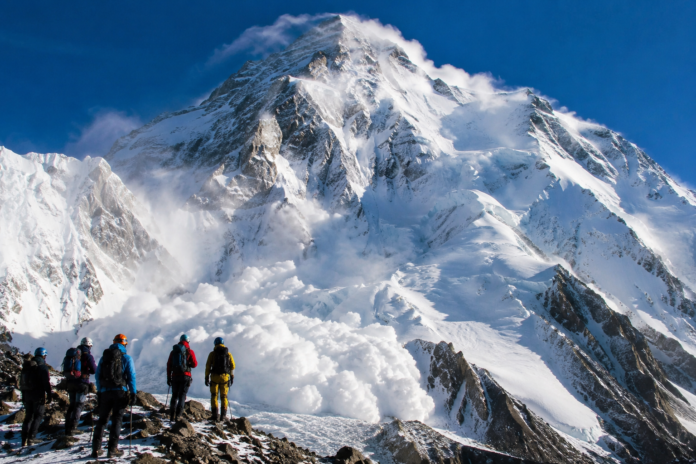
An avalanche swept across Broad Peak, one of the world’s highest mountains located in Pakistan’s formidable Karakoram range, striking a ten-member international mountaineering team at approximately midday on Thursday. The team, led by Nirmal Purja — a Nepal-born former British Royal Marine celebrated worldwide for his extraordinary climbing achievements — has not been in contact with base personnel since the incident occurred. Pakistani mountaineering officials confirmed the situation and indicated that all communication lines with the group went silent following the avalanche’s impact on the 8,047-metre peak, which is ranked as the 12th highest mountain on Earth.
Purja, who is widely recognized for having successfully summited all 14 of the world’s peaks exceeding 8,000 metres in just over six months during 2019, was serving as the expedition leader at the time of the incident. His record-breaking achievement in 2019 established him as one of the most accomplished high-altitude mountaineers in modern history. The international composition of his current team underscores the global nature of extreme mountaineering expeditions that regularly attempt Broad Peak’s challenging slopes each climbing season.
- Avalanche struck Broad Peak at approximately midday Thursday local time.
- All communication with the ten-member team ceased following the avalanche.
- Team includes climbers from the United States, China, Oman, and Nepal.
- Broad Peak stands at 8,047 metres and is the world’s 12th highest peak.
Why It Matters
The disappearance of such a high-profile international mountaineering team on one of the world’s most demanding peaks commands global attention and raises renewed concerns about the inherent dangers associated with high-altitude expeditions in the Karakoram range. Broad Peak has long been regarded by mountaineering experts as one of the more technically and physically challenging 8,000-metre summits, making avalanche risk a persistent and serious threat for any team attempting its upper reaches during the climbing season.
Nirmal Purja’s global reputation as a record-setting climber amplifies the significance of this incident beyond the mountaineering community. His career trajectory — from enlisting in the British Army in 2003 and earning his Royal Marine designation in 2009, to spontaneously deciding to summit Everest during what was originally a base camp visit in 2012 — has made him a recognized figure well beyond traditional climbing circles. The safety of his team and the outcome of rescue efforts are being closely monitored by mountaineering organizations and enthusiasts worldwide.
- Families of climbers from four different nations are directly affected by the missing team.
- Broad Peak’s reputation as a highly challenging summit underscores the elevated risk faced by the team.
- The incident highlights persistent avalanche dangers on Karakoram-range expeditions.
- Global attention is drawn to safety protocols and communication standards on high-altitude climbs.
Political and Public Context
Pakistan’s Karakoram range, which is home to several of the world’s most iconic and dangerous peaks including K2 and Broad Peak, is a significant hub of international mountaineering activity each year. Pakistani mountaineering authorities and organizations such as the Alpine Club of Pakistan play a central coordinating role in managing expedition registrations, safety oversight, and emergency response operations for the dozens of international teams that attempt these summits annually.
The Alpine Club of Pakistan indicated it has been in ongoing contact with relevant authorities to ensure that all available resources are mobilized as quickly as possible to respond to the emergency. The organization also expressed solidarity with the families of the missing climbers and with the broader international mountaineering community. The vice-president of the Alpine Club noted that a helicopter rescue attempt was being coordinated for Friday morning Pakistani time, with the operation contingent upon favorable weather conditions at altitude. Weather is a critical limiting factor in any high-altitude rescue, as conditions on Karakoram peaks can deteriorate rapidly and unpredictably.
- The Alpine Club of Pakistan is actively coordinating with national authorities on the rescue response.
- Helicopter rescue is planned for Friday morning, subject to weather clearance.
- Pakistan’s Karakoram hosts dozens of international expeditions each climbing season.
- Purja’s prior record of summiting all 14 eight-thousanders established him as a globally recognized mountaineer.
What Happens Next
Rescue teams are preparing to mobilize helicopter operations at first light on Friday morning Pakistani time, contingent on weather conditions clearing sufficiently to allow safe flight operations at altitude. High-altitude rescues in the Karakoram range present significant logistical challenges, as helicopters are often unable to operate safely at extreme elevations depending on temperature, wind speed, and visibility. Ground-based rescue teams may also be deployed if aerial options remain limited by persistent weather constraints.
Authorities and the Alpine Club of Pakistan are expected to provide further updates as the situation develops and as rescue personnel gain access to the area affected by the avalanche. The international community will be watching closely, given the multinational composition of the team and the prominence of its leader. The coming hours will be critical in determining the fate of the ten climbers, and the coordination between Pakistani officials and international mountaineering bodies will be essential to any successful rescue outcome.
- Helicopter rescue operations are scheduled for Friday morning local time, weather permitting.
- Ground-based rescue teams may be deployed if aerial access is restricted.
- Further updates from Pakistani authorities and the Alpine Club of Pakistan are expected.
- Weather conditions at altitude will be the primary determining factor in rescue timeline and success.
