

Story Highlights
- NYC Mayor Zohran Mamdani repeatedly avoided direct answers regarding reported plans for a public campaign pushing tax increases on wealthy New Yorkers and corporations
- The mayor indicated that discussions about such initiatives would occur after the November election, emphasizing current focus on immediate city concerns
- Governor Kathy Hochul previously rejected similar tax proposals in early 2026, creating uncertainty about the administration’s unified stance on fiscal policy
- Reports suggest any coordinated push for higher taxes would align with the state legislature’s January 2027 return to Albany and Hochul’s reelection campaign
What Happened
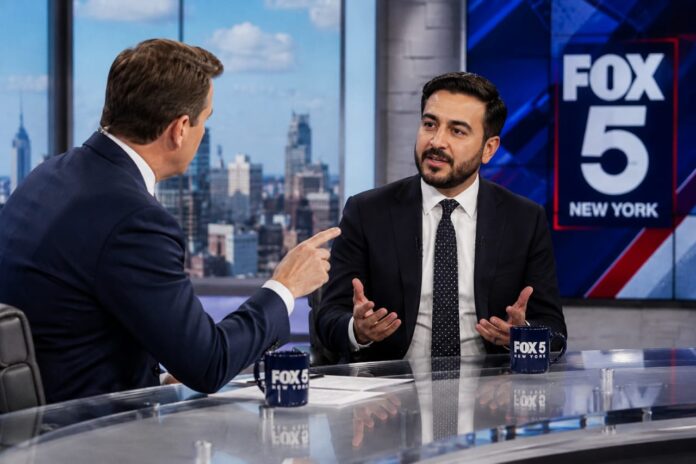
During a Thursday interview with Fox 5 New York, Mayor Zohran Mamdani of New York City faced multiple inquiries about reported plans to build public support for tax increases targeting wealthy residents and corporations. The mayor consistently declined to provide direct answers to these questions, instead pivoting to discussions of current policy achievements and immediate municipal priorities.
When pressed about whether he intended to launch a public pressure campaign focused on tax policy before November, Mamdani indicated that substantive conversations about such matters would be deferred until after the election concluded. He emphasized that his current attention remained centered on managing present-day challenges facing the city, including public safety during extreme weather conditions and preparation for the upcoming school year.
The reported campaign would follow proposals previously rejected by Governor Hochul in early 2026. According to reporting, any coordinated effort to advance tax legislation would likely emerge ahead of the New York Legislature’s return to Albany in January 2027.
- Mayor Mamdani repeatedly declined direct responses during Fox 5 New York interview on Thursday
- Governor Hochul previously rejected similar tax increase proposals in early 2026
- Mayor indicated post-November timeframe for substantive discussions about tax policy initiatives
- Current mayoral focus cited as immediate city challenges including heat wave management and school year preparation
Why It Matters
The mayor’s evasive responses regarding tax policy signal potential tension between municipal leadership and the governor’s office on fiscal matters. Tax increases targeting high-income earners and corporations represent a significant policy decision with widespread implications for New York City’s economic landscape and business environment. The timing of any such campaign carries particular weight given that it would occur during a gubernatorial reelection cycle, raising questions about political coordination and economic messaging.
The deliberate deferral of substantive discussion until after November elections suggests calculated political strategy. This approach indicates awareness that fiscal policy debates might influence electoral outcomes in the near term. For New York’s business community, wealthy residents, and economic observers, the lack of clarity creates uncertainty about the administration’s true intentions regarding tax burden distribution. The coordination between city and state leadership on such matters directly affects economic competitiveness and the state’s ability to retain high-earning professionals and corporations.
- Uncertainty about potential tax increases affects business investment decisions and economic planning for New York City
- Political coordination between city and state on fiscal policy influences reelection campaign dynamics for Governor Hochul
- Wealthy residents and corporations lack clarity on future tax burden scenarios affecting long-term location decisions
- Municipal-gubernatorial alignment on revenue initiatives impacts credibility of government messaging on fiscal responsibility
Political and Public Context
Mayor Mamdani’s political background as a democratic socialist shapes the context surrounding these discussions. Democratic Socialist candidates and organizations have historically advocated for progressive tax structures and wealth redistribution policies. The mayor’s consistent deflection regarding tax initiatives, while serving as a member of a political movement historically aligned with such proposals, underscores the political sensitivity of these topics in the current electoral environment.
Governor Hochul’s previous rejection of similar tax proposals in early 2026 establishes a backdrop of existing disagreement within Democratic leadership. The governor’s reelection campaign this fall suggests her political calculations regarding tax policy may differ from the mayor’s ideological preferences. This divergence highlights internal Democratic Party tensions regarding fiscal policy approaches and the political palatability of tax increases during election cycles.
New York City has long been a focal point for debates about progressive taxation and the relationship between municipal government and wealthy residents. The state legislature’s scheduled January 2027 return to Albany would provide the formal venue for any legislative tax initiatives, aligning with typical policy implementation timelines.
- Mayor Mamdani’s democratic socialist political affiliation traditionally associated with progressive taxation advocacy
- Governor Hochul’s January 2026 rejection of tax proposals demonstrates internal Democratic leadership disagreement on fiscal matters
- Gubernatorial reelection campaign timing influences tax policy messaging and implementation strategies for Democratic leadership
- New York Legislature’s January 2027 session represents likely venue for substantive tax policy debates and legislative action
Mamdani repeatedly sidesteps questions on reported plan to revive tax hikes on wealthy New Yorkers https://t.co/OzUmr6j4CC via @@YahooNews
— JCU Uribarri (@JcuUribarri) August 8, 2026
What Happens Next
Following the November elections, observers should expect clearer statements regarding tax policy intentions from both the mayor’s office and the governor. The post-election period would provide political cover for substantive discussions about fiscal restructuring that might be electorally risky beforehand. If Governor Hochul wins reelection, the dynamic between her administration and the mayor’s office regarding tax initiatives remains uncertain, as her previous positions suggest resistance to such proposals.
The New York Legislature’s return in January 2027 will likely serve as a critical juncture for any coordinated tax policy efforts. At that point, the political landscape will have shifted following elections, potentially creating different conditions for fiscal policy debates. Whether Mayor Mamdani and progressive Democratic allies can build sufficient public support and legislative backing for tax increases on wealthy residents and corporations remains an open question dependent on multiple political variables.
- Post-November election period expected to bring clearer municipal and state tax policy statements
- January 2027 New York Legislature session likely venue for formal tax policy debates and legislative proposals
- Governor Hochul’s reelection outcome affects dynamic between state and city leadership on fiscal initiatives
- Public support building and legislative coalition formation represent critical next steps for advancing tax policy changes
