

Story Highlights
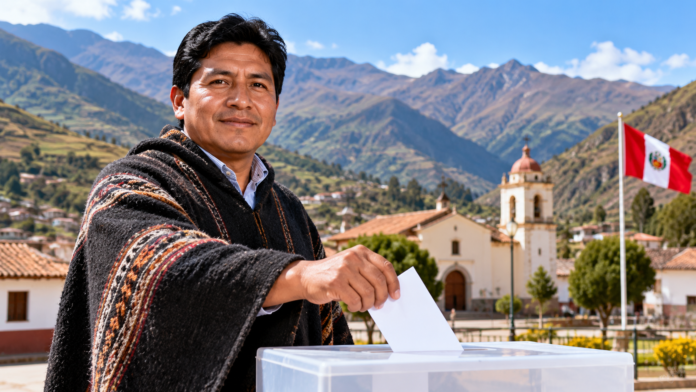
- Hitler Mussolini Simeon Flores has been elected mayor of Queropalca, a remote district in Peru’s Andes
- Flores won with 229 votes, 25 more than his closest rival, in a contest with about 700 voters in total
- Although he will serve fewer than 1,000 residents, his given names, which match those of historical fascist leaders, have drawn unexpected international media attention
- The 45-year-old represented the centre-left Ahora Nación party and took roughly 34% of the vote
What Happened
Peru’s local election results show that Hitler Mussolini Simeon Flores narrowly won the mayoralty of Queropalca, a small district in the Peruvian Andes in the central department of Huánuco. Exit poll data and reports from Peru’s elections office indicate that Flores received 229 votes, putting him 25 votes ahead of his nearest rival, who ran for the right-wing Renovación Popular Perú party. Slightly more than 700 residents voted, and Flores will represent a constituency of fewer than 1,000 people.
Flores, who is 45, ran for the centre-left Ahora Nación party and won about 34% of the vote, according to official electoral data. He was born in the Queropalca district, which lies about 360 kilometers from the capital, Lima. Local contests in remote districts usually receive very little international coverage, but the combination of his given names has led to considerable global media interest and commentary about what would otherwise be an ordinary municipal result.
- Hitler Mussolini Simeon Flores won 229 votes, beating the Renovación Popular Perú candidate by 25
- About 700 people voted in the district, and Flores took roughly 34% of the vote
- The 45-year-old will represent fewer than 1,000 constituents in Queropalca, in the Huánuco department
- Flores ran for the centre-left Ahora Nación party
Why It Matters
Flores’s win has drawn wide international comment and fascination, mainly because of what his given names evoke rather than the details of the local race. His forenames are those of two of the best-known figures of twentieth-century European totalitarian regimes, which has turned a routine local result into a news story discussed around the world. The outsized attention shows how cultural and historical associations can raise the profile of political events that might otherwise get only regional coverage.
The episode also prompts broader questions about naming conventions, cultural context, and the way international audiences read political news through their own historical frameworks. For the people of Queropalca, the election was a choice of local leadership based on policy positions and community representation. Yet the global attention to his name has created an unusual situation in which a municipal election in a remote Peruvian district has become a subject of international curiosity and discussion, with commentators concentrating on his name rather than on governance or policy.
- International media outlets have given extensive coverage to a routine local election because of cultural and historical name associations
- The election shows how naming conventions can create unexpected links between local governance and global attention
- Flores’s victory raises questions about how identity, naming practices, and historical context shape the story told about political events
- Local voters chose their municipal leader according to their electoral preference, while international audiences focused mainly on historical associations
Political and Public Context
People with historically significant names holding political office in modern times is not without precedent. Before Flores’s election, other candidates in similar circumstances won office and attracted comparable international interest. In 2018, a man named Hitler Guesclin Alba Sánchez was elected mayor of Yúngar in Peru, reportedly running on a particular campaign message about his given name. In 2020, a politician named Adolf Hitler Uunona won local elections in Namibia, a country with historical German colonial ties where Germanic given names remain more common among the population.
These cases show that people with historically loaded names running for and winning political office in various countries is a recurring pattern rather than a one-off. The names in question often reflect regional historical and cultural contexts that differ greatly from how the names are perceived internationally. Flores’s win in Peru adds another notable example to a growing set of cases in which local political results have drawn disproportionate global attention because of names that carry historical significance in certain cultural frameworks.
- Hitler Guesclin Alba Sánchez won the mayoral election in Yúngar, Peru, in 2018, drawing similar name-related international attention
- Adolf Hitler Uunona won local office in Namibia in 2020, reflecting how Germanic names remain part of naming traditions in former German colonial territories
- These cases show a recurring pattern in which local elections attract global media focus because of historical name associations
- Regional cultural and historical contexts shape naming conventions differently from the way the names are perceived internationally
What Happens Next
Flores will now take up his duties as mayor of Queropalca and will be responsible for the governance needs and policy priorities of his small constituency in the Peruvian Andes. His time in office will likely center on local infrastructure, community services, and regional development issues relevant to the district. International media attention will presumably fade as news cycles move on to other stories, while Flores’s administration will operate within Peru’s broader political and economic landscape.
The case may become a reference point in future discussions of naming conventions, cultural contexts, and the overlap between local politics and global media attention. Scholars, commentators, and media observers may continue to cite Flores’s election as an example of how international audiences engage with and interpret political news from remote regions. The outcome also renews the question of whether similar naming situations in future elections will keep drawing comparable international interest, or whether this was a unique convergence of factors that brought unusual global attention to an otherwise routine municipal election.
- Flores will take office as mayor and handle governance duties for Queropalca’s fewer than 1,000 residents
- International media attention is expected to fade as news cycles move on and other political developments draw public interest
- The case may serve as a precedent in future discussions of naming, cultural context, and patterns in global news coverage
- Future elections involving people with historically significant names may be viewed through the lens set by Flores’s election and earlier cases
