

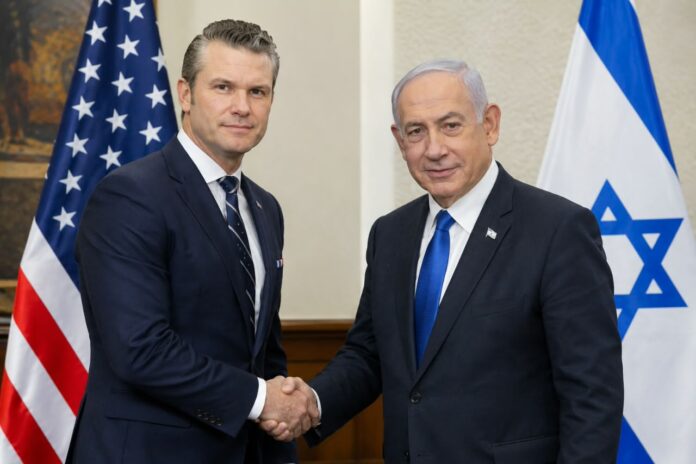
Story Highlights
- Defense Secretary Pete Hegseth made an unannounced visit to Israel to meet with Prime Minister Benjamin Netanyahu
- The trip came one day after President Trump publicly endorsed Netanyahu ahead of parliamentary elections
- Israel faces critical elections following the October 7, 2023 Hamas attack and subsequent military operations
- Netanyahu’s coalition faces projections of losing its governing majority in the upcoming vote
What Happened
Defense Secretary Pete Hegseth traveled to Israel for a surprise meeting with Prime Minister Benjamin Netanyahu on Monday, demonstrating the strength of the U.S.-Israel alliance during a pivotal moment in the Middle East. The unannounced nature of the visit underscored its significance, as high-level diplomatic missions of this caliber typically receive advance coordination and public notification. Hegseth’s presence in Jerusalem came just one day after President Trump issued a direct endorsement of Netanyahu ahead of the country’s parliamentary elections, scheduled for the following week.
The timing of these developments reflects a coordinated effort by the Trump administration to reinforce American support for Israel at a critical juncture. The visit carried symbolic weight given the broader geopolitical context and ongoing regional tensions. Both the Pentagon and Israel’s embassy in Washington declined to provide immediate comment on the classified nature of the meetings and their specific agenda, a customary practice for sensitive diplomatic engagements.
- Hegseth met with Netanyahu during an unannounced Monday visit to Israel
- The meeting occurred one day after President Trump endorsed Netanyahu in parliamentary elections
- Israel’s first elections since the October 7, 2023 Hamas attack and subsequent military operations
- Netanyahu’s religious-nationalist coalition faces projections of losing its governing majority
Why It Matters
The Defense Secretary’s surprise visit carries substantial diplomatic and strategic implications for the broader Middle East. By inserting himself into the Israeli political landscape through an unannounced visit, Hegseth signaled that the Trump administration views the outcome of Israel’s parliamentary elections as consequential to American interests and regional stability. The visit demonstrated that Washington views its relationship with Netanyahu and Israel as a cornerstone of Middle Eastern policy, particularly as security challenges persist across the region.
This coordinated show of support from both the White House and the Pentagon reflects the administration’s commitment to strengthening the U.S.-Israel alliance at a time when Israel continues military operations in Gaza and Lebanon while confronting threats from Iran. The strategic message being sent extends beyond Israel’s borders, communicating to regional actors that American backing for the Jewish state remains unwavering and that the Trump administration prioritizes Israeli security concerns. For Netanyahu specifically, the dual support from the president and defense secretary provides valuable political capital as he faces domestic challenges in securing a governing majority.
- Demonstrates Trump administration prioritizes U.S.-Israel alliance and regional stability
- Provides political backing for Netanyahu during challenging domestic election circumstances
- Signals to regional adversaries that American support for Israel remains steadfast and resolute
- Affects broader Middle East dynamics amid ongoing military operations in Gaza, Lebanon, and tensions with Iran
Political and Public Context
Israel’s upcoming parliamentary elections represent the nation’s first vote since the October 7, 2023 Hamas attack, an assault that fundamentally altered the country’s political and security landscape. That attack triggered a cascade of military responses, with Israel conducting extensive operations in Gaza while also engaging targets in Lebanon and confronting Iranian threats. The elections carry enormous weight, as they will determine which coalition controls Israel’s government during these turbulent times.
Netanyahu’s religious-nationalist coalition currently faces headwinds in public opinion polling, with projections indicating the bloc may lose its governing majority. However, opinion polls also suggest that opposition parties may struggle to assemble an alternative governing coalition, creating potential uncertainty about government formation regardless of the election outcome. The Trump administration’s decision to publicly back Netanyahu, followed immediately by Hegseth’s unannounced visit, represents an extraordinary intervention by an American administration in Israeli domestic politics. This level of overt support underscores how significantly Washington views the stakes of these elections.
- Israel faces first elections since October 7, 2023 Hamas attack and military response
- Netanyahu’s coalition projected to lose governing majority, though opposition also faces formation challenges
- Trump administration issued direct endorsement of Netanyahu ahead of elections
- Regional security situation remains volatile with operations ongoing in Gaza, Lebanon, and Iran tensions
Defense Secretary Pete Hegseth quietly visited Israel on Monday and met with Prime Minister Benjamin Netanyahu, according to a senior U.S. military official who spoke to CBS News under condition of anonymity because they were not authorized to speak publicly.…
— CBS News (@CBSNews) October 20, 2026
What Happens Next
The immediate question centers on whether the Trump administration’s demonstrated support for Netanyahu and the strategic signal sent by Hegseth’s visit will influence the parliamentary election outcome scheduled for the following week. Israeli voters will determine whether Netanyahu’s coalition retains power or whether opposition parties gain sufficient seats to form an alternative government. The defense secretary’s unannounced meeting likely included discussions about security cooperation, military aid, and regional strategy, though the substance of these conversations will remain confidential.
Following the election results, the Trump administration will likely deepen its engagement with whoever leads Israel’s next government. If Netanyahu retains power, the relationship will likely intensify further given the demonstrated support. If opposition forces gain control, the administration will need to establish working relationships with new leadership while maintaining the same commitment to Israel’s security. The broader regional situation—including the status of military operations, Iranian threats, and humanitarian concerns in Gaza—will continue to shape the trajectory of U.S.-Israel relations and American Middle East policy.
- Parliamentary elections scheduled for the following week will determine outcome of Netanyahu’s political future
- Trump administration will continue high-level engagement with Israeli leadership regardless of election result
- Future discussions will likely address military cooperation, security assistance, and regional strategy
- Ongoing regional tensions in Gaza, Lebanon, and with Iran will influence the direction of U.S. policy