

Story Highlights
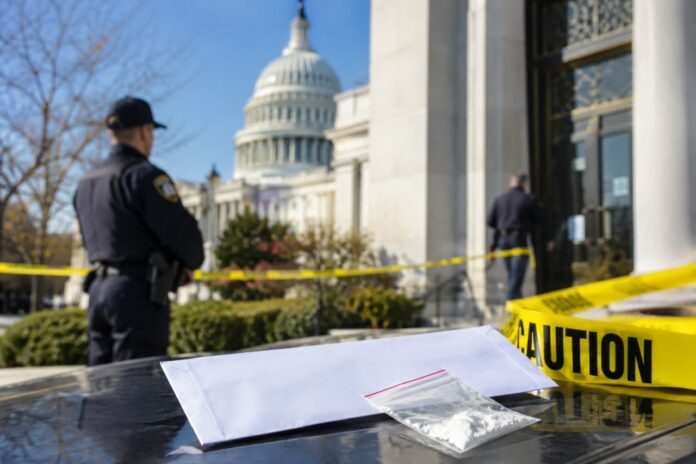
- More than three dozen members of Congress across both parties have received envelopes containing white powder at their offices
- Over 100 letters believed to contain white powder are circulating through the US mail system, with election offices in at least 15 states also targeted
- The FBI, Capitol Police, and US Postal Inspection Service are investigating the coordinated campaign ahead of the November midterms
- Preliminary testing has found no hazardous substances in the envelopes received so far, though federal authorities continue their investigation
What Happened
More than three dozen members of Congress have had their offices targeted with envelopes containing white powder less than three weeks before the November midterms. The Virginia Democrat whose Leesburg district office was evacuated on Monday reported that the office was cleared quickly after an envelope containing a suspicious substance arrived. His office said preliminary tests showed the powder was not hazardous.
Law enforcement sources indicated that more than 100 letters thought to contain white powder are circulating in the US mail system. The FBI, Capitol Police, and US Postal Inspection Service are actively investigating the incidents, according to a notice sent to Senate staff. Election offices in at least 15 states had reported receiving or being targeted by suspicious mail by Thursday evening according to federal authorities. No suspect has been identified, and federal authorities have not released a confirmed total figure.
- Virginia Democrat’s Leesburg district office evacuated Monday after suspicious envelope arrival; preliminary tests showed substance was not hazardous
- Law enforcement sources report over 100 letters containing white powder circulating in US mail system
- FBI, Capitol Police, and US Postal Inspection Service investigating; election offices in at least 15 states targeted
- No suspects identified as of reporting; investigation ongoing
Why It Matters
The coordinated campaign targeting congressional offices and election facilities represents a significant security threat during a critical election period. These incidents constitute attempted political intimidation directed at elected officials and election infrastructure, occurring when the nation is preparing for midterm elections. The breadth of the targeting, affecting members across both political parties and multiple geographic regions, suggests a coordinated effort rather than isolated incidents.
The involvement of multiple federal law enforcement agencies underscores the seriousness with which authorities are treating these threats. While preliminary testing has found no hazardous materials, the psychological impact of such threats on elected officials and their staff is substantial. The timing of these envelopes—less than three weeks before the midterms—raises concerns about election security and the safety of those administering voting processes across the country.
- Threat comes weeks before critical November midterm elections, affecting election administration offices nationwide
- Multiple federal agencies engaged in investigation indicates serious security concern
- Targets include both Democratic and Republican members across geographic regions, suggesting coordinated effort
- Staff members exposed to potential hazards during routine office operations, creating workplace safety concerns
Political and Public Context
The targeting of members across the political spectrum demonstrates the indiscriminate nature of the campaign. Democratic senators have received envelopes, as have Republican members in South Dakota, Texas, and Nebraska. In the House, Democratic members in New York, California, and Massachusetts have reported incidents. One New York Democratic representative noted that a staffer opened an envelope at a Santa Cruz office before clearing the room and calling emergency services. A Massachusetts member’s office was evacuated while police investigated, with testing ultimately finding no hazardous substance.
The FBI released a statement acknowledging the investigation into a series of suspicious mailings sent to various addresses nationwide, including secretary of state offices, election offices, and congressional offices. The agency indicated it is working closely with law enforcement partners to respond to each incident and identify those responsible. This represents part of a broader pattern of threats targeting election infrastructure and elected officials in recent election cycles, reflecting concerns about the security environment surrounding major electoral events.
- Democratic and Republican members targeted across multiple states including New York, California, Massachusetts, Connecticut, South Dakota, Texas, Nebraska, and Virginia
- Election offices in at least 15 states targeted alongside congressional offices
- FBI statement indicates coordination with Capitol Police and US Postal Inspection Service
- Part of broader pattern of threats targeting election infrastructure in recent election cycles
What Happens Next
Federal authorities will continue their investigation to identify the individual or individuals responsible for the letters. The FBI and US Postal Inspection Service have indicated they are working to safeguard the public and secure elections. Given the scope of the investigation spanning over 100 letters and 15 states, coordination between federal agencies and state election officials is expected to continue through the midterm elections.
Enhanced security measures at congressional offices and election facilities may be implemented in response to the threat. Congress members and election officials will likely receive updated briefings on security protocols. The investigation remains ongoing, and federal authorities have stated they will continue working to identify and apprehend those responsible before the November midterm elections occur.
- FBI and US Postal Inspection Service continuing investigation to identify responsible parties
- Enhanced security measures expected at congressional offices and election facilities through midterm elections
- Coordination between federal agencies and state election officials ongoing
- Investigation timeline tied to November midterm election period with potential updates expected before voting occurs