

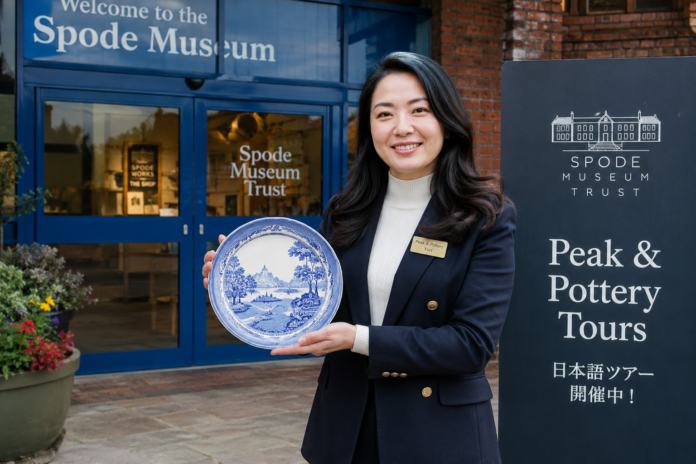
Story Highlights
- Yuri Kawakami-Shotton runs Peak and Pottery Tours at the Spode Museum in Stoke-on-Trent, drawing Japanese visitors to the region.
- Her efforts have generated measurable economic results for local businesses, including a local tea room that sold 2,000 scones per day at a Japan pop-up event.
- The Spode Museum has credited Kawakami-Shotton with significantly broadening its international reach, both in person and virtually.
- Her work is seen as a model for grassroots cultural diplomacy that supports struggling heritage industries.
What Happened
Yuri Kawakami-Shotton, a Japanese-born woman living in Stoke-on-Trent, England, has earned widespread recognition for her ongoing campaign to promote the city’s world-famous pottery heritage to audiences in Japan. Operating Peak and Pottery Tours out of the historic Spode Museum, she has organized guided experiences that bring Japanese visitors face to face with the craftsmanship and culture behind one of Britain’s most storied industrial traditions.
Kawakami-Shotton has described her motivation as deeply personal. After seeing coverage of British pottery firms facing financial collapse, she concluded that Japanese consumers and cultural enthusiasts represented an untapped and enthusiastic audience for English ceramics. She resolved to act as an informal cultural ambassador, using her bilingual background and cultural fluency to bridge two nations with a shared appreciation for fine craftsmanship. Her tours have since grown to encompass multiple local businesses and cultural sites throughout the Stoke area, known historically as the Potteries.
- Kawakami-Shotton operates Peak and Pottery Tours based at the Spode Museum in Stoke-on-Trent.
- She was motivated by news reports about pottery companies entering administration due to declining domestic demand.
- Her tours highlight English-made ceramics and pottery heritage to Japanese visitors arriving both in person and virtually.
- The Spode Museum’s management has formally praised her contribution to expanding the museum’s international audience.
Why It Matters
The pottery industry in Stoke-on-Trent has faced sustained economic pressure for decades. Once a powerhouse of British manufacturing, the region saw many of its most iconic firms struggle under shifting consumer habits, cheaper overseas competition, and reduced domestic interest in traditional tableware. Against that difficult backdrop, Kawakami-Shotton’s initiative represents a genuinely inventive approach to economic revitalization — one driven not by government subsidy or corporate strategy, but by individual initiative and cross-cultural understanding.
Her work demonstrates that heritage industries do not have to be resigned to decline. By identifying and cultivating international markets where cultural appreciation for craftsmanship remains strong, local businesses have been able to generate new revenue streams and attract visitors who might never have otherwise considered traveling to England’s Midlands. The results have been tangible and measurable, offering a replicable model that other heritage communities could study and adapt.
- Stoke-on-Trent’s pottery sector has been under prolonged financial pressure, with several firms entering administration in recent years.
- Kawakami-Shotton’s tours have generated direct visitor traffic to local heritage sites and commercial establishments.
- Her 2023 collaboration with a local tea room resulted in that business selling approximately 2,000 scones daily during a pop-up event in Nihonbashi, Japan.
- The initiative illustrates how cultural diplomacy at an individual level can produce concrete economic benefits for struggling communities.
Political and Public Context
Stoke-on-Trent has long been a focal point in broader conversations about British industrial heritage and the economic fortunes of communities whose identities are bound up in now-declining manufacturing traditions. The city voted heavily in favor of Brexit in 2016, in part out of a desire to reassert national identity and protect domestic industries. That backdrop gives Kawakami-Shotton’s work an added layer of significance: she is an immigrant who has chosen to champion the city’s heritage with an energy and creativity that has benefited local residents and businesses alike.
Japan represents a particularly receptive audience for British ceramics. The country has a deep cultural tradition of valuing fine craftsmanship, and British brands such as Wedgwood and Spode have historically carried strong prestige among Japanese consumers. Kawakami-Shotton’s tours tap into that pre-existing cultural esteem and convert it into active tourism and purchasing behavior. Meanwhile, concerns about the future of Wedgwood — one of Stoke’s most iconic firms — have intensified following reports that the factory entered a 90-day pause in production due to low demand in late 2025.
- Stoke-on-Trent has been at the center of debates about British industrial identity and post-manufacturing economic futures.
- Japan has a longstanding cultural affinity for high-quality British ceramics, making it a natural target market.
- Wedgwood, one of the region’s flagship firms, reportedly paused factory operations for 90 days in September 2025 due to low demand.
- A separate initiative to preserve fading ceramic skills and a university ceramics loan program signal broader regional efforts to sustain the pottery tradition.
What Happens Next
Kawakami-Shotton’s success has drawn attention from the broader heritage tourism sector, and observers are watching to see whether her model can be expanded or replicated. The Spode Museum, buoyed by increased international visibility, may have opportunities to develop more structured partnerships with Japanese cultural and travel organizations. Similarly, other local businesses that have benefited from her tours could seek to build on the momentum by developing their own Japan-focused outreach strategies.
The long-term health of Stoke-on-Trent’s pottery industry will depend on more than one individual’s efforts, however. Structural challenges around manufacturing costs, workforce training, and consumer demand remain significant. Initiatives like the regional bid to preserve fading ceramic skills and a university plan to loan rare ceramics to local museums suggest that a wider coalition is beginning to form around the question of how to sustain and promote the Potteries for future generations. Kawakami-Shotton’s work may prove to be one important and inspiring piece of a much larger puzzle.
- Expanded partnerships between the Spode Museum and Japanese travel or cultural organizations are a potential near-term development.
- Other local businesses may seek to replicate the Japan pop-up model pioneered by The Rabbit Hole Tea Room.
- Regional programs addressing ceramic skills preservation and museum lending are underway, broadening the support ecosystem.
- The ongoing challenges facing firms like Wedgwood mean that the industry’s recovery will require sustained effort beyond individual initiatives.
