

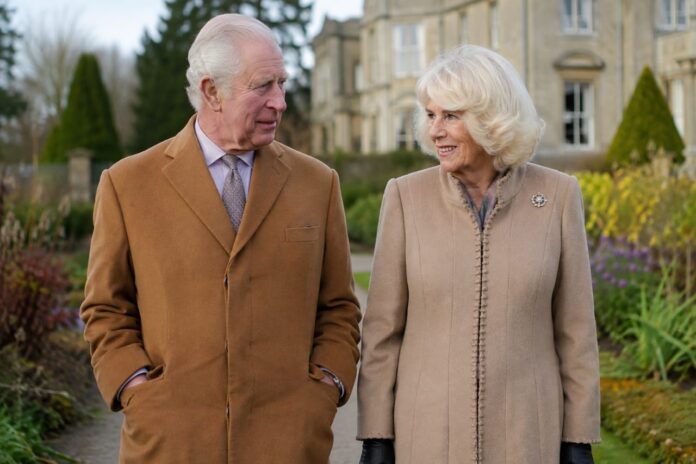
Story Highlights
- King Charles III and Queen Camilla maintain separate residences and spend weekends apart as part of their marriage routine
- The couple has been married for 21 years and appears to have found success through embracing independent lifestyles
- King Charles retreats to Highgrove House in Gloucestershire while Queen Camilla spends time at Ray Mill House in Wiltshire
- Royal observers indicate the arrangement allows the couple to manage the pressures of senior royal duties while maintaining their relationship
What Happened
King Charles III and Queen Camilla have reportedly developed an unconventional approach to married life that centers on maintaining separate living spaces and spending significant time apart. According to royal commentary, the couple regularly divides their weekends, with King Charles often retreating to Highgrove House, his country estate located in Gloucestershire, where he engages in personal pursuits including gardening. Queen Camilla, meanwhile, typically spends her time at Ray Mill House, a property she purchased in Wiltshire following her previous divorce.
Royal editor observations suggest that this arrangement has proven effective for the couple over their two decades of marriage. The separation of living spaces appears to complement rather than diminish their relationship, with assessments indicating that the couple maintains a strong connection despite—or perhaps because of—their independent lifestyles. The practice reflects a long-standing pattern in their lives, as both individuals had previously maintained separate residences for extended periods before their marriage in 2005.
- King Charles, age 77, maintains Highgrove House in Gloucestershire as a personal retreat
- Queen Camilla, age 79, retains Ray Mill House in Wiltshire as her independent residence
- The couple has been married since 2005 following a civil ceremony
- Ray Mill House remains an important family gathering place for Camilla’s children and grandchildren
Why It Matters
The living arrangement between King Charles and Queen Camilla represents a significant departure from traditional expectations surrounding royal marriages and household management. In an era when public perception heavily influences the monarchy’s image, the couple’s willingness to openly maintain separate residences demonstrates a modern approach to partnership that prioritizes individual wellbeing and autonomy. This arrangement becomes particularly relevant given the extensive demands and pressures associated with senior royal duties, which require both individuals to work closely together in official capacities while managing the stress inherent to their positions.
The sustainability of the arrangement also speaks to broader conversations about marriage dynamics, independence within partnerships, and the evolution of relationship models across different social strata. For a couple in the highest echelons of British society, maintaining separate spaces while sharing marital commitment sends a message about the compatibility of personal space with spousal dedication. Furthermore, Queen Camilla’s determination to retain Ray Mill House despite considerations about security costs and maintenance expenses underscores her priority on maintaining personal autonomy and a private retreat space separate from official royal residences.
- The arrangement demonstrates modern approaches to marriage within traditional institutional frameworks
- Separate residences allow both individuals to manage personal interests and pursuits independently
- The system appears to mitigate pressures associated with intensive royal duties and public scrutiny
- Queen Camilla’s continued ownership of Ray Mill House provides informal family gathering space outside formal royal settings
Political and Public Context
King Charles III and Queen Camilla’s relationship has historically attracted significant public attention due to the circumstances of its origins. The couple first met in 1970 at a polo match and dated before separating and marrying other individuals. Charles married Princess Diana in 1981, while Camilla married Andrew Parker Bowles in 1973. The couple rekindled their relationship in 1986 while both remained married to their respective spouses, an aspect of their history that has long been subject to public commentary and scrutiny. Their eventual marriage in 2005, following the deaths and divorces of their previous spouses, marked a significant moment in modern royal history.
The public narrative surrounding their relationship has evolved considerably over the decades. What was once a matter of considerable controversy has gradually transformed into a more accepted aspect of the royal family’s contemporary structure. The revelation of their unconventional living arrangement and its apparent success reflects broader shifts in how the monarchy presents itself to the public—as an institution capable of adapting to modern relationship dynamics while maintaining traditional institutional roles. The arrangement also contextualizes the couple’s ability to balance personal lives with their extensive official responsibilities, which has become increasingly important as the monarchy emphasizes its relevance to contemporary society.
- King Charles and Camilla first met in 1970 and rekindled their relationship in 1986 while both were married to other individuals
- The couple married in a civil ceremony in 2005 after the dissolution of their previous marriages
- Their relationship history was long a subject of public controversy and intense scrutiny
- The modern monarchy continues to present evolving approaches to family structures and personal relationships
What Happens Next
The established pattern of King Charles and Queen Camilla’s living arrangement appears likely to continue as a permanent feature of their married life. With both individuals now in their late 70s and settled into their respective roles within the monarchy, the system has demonstrated sufficient longevity and effectiveness to suggest it will persist. The couple’s commitment to maintaining their separate residences, coupled with their continued close working relationship in official capacities, indicates that this arrangement has become integral to how they structure their lives together.
Future developments may include how this model influences broader perceptions of royal marriages and family structures within the institution. Additionally, questions may arise regarding the long-term succession planning and household management as the couple ages, though current indicators suggest their arrangement provides them with the autonomy and support they require. The arrangement may also serve as a precedent for how younger members of the royal family approach marriage and personal independence, potentially influencing evolving standards within the institution regarding the balance between official duties and personal space.
- The couple is expected to continue their current arrangement of maintaining separate residences indefinitely
- Questions may emerge regarding household succession planning and management as both individuals advance in age
- The arrangement may influence how younger royals approach marriage and personal autonomy within institutional constraints
- Public perception and media coverage of the arrangement will likely continue to shape broader conversations about modern royal life
