

Story Highlights
- Dare County is investing $50 million in a beach nourishment project to combat severe erosion along North Carolina’s Outer Banks
- The project will pump 2 million cubic yards of offshore sand onto a 3-mile stretch of beaches in Buxton, widening shorelines by up to 75 feet
- Since 2020, 32 homes in the Cape Hatteras National Seashore area have collapsed into the Atlantic Ocean due to erosion and hurricane damage
- County officials emphasize the project is essential to protect tourism infrastructure, power lines, water systems, and critical roadways from continued ocean erosion
What Happened
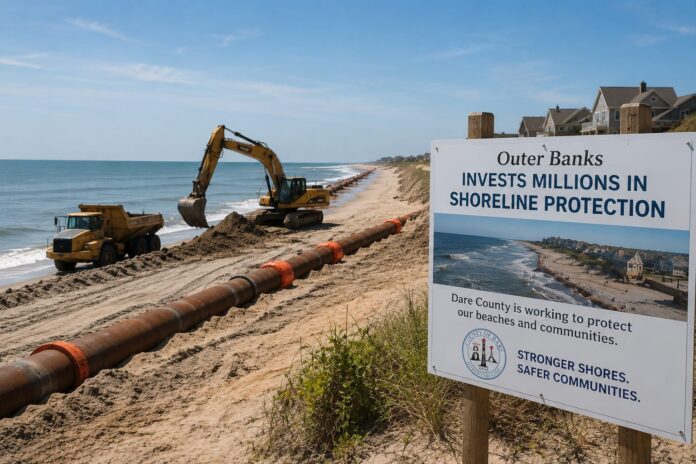
Dare County has launched an ambitious shoreline restoration project in Buxton, a village on one of North Carolina’s barrier islands. The county is implementing what officials describe as a substantial beach nourishment initiative designed to address severe erosion that has plagued the Outer Banks for several years. The project involves extracting 2 million cubic yards of sand from the ocean floor and redistributing it along a 3-mile stretch of deteriorated beaches.
The scope of this restoration effort represents the most expensive investment the county has undertaken for beach protection. The work will increase the width of shorelines by up to 75 feet in certain areas, creating a buffer zone intended to shield roads, homes, and critical infrastructure from future storm damage. County officials emphasize that beaches and dunes function as a natural defense system, similar to levees, preventing water from inundating vital infrastructure and threatening the region’s economic foundation.
- Dare County Manager Bobby Outten leading the restoration effort in Buxton
- 2 million cubic yards of sand being pumped onto beaches over a 3-mile stretch
- Shorelines will be widened by up to 75 feet in certain areas
- Total investment: $50 million funded by county taxpayers
Why It Matters
The Outer Banks region faces an existential economic threat from ongoing coastal erosion. The area’s economy depends heavily on tourism, fishing, and boating industries, which rely on accessible beaches and stable infrastructure. The erosion crisis directly endangers the roads, power lines, water systems, and internet connectivity that residents and businesses depend upon daily. Without intervention, continued erosion could render portions of the region economically unviable and physically inaccessible.
The investment also reflects the escalating costs associated with environmental challenges affecting American communities. The project represents a significant financial burden for county taxpayers and demonstrates how local governments must increasingly allocate resources toward infrastructure protection rather than economic development or other priorities. The erosion problem has accelerated over recent years, with documented housing losses creating urgency around finding solutions to prevent further damage to both public and private property.
- Tourism-dependent economy threatened by erosion of beaches and access roads
- 32 homes collapsed into the Atlantic since 2020 in the Cape Hatteras National Seashore area
- Multiple hurricanes in fall 2025 caused ocean waves to crash 70 to 100 yards inland
- Critical infrastructure including power lines, water systems, and internet connectivity at risk
Political and Public Context
Coastal erosion has become an increasingly pressing issue for communities along the Atlantic seaboard. The Outer Banks, already vulnerable due to their geographic position on barrier islands, have experienced particularly acute challenges. Environmental patterns over the past six years have intensified the erosion problem, with multiple severe storm events accelerating the pace of shoreline loss. This pattern reflects broader environmental trends affecting coastal regions nationwide.
The Dare County approach represents a pragmatic response to immediate threats, though officials acknowledge the solution is temporary rather than permanent. The project is actually the third beach nourishment attempt in the area, indicating that this strategy requires recurring investment and ongoing maintenance. County leadership has indicated that this work will need to be repeated approximately every five years, creating a cycle of substantial spending commitments that will impact local budgets indefinitely. This reality underscores the long-term financial implications communities face when addressing environmental challenges of this magnitude.
- Third beach nourishment project attempted in the area, indicating previous restoration efforts
- Severe erosion accelerated over the past six years
- Multiple hurricanes in 2025 caused unprecedented inland flooding and wave penetration
- Recurring costs anticipated every five years for maintenance and additional restoration work
Crews in Buxton, North Carolina, are racing to restore about three miles of eroded beachfront by pumping 2.8 million cubic yards of sand onto the Outer Banks shoreline. The multimillion-dollar effort comes after more than 30 homes have collapsed into the Atlantic since 2020.… pic.twitter.com/L5je1rrqFW
— CBS News (@CBSNews) August 6, 2026
What Happens Next
The immediate work involves the technical process of extracting sand from offshore locations and transporting it to the designated beach areas. This ongoing construction phase will establish the newly widened shoreline buffer intended to provide protection against near-term storm events and erosion. However, county officials have been transparent that this represents a temporary solution rather than a permanent fix for the underlying erosion challenge.
Looking forward, Dare County faces the prospect of repeating this substantial investment within approximately five years. This creates a long-term financial planning challenge for local government, as resources must be reserved for continued beach restoration projects. The community and regional leaders will need to evaluate whether additional strategies, improved drainage systems, or other interventions might reduce the frequency or cost of future nourishment projects. The success or failure of this current initiative may influence policy discussions about sustainable approaches to coastal protection across other vulnerable American communities.
- Beach nourishment work currently underway with sand extraction and redistribution ongoing
- Shoreline buffer expected to provide storm protection and infrastructure defense once completed
- Planning needed for anticipated project repetition within five years
- County officials evaluating long-term strategies for managing recurring erosion challenges
