

Story Highlights
- President Trump issued a statement addressing reports regarding U.S. missile inventory levels and manufacturing capabilities
- The president’s response focused on asserting that the nation maintains substantial munitions supplies and active production
- Questions have been raised about how the president’s denial strategy may have inadvertently drawn attention to the underlying claims
- The incident highlights ongoing tensions between the White House and media outlets reporting on defense matters
What Happened
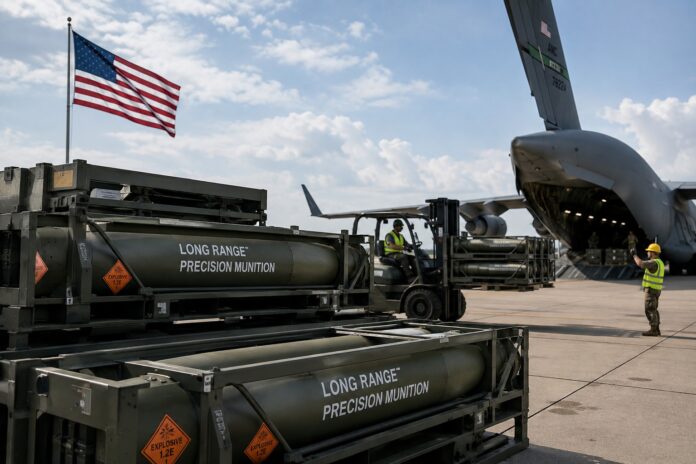
A Reuters report emerged describing concerns about U.S. supplies of highly accurate long-range missiles during ongoing tensions in the Middle East. In response, the president issued a statement on Truth Social asserting that the United States maintains massive quantities of munitions and that large amounts continue to be manufactured and shipped domestically as needed. The statement also indicated that individuals responsible for leaking classified information would be pursued, with references to potential legal consequences including lengthy prison sentences.
Media analysts subsequently examined the president’s response strategy and noted an apparent contradiction in his approach. By simultaneously denying the report while announcing investigations into the source of the leaked information, observers suggested that the administration’s reaction may have inadvertently validated the underlying claims the president sought to refute.
- Reuters report documented concerns about U.S. long-range missile inventory levels
- President Trump responded via Truth Social with assertions about munitions availability
- The statement included warnings about prosecuting individuals responsible for information leaks
- Media analysts noted potential contradictions in the denial strategy employed
Why It Matters
The incident raises important questions about how administrations communicate regarding sensitive national security matters. When government officials respond to reports about military capabilities or supply levels, the manner and substance of those responses can carry significant implications for public perception and international observers. The strategy employed in this case demonstrates how defensive communication tactics, while intended to refute damaging claims, can sometimes produce unintended consequences regarding credibility and message clarity.
Additionally, the approach highlights the inherent tension between protecting classified information and responding to public reporting about defense matters. Analysts noted that when government officials pursue legal action against information leakers, such prosecution efforts typically assume the underlying information presents genuine national security concerns. This dynamic creates a logical paradox: defending against reports by aggressively prosecuting their sources can paradoxically suggest that the original reporting possessed substantial accuracy and significance.
For military preparedness and public confidence, maintaining clarity about defense capabilities matters considerably. The manner in which the White House addresses concerns about weapons systems and inventory levels influences both domestic support for military initiatives and international assessments of American strength and readiness.
- Communication strategy regarding national security matters affects public and international perception
- Aggressive leak investigations may inadvertently validate underlying reporting claims
- Defense industry stakeholders and military planners require clear guidance on national capabilities
- Congressional oversight bodies depend on accurate information regarding military readiness assessments
Political and Public Context
The president’s administration has maintained an ongoing focus on addressing what it characterizes as unauthorized disclosures of sensitive information. Throughout various policy initiatives and defense matters, the White House has consistently emphasized the need to identify and hold accountable individuals responsible for leaking classified or sensitive government information. This approach reflects a broader commitment to information security within executive branch operations.
The response to the Reuters report fits within a larger pattern of media relations and national security communication. Over recent years, administrations across the political spectrum have grappled with managing the flow of information regarding military capabilities, weapons systems, and strategic readiness. The challenge of simultaneously denying inaccurate reporting while protecting genuine secrets represents a persistent tension in government communications.
Conservative commentators and administration supporters have emphasized the importance of protecting classified information and maintaining operational security around sensitive military matters. Meanwhile, others have focused on the transparency and credibility dimensions of how government responds to media inquiries about national defense topics.
- White House has prioritized identifying sources of classified information leaks
- Multiple administrations have struggled with balancing transparency and security regarding military matters
- Media outlets continue reporting on defense capabilities and supply levels despite government denials
- Congressional committees maintain oversight responsibilities for military preparedness and weapons acquisition
🇺🇸 The U.S. military’s arsenal is facing a major breaking point. The ongoing war with Iran is severely depleting American weapons stockpiles, triggering significant delays in arms deliveries to global allies.
After expending thousands of advanced precision missiles and… pic.twitter.com/wJSBtHBmSk
— TruthUnfiltered (@Truth_Unfiltere) August 10, 2026
What Happens Next
The president’s administration will likely continue its efforts to identify individuals responsible for the original Reuters report and any related information disclosures. Legal and investigative resources typically focus on tracing leaked information back to sources within government agencies and defense contractors. Such investigations may involve interviews with personnel, review of communication records, and coordination with relevant law enforcement agencies.
Congressional oversight committees will presumably examine both the underlying concerns about missile inventory levels and the administration’s response to public reporting on the matter. Members of Congress with responsibility for defense authorization and appropriations typically seek detailed briefings on weapons systems, production capabilities, and strategic reserve levels. The dynamics surrounding this particular report may prompt additional inquiries into current munitions supplies and long-range missile capabilities.
The broader question of how the government communicates about sensitive military matters will likely continue generating discussion among national security professionals, media commentators, and policymakers. The balance between protecting legitimate state secrets and maintaining public confidence in official statements represents an ongoing challenge for any administration managing complex defense and national security portfolios.
- Leak investigation efforts will continue within relevant government agencies and departments
- Congressional defense committees may request detailed classified briefings on missile inventory matters
- Media outlets will likely continue reporting on defense capabilities and supply concerns
- Administration officials may refine communication strategies regarding national security disclosures