

Story Highlights
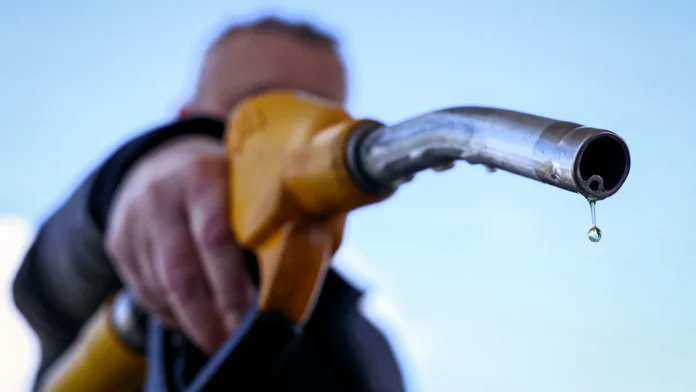
- Regular gasoline prices have climbed from a national average of $3.17 per gallon one year ago to $4.55 today, while diesel has surged approximately 60 percent from $3.54 to $5.65 per gallon as the prolonged closure of the Strait of Hormuz removes roughly one-fifth of the world’s oil supply from circulation.
- Analysts warn that prices will continue to rise as long as the Strait of Hormuz remains closed to shipping traffic, as a stalemate between President Trump and Iran traps oil and petroleum products in the Persian Gulf.
- Former U.S. Defense Secretary Robert Gates said the United States cannot simply “walk away” from the conflict, and Goldman Sachs has projected that elevated energy prices could persist through 2027.
What Happened
The U.S.-Israeli war on Iran, launched on February 28 without congressional approval, led to the prolonged closure of the Strait of Hormuz — the narrow waterway through which one-fifth of the world’s oil and natural gas typically passes. West Texas Intermediate crude oil, the U.S. benchmark, was trading at $58 per barrel as recently as December. It has since surged dramatically as the conflict stretches into its third month.
President Donald Trump’s administration has taken emergency steps to limit the damage, including draining oil from America’s Strategic Petroleum Reserve at the fastest pace on record, waiving shipping restrictions, and easing some sanctions on Russia and Venezuela. Those measures have slowed but not arrested the price rise, and analysts say structural relief requires one outcome above all others: reopening the strait.
Energy Secretary Chris Wright acknowledged Americans should expect higher prices at the pump for at least several more weeks. The White House has maintained that once the strait normalizes, prices will “plummet,” but that assurance has provided little comfort to drivers, trucking operators, and businesses facing escalating fuel costs in real time.
Iran has indicated it is in discussions with Oman to develop a mechanism for ensuring transit through the Strait of Hormuz, but military and diplomatic efforts appear to remain at a stalemate. Gates, in a Sunday television interview, argued that while American and Israeli strikes have “dramatically damaged and set back” Iran’s nuclear program, one main objective of eliminating the program entirely has not been fully achieved.
Why It Matters
The economic impact of the Iran war has moved from a foreign policy abstraction to a kitchen-table reality for millions of Americans. Gas prices at the pump are the most visible and psychologically potent inflation indicator available to voters, and the current trajectory puts them within range of Biden-era records that Trump spent years citing as evidence of Democratic economic failure.
Diesel prices are a particularly important indicator because the fuel powers tractor trailers and agricultural equipment — the physical infrastructure of supply chains. Some trucking companies are already adding fuel surcharges, and those costs are being passed on to consumers in the form of higher prices for goods across the economy. The downstream inflation effect is compounding pressure already present from earlier rounds of tariff-related price increases.
Inside the White House, options to lower prices are dwindling. Gas prices at some stations in Houston have been recorded at or near $5 per gallon. The political vulnerability is stark: Trump built his economic brand on energy abundance and low prices, and the divergence between that promise and current conditions gives Democrats a powerful and simple campaign message heading into the midterms.
Congressional Republicans are feeling the pressure acutely. The war powers votes in both chambers this week — where GOP leaders struggled to hold their members in line — reflect not just constitutional concerns about executive authority but the tangible electoral consequences of sustaining an unpopular conflict whose economic costs are felt daily by constituents.
Economic and Global Context
Analysts have warned that if escalation rather than resolution defines the next phase of the conflict, Brent crude oil futures could surge toward $150 per barrel, approaching the all-time high of $147.50 set in July 2008. At that price level, gasoline and diesel costs would significantly exceed Biden-era records, creating an economic and political crisis of the first order for the Republican Party heading into November.
Global markets are reacting to the uncertainty with persistent volatility. Shipping insurance premiums for vessels transiting near the Persian Gulf have risen sharply. European natural gas prices have climbed as the continent seeks to reduce reliance on supply chains exposed to the conflict zone. The International Monetary Fund and several national central banks have revised growth forecasts downward, citing the ongoing disruption to energy markets as a primary risk factor.
The price for a barrel of Brent crude oil moved from a high of $112 to below $107 before turning back higher in a single session, illustrating the hair-trigger sensitivity of markets to any development — diplomatic or military — that might alter the conflict’s trajectory. That volatility is itself an economic cost, making it difficult for businesses to plan capital investment, hire workers, or set prices with any confidence.
Implications
The administration faces a fundamental dilemma: the military campaign was designed to eliminate Iran’s nuclear program and project American strength, but its duration has created an economic vulnerability that is actively undermining the president’s domestic political standing. The longer the stalemate holds, the deeper the damage to consumer confidence, real wages, and Republican electoral prospects.
The reality is that Trump has only one lever left to slash gas prices: getting the Strait of Hormuz reopened. Without that, no combination of reserve releases, sanctions waivers, or domestic production incentives can fully offset the removal of one-fifth of global oil supply from the market.
For American voters, the summer driving season now arrives under conditions of sustained energy inflation that will make every fill-up a reminder of the war’s costs. The midterm elections are roughly five months away, and the Republican Party’s ability to hold its House and Senate majorities may ultimately hinge not on any legislative accomplishment in Washington but on whether the administration can find a diplomatic or military path that reopens the waterway and allows prices to fall before ballots are cast.
Sources
