

Story Highlights
- Defense Secretary Pete Hegseth champions new partnerships with five non-Ivy League colleges.
- The initiative aims to foster patriotic leadership and military discipline.
- Hegseth’s actions mark a strategic shift from elite universities to institutions that emphasize character and duty.
- New program, ‘America’s Corps of Cadets,’ will enhance military education and officer commissioning.
What Happened
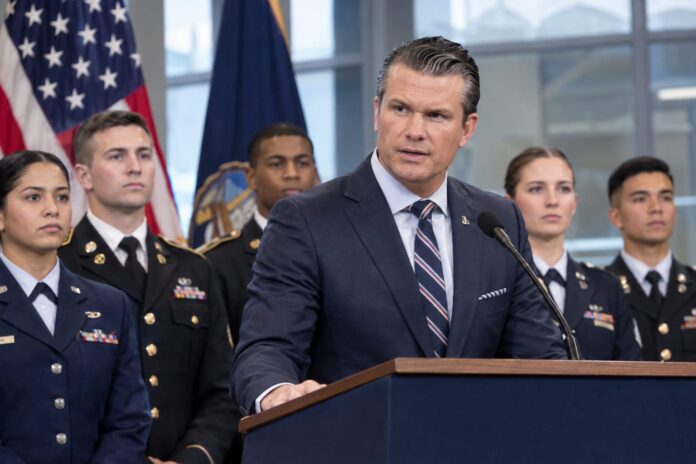
In a significant move aimed at reshaping military education, Defense Secretary Pete Hegseth announced on Wednesday a series of new partnerships with five non-Ivy League colleges and universities. This announcement was made during a speech at Quantico, Virginia, where Hegseth emphasized the need for the military to distance itself from what he described as the ‘toxic indoctrination’ prevalent in elite institutions. The selected schools include Louisiana State University (LSU), Liberty University, Tuskegee University, Mississippi State University, and Hillsdale College.
Hegseth stated, ‘We’re partnering with a new crop of premier higher ed institutions.’ He elaborated that these schools have stepped forward to answer the call to duty and will establish new corps of cadets in partnership with the Department of War, a term he prefers over the more commonly used Department of Defense. This initiative, dubbed ‘America’s Corps of Cadets,’ is designed to cultivate a new generation of military leaders who embody the values of patriotism and character.
- The announcement was made on Wednesday, with the program set to commence within the month.
- Hegseth previously restricted military officers from attending graduate programs at elite universities.
- Schools in the new program will receive ‘Honor School’ status, granting them priority in officer commissioning.
- The initiative follows the Pentagon’s recent selection of the University of North Carolina at Chapel Hill and Virginia Tech for a fellowship program for senior military officers.
Why It Matters
This initiative is not merely a shift in partnerships; it represents a broader ideological battle over the direction of military education and the values that underpin it. Hegseth’s decision to partner with non-Ivy League institutions is a clear rejection of the prevailing academic culture at elite universities, which he argues has become increasingly disconnected from the values of duty, honor, and service. By focusing on schools that emphasize these principles, the Pentagon aims to cultivate leaders who are not only skilled in military tactics but also grounded in a strong sense of character and patriotism.
The implications of this initiative are profound. It signals a commitment to fostering a military culture that prioritizes traditional values over what some perceive as a liberal agenda prevalent in elite academia. Hegseth’s actions could lead to a significant transformation in how military leaders are educated and trained, potentially resulting in a more cohesive and ideologically aligned officer corps.
- The initiative could lead to a new generation of military leaders who are more aligned with conservative values.
- It may also encourage other non-Ivy institutions to enhance their military programs and partnerships.
- The focus on character and duty could reshape the military’s approach to leadership development.
- Hegseth’s actions may further polarize the relationship between the military and elite academic institutions.
Political and Public Context
Hegseth’s announcement comes in the wake of growing concerns about the ideological leanings of elite universities. Earlier this year, he ordered the cancellation of military attendance at several prestigious institutions, including Harvard, Brown, Princeton, and Yale, citing their role in promoting what he termed ‘the enemy’s wicked ideologies.’ This move was part of a broader strategy to realign military education with values that resonate more closely with the American public.
The establishment of ‘America’s Corps of Cadets’ is a continuation of this strategy, aiming to create a pipeline of leaders who are not only competent but also committed to the principles of service and patriotism. The program’s implementation is expected to commence within the month, with the selected institutions receiving ‘Honor School’ status, which will grant them priority in officer commissioning.
- Hegseth’s previous restrictions on military attendance at elite universities reflect a growing trend of skepticism towards these institutions.
- The Pentagon’s recent selection of UNC and Virginia Tech for a fellowship program indicates a shift towards more accessible military education.
- Hegseth’s background as an alumnus of Harvard and Princeton adds a layer of complexity to his criticisms of these institutions.
- The establishment of ‘America’s Corps of Cadets’ may inspire similar initiatives in other sectors of education and training.
What Happens Next
Looking ahead, the success of ‘America’s Corps of Cadets’ will depend on its implementation and the response from both the military and the selected institutions. The program aims to enhance military education by instilling a sense of duty and character among cadets, but it will require ongoing support and commitment from the Pentagon and the participating schools. As the program rolls out, it will be crucial to monitor its impact on officer commissioning rates and the overall culture within the military.
Moreover, this initiative raises several open questions. Will other non-Ivy institutions seek to join this program? How will the military’s relationship with elite universities evolve in the coming years? And what will be the long-term effects on military leadership and culture? These questions will be pivotal in shaping the future of military education in the United States.
- The program’s implementation will begin within the month, with ongoing evaluations expected.
- Potential interest from other non-Ivy institutions could expand the initiative.
- Monitoring the impact on officer commissioning rates will be essential for assessing success.
- Future developments may further influence the military’s relationship with elite academic institutions.
