

Story Highlights
- The US Treasury’s $6 billion buyback plan was met with skepticism from bond investors.
- Bond yields reached their highest levels since the 2008 financial crisis.
- Rising inflation and geopolitical tensions are contributing to investor hesitance.
- The Federal Reserve faces increased pressure to manage inflation amid these developments.
What Happened
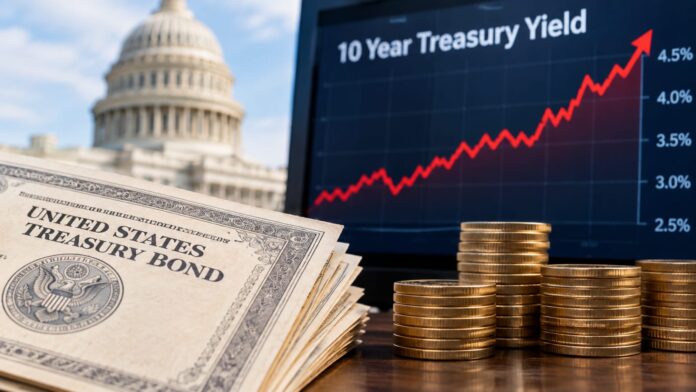
On Wednesday, the US Treasury’s attempt to stabilize the bond market through a $6 billion buyback plan was met with significant resistance from investors. Treasury Secretary Scott Bessent announced the initiative in a bid to alleviate a selloff that has been pressuring interest rates. However, the announcement failed to convince bond buyers, leading to a continued rise in yields, particularly on 10-year treasuries, which reached a three-year high.
The backdrop of this situation is marked by rising inflation and geopolitical uncertainties, particularly stemming from the ongoing conflict in Iran. These factors have historically made US treasuries, considered one of the safest investment vehicles, less appealing to investors. The yield on the 30-year treasury bond has surged to approximately 5.2%, a level not seen since the financial crisis of 2008.
In an attempt to alleviate the bond market, Bessent on August 19 announced the treasury would at least double its typical buyback operation. The move is meant to stabilize the market: fewer bonds on the market should mean that yields go down. But in the weeks since the announcement, treasury yields have continued to rise. Even after Bessent announced the operation would target $6 billion worth of government bonds, yields on Wednesday continued to rise.
- Scott Bessent announced the buyback plan on September 6, 2026.
- The yield on 10-year treasuries rose to a three-year high following the announcement.
- The US government debt reached $40 trillion for the first time in history in August 2026.
- The annualized inflation rate peaked at 3.4% in July 2026.
Why It Matters
The implications of the Treasury’s failed buyback plan are significant. Higher bond yields typically translate to increased borrowing costs for consumers and businesses alike. This means that loans tied to the bond market, such as mortgages, student loans, and auto loans, could see higher interest rates. As a result, consumers may face increased financial strain, which could dampen economic growth.
Moreover, the rising yields put additional pressure on the Federal Reserve to take action against inflation. The Fed’s dual mandate requires it to manage both inflation and employment, and the current economic climate presents a challenging balancing act. With inflation rates already elevated, the Fed may be compelled to raise interest rates further, which could have a cascading effect on the economy.
- Higher borrowing costs could lead to reduced consumer spending.
- The Federal Reserve may be forced to raise interest rates to combat inflation.
- Increased financial strain on consumers could slow down economic growth.
- Investors may continue to shy away from US treasuries, impacting government financing.
Political and Public Context
The current situation is not an isolated incident but rather part of a broader trend in the bond market. The US government debt has ballooned to unprecedented levels, reaching $40 trillion in August 2026, which is double the amount from just a decade ago. This surge in debt has raised concerns about the sustainability of government borrowing and its long-term implications for the economy.
Additionally, the geopolitical landscape, particularly the ongoing conflict in Iran, has contributed to market volatility. Investors are wary of the potential for further escalation, which could exacerbate inflationary pressures, particularly in energy markets. Brent crude oil prices have recently surpassed $100 per barrel, reflecting the heightened tensions in the Middle East.
- The US government debt reached $40 trillion in August 2026.
- Brent crude oil prices rose above $100 per barrel amid geopolitical tensions.
- The annualized inflation rate hit a three-year high in May 2026.
- The Federal Reserve’s dual mandate is increasingly challenged by rising inflation.
Bond Market Rebuffs Treasury’s $6 Billion Plan To Reduce Borrowing Costs: The 10-year yield rose to its highest level in three years, suggesting investors were underwhelmed by the details of a move to buy back government bonds (NYT) https://t.co/TTMUjWO7TU
— Candice Rose (@CandiceRose) September 10, 2026
What Happens Next
Looking ahead, the bond market’s reaction to the Treasury’s buyback plan raises several questions about the future of US fiscal policy and economic stability. Investors will be closely monitoring the Federal Reserve’s next moves, particularly in light of the rising inflation and bond yields. The Fed may need to adopt a more aggressive stance to restore confidence in the bond market and manage inflation effectively.
Furthermore, the Treasury may need to reconsider its approach to managing government debt and explore alternative strategies to stabilize the bond market. This could involve larger buyback operations or other measures aimed at reducing the supply of bonds in the market. The ongoing geopolitical tensions will also play a crucial role in shaping market sentiment and investor behavior.
- The Federal Reserve may raise interest rates in response to rising inflation.
- The Treasury could explore larger buyback operations to stabilize the bond market.
- Investors will be watching for further developments in the geopolitical landscape.
- Market sentiment may shift as economic indicators evolve in the coming months.
