
Story Highlights
- President Trump asserts that the Federal Reserve’s recent interest rate hike is politically motivated.
- He expresses confidence in his appointee, Kevin Warsh, despite the rate increase.
- The president emphasizes the need for lower interest rates to foster economic growth.
- Trump criticizes the Federal Reserve board as being hostile and politically driven.
What Happened
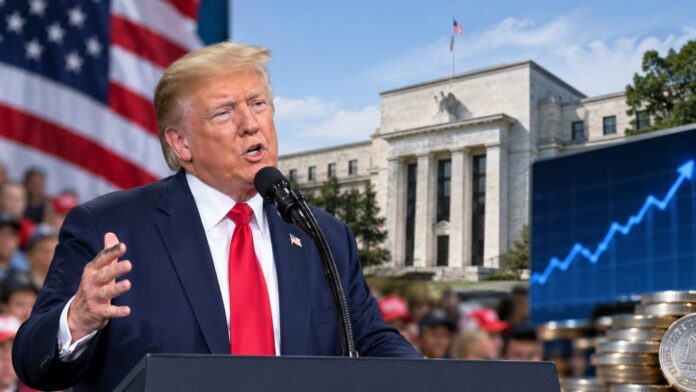
During a recent rally in North Carolina, President Trump addressed the controversial decision by the Federal Reserve to raise interest rates, a move he claims is politically charged and detrimental to the economy. Speaking to reporters, he defended his choice of Kevin Warsh as the Federal Reserve chair, asserting that Warsh’s vote to increase rates was not a reflection of his independence but rather a response to the pressures exerted by a board he described as ‘hostile’ and ‘political’.
Trump’s remarks came in the wake of the Federal Reserve’s decision to raise interest rates, a move that has sparked debate among economists and political analysts alike. The president’s comments highlight his ongoing concerns about the economic implications of such decisions, particularly as the nation approaches a critical election cycle. He reiterated that the current interest rates do not reflect the nation’s strong credit and are detrimental to economic growth.
- Trump criticized the Federal Reserve’s board for being politically motivated.
- He reiterated his confidence in Kevin Warsh, despite the rate hike.
- The president stated that interest rates are too high and not reflective of the nation’s strong credit.
- Trump suggested that the board’s decisions are detrimental to economic growth.
Why It Matters
The implications of the Federal Reserve’s interest rate hike are significant, particularly in the context of the current economic climate. Higher interest rates can lead to increased borrowing costs for consumers and businesses, potentially stifling economic growth. Trump’s assertion that the rate hike is politically motivated raises questions about the independence of the Federal Reserve and its ability to make decisions based solely on economic indicators.
Moreover, the president’s comments reflect a broader concern among many conservatives regarding the Federal Reserve’s role in the economy. By framing the rate hike as a politically charged decision, Trump seeks to rally support among his base, emphasizing the need for policies that prioritize economic growth and stability. The potential consequences of these decisions could reverberate through the economy, affecting everything from consumer spending to business investment.
- Higher interest rates could lead to reduced consumer spending and investment.
- The political framing of the rate hike may influence public perception of the Federal Reserve.
- Trump’s comments could galvanize support for his economic policies ahead of the elections.
- Potential backlash against the Federal Reserve could lead to calls for reform or changes in leadership.
Political and Public Context
The Federal Reserve’s decision to raise interest rates is not an isolated event but part of a broader trend in monetary policy aimed at controlling inflation and stabilizing the economy. Historically, interest rate hikes have been employed as a tool to combat rising inflation, but they can also have unintended consequences, particularly in a politically charged environment.
Trump’s criticism of the Federal Reserve is not new; during his presidency, he frequently expressed dissatisfaction with the central bank’s decisions, often attributing them to political motivations rather than economic necessity. This ongoing tension between the White House and the Federal Reserve underscores the challenges of maintaining an independent monetary policy in a highly politicized environment. The relationship between the White House and the Federal Reserve is often fraught with tension, and Trump’s remarks may further complicate this dynamic.
- The Federal Reserve has a history of facing political pressure during economic downturns.
- Trump’s previous criticisms of the Fed during his presidency set a precedent for current remarks.
- The relationship between the White House and the Federal Reserve is often fraught with tension.
- Economic indicators suggest a complex landscape for future monetary policy decisions.
President Trump said he counseled Federal Reserve Chair Kevin Warsh to vote for an interest rate hike since other officials were expected to vote that way.
“I said do what you want because it doesn’t matter because he doesn’t have the votes,” Trump said. https://t.co/V0ityDcnti
— The Washington Post (@washingtonpost) September 17, 2026
What Happens Next
Looking ahead, the Federal Reserve’s decisions will continue to be scrutinized, particularly as the nation approaches the upcoming elections. Trump’s comments may influence public opinion and shape the narrative surrounding the Federal Reserve’s actions. As the economy evolves, the central bank will need to navigate the delicate balance between controlling inflation and supporting growth.
Moreover, the potential for further interest rate hikes looms large, and the implications for consumers and businesses could be profound. The president’s call for lower rates may resonate with many Americans who are feeling the pinch of rising costs. As the political landscape shifts, the Federal Reserve’s actions will likely remain a focal point of debate and discussion. Future Federal Reserve meetings will be critical in shaping monetary policy direction.
- Expect continued scrutiny of the Federal Reserve’s decisions leading up to the elections.
- Potential for further interest rate hikes could impact consumer behavior.
- Trump’s economic policies may gain traction among voters concerned about rising costs.
- Future Federal Reserve meetings will be critical in shaping monetary policy direction.