

Story Highlights
- Rep. Thomas Massie introduces a resolution to impeach Defense Secretary Pete Hegseth.
- The resolution was kept secret from GOP leaders to avoid interference.
- Massie expresses concerns over military operations and civilian casualties.
- Support for Hegseth from the White House and Pentagon underscores his leadership.
What Happened
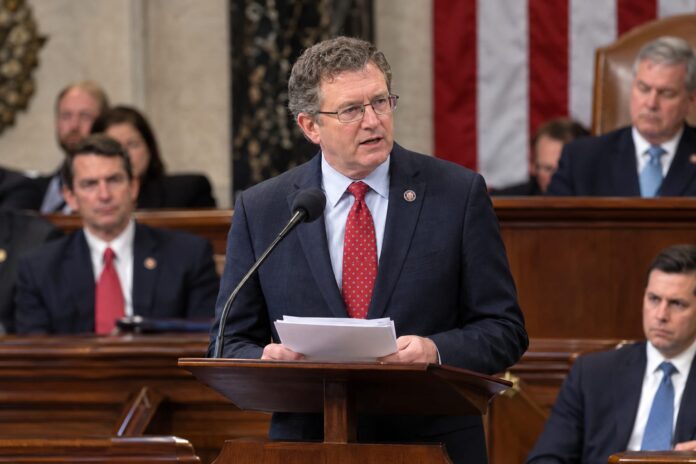
In a surprising move that has sent ripples through the Republican Party, Rep. Thomas Massie (R-Ky.) announced on Tuesday that he had introduced a resolution to impeach Defense Secretary Pete Hegseth. What makes this development particularly noteworthy is that Massie chose to keep this resolution a secret from GOP leaders, citing a desire to avoid revealing his strategy. During an appearance on CNN’s ‘The Source,’ he explained, ‘I didn’t want to show it to anybody. I was afraid that they would do something to subvert me getting on the floor for an hour and 20 minutes and reading these articles.’
This revelation comes at a time when tensions are high regarding military operations, particularly in Iran, where Massie has been a vocal critic of the Trump administration’s approach. He expressed grave concerns about the potential for escalation into a nuclear conflict, stating, ‘This is a hot war. This could become a nuclear war, and in the interim, even if it doesn’t, there are civilian casualties that are racking up greater than they would have otherwise.’
- Massie introduced the impeachment resolution on the House floor on Tuesday.
- He has not received a response from House Speaker Mike Johnson regarding the resolution.
- Massie previously lost his primary reelection bid to a Trump-backed candidate.
- Attorney General Todd Blanche defended Hegseth during a press briefing.
Why It Matters
The implications of Massie’s secretive approach to the impeachment resolution are significant. It highlights the growing divisions within the GOP, particularly regarding military policy and the direction of the party under President Trump. While some members of the party remain staunch supporters of the president’s military strategies, others, like Massie, are increasingly vocal about their dissent. This internal conflict could have far-reaching consequences for the party’s unity and effectiveness moving forward.
Moreover, the resolution itself raises questions about the accountability of military leaders and the extent to which they should be held responsible for decisions that lead to civilian casualties. Massie’s argument that Hegseth has degraded the Department of Defense’s ability to minimize these casualties is a serious accusation that warrants further examination. The potential fallout from this impeachment effort could lead to a reevaluation of military leadership and strategy within the GOP.
- The GOP faces internal divisions that could impact future elections.
- Massie’s actions may embolden other dissenting voices within the party.
- Hegseth’s leadership is being scrutinized, which could affect his position.
- The resolution could set a precedent for future impeachment efforts against military officials.
Political and Public Context
To fully understand the significance of Massie’s actions, it is essential to consider the broader context of the Republican Party’s stance on military operations and leadership. The party has historically been seen as the champion of a strong military, and President Trump’s administration has emphasized a robust defense strategy. However, the emergence of voices like Massie’s indicates a shift in some factions of the party, where concerns about military engagement and its consequences are becoming more pronounced.
Additionally, Massie’s previous attempts to limit President Trump’s military operations in Iran further illustrate his position within the party. His loss in the primary to a Trump-backed candidate, Ed Gallrein, suggests that while there is a faction of the GOP that supports a more interventionist approach, there is also a growing concern about the implications of such policies. This duality within the party could lead to a reevaluation of what it means to be a Republican in the current political landscape.
- Massie has previously introduced resolutions limiting military operations.
- The GOP has passed several war powers resolutions with bipartisan support.
- Hegseth’s campaign efforts for Gallrein indicate his influence within the party.
- The Pentagon has publicly supported Hegseth’s leadership amidst the controversy.
Massie: GOP leaders found ‘other Republicans’ who would join Hegseth impeachment pushhttps://t.co/KaPp0uUQ2T
— The Hill (@thehill) September 17, 2026
What Happens Next
The future of Massie’s impeachment resolution remains uncertain. With House Speaker Mike Johnson having 48 hours to respond, the next steps will be crucial in determining whether this effort gains traction within the GOP. If Johnson chooses to bring the resolution to a vote, it could lead to a significant showdown within the party, forcing members to take a public stance on Hegseth’s leadership and the broader military strategy endorsed by the Trump administration.
Moreover, the response from other Republican lawmakers will be telling. Will they rally behind Massie, or will they distance themselves from his controversial approach? The outcome could either strengthen or weaken the faction of the party that is critical of military operations, potentially reshaping the GOP’s identity moving forward.
- House Speaker Mike Johnson’s response will be pivotal in the coming days.
- Other GOP members may choose to support or oppose Massie’s resolution.
- The outcome could influence future military policy discussions within the party.
- Massie’s actions may inspire similar efforts from other lawmakers.
