

Story Highlights
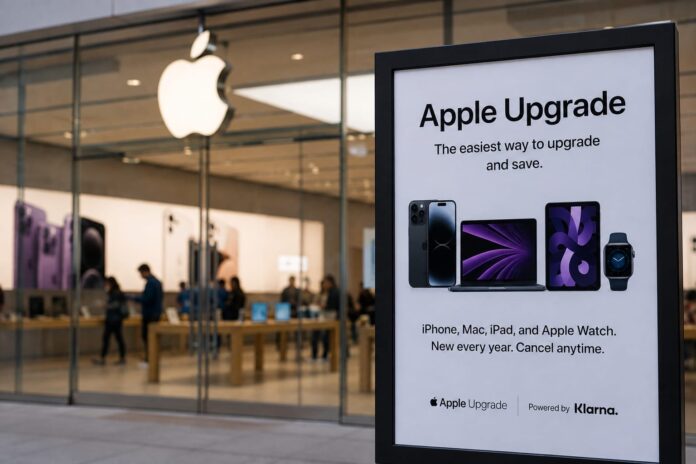
- Apple has announced a new monthly lease program called Apple Upgrade, replacing its long-standing iPhone Upgrade Program.
- The program is structured as a true legal lease through fintech company Klarna, meaning consumers do not own their devices until all payments are completed.
- Missed payments could obligate consumers to return devices or pay off remaining balances immediately.
- Code discovered in a beta version of iOS 27 suggests potential feature restrictions tied to missed lease payments, raising significant consumer concerns.
What Happened
Apple has officially announced a new monthly leasing program that fundamentally changes how millions of Americans can acquire iPhones, MacBooks, iPads, and Apple Watches. The program, branded as Apple Upgrade, replaces the company’s iPhone Upgrade Program that had been in place since 2015 and is structured through a partnership with Klarna, a widely recognized buy-now, pay-later financial services company.
The critical distinction between the old and new programs centers on ownership. Under the previous iPhone Upgrade Program, monthly payments functioned as installments toward a loan, meaning consumers were on a path to full ownership from the start. Under the new Apple Upgrade arrangement, consumers are legally renting their devices. Ownership is not transferred until the very final payment is completed, a shift that carries meaningful legal and practical consequences for device holders.
- Apple Upgrade launched as a formal lease agreement, not a loan or installment plan.
- Klarna serves as the financial partner facilitating the lease terms.
- Missing three consecutive payments obligates the consumer to return the device or pay the full remaining balance immediately.
- Beta code within iOS 27 reportedly contains provisions for restricting device features tied to payment status.
Why It Matters
The shift from ownership to leasing carries implications that go beyond simple financial arrangements. Apple devices are among the most personal pieces of technology consumers use daily. iPhones and iPads store intimate photographs, health and fitness data, private communications, and sensitive financial information. Under a leasing model, both Apple and Klarna retain a degree of legal authority over the physical device that consumers may not fully appreciate at the point of purchase.
Perhaps most alarming to consumer advocates is the discovery of code present in a beta version of iOS 27 that appears to enable restrictions on device functionality linked to missed lease payments. While an Apple spokesperson indicated that no functionality changes would occur due to missed payments, the existence of such code in the operating system has not been explained and remains an open question. The combination of third-party financial control, potential remote device restrictions, and the deeply personal nature of stored data creates a scenario that many consumers may find deeply uncomfortable.
- Consumers storing sensitive personal data on leased devices may have reduced legal protections compared to owned devices.
- Klarna and Apple both maintain control over the physical hardware throughout the lease period.
- Unexplained iOS 27 code suggests the infrastructure for feature restrictions already exists at the software level.
- Lower-income consumers who rely on monthly payment options are disproportionately affected by these new terms.
Political and Public Context
The Apple Upgrade announcement arrives amid a broader national conversation about digital ownership rights, consumer data privacy, and the growing power of large technology companies to shape how Americans access and use products. The trend of moving from ownership models to subscription and leasing models has accelerated across multiple industries, from automobiles to software, and Apple’s move signals that even personal electronics are now fully part of that shift.
Consumer rights advocates have long warned about the dangers of the so-called right-to-repair movement’s counterpart: the drift toward arrangements where individuals never truly own the technology they depend on. The Apple situation adds a new layer by tying financial services from a third-party lender directly into the hardware and software ecosystem of one of the world’s most powerful technology companies. This creates a web of contractual relationships that most everyday consumers are unlikely to scrutinize before signing up.
- Leasing models have become increasingly common across the U.S. economy, from vehicles to software platforms.
- Right-to-repair advocates have raised ongoing concerns about consumer control over personal electronics.
- Klarna operates primarily as a buy-now, pay-later service, making this lease arrangement a departure from its standard model.
- Apple’s market dominance means that the terms it sets often become industry-wide standards followed by competitors.
What Happens Next
Consumer advocacy groups and legal analysts are expected to examine the fine print of the Apple Upgrade lease agreement closely in the coming weeks. The question of whether Apple or Klarna can legally restrict device functionality mid-lease, and under what specific circumstances, is likely to attract regulatory scrutiny at both the state and federal levels. Several state attorneys general have previously shown interest in consumer protection cases involving major technology firms.
The rollout of iOS 27, which reportedly contains code enabling payment-linked device restrictions, will be closely watched by independent developers and researchers. If those restrictions are activated or expanded in the final release, it could trigger legislative responses aimed at protecting consumers who rely on leased devices for essential daily functions including communication, healthcare management, and financial access.
- Regulatory agencies and state attorneys general may open inquiries into the terms of the Apple Upgrade leasing agreement.
- The final release of iOS 27 will be scrutinized for any activation of payment-linked feature restrictions.
- Consumer advocacy organizations are expected to publish guidance helping users understand what leasing versus owning means for their data rights.
- Competing smartphone manufacturers may face pressure to clarify whether similar leasing models are under consideration.
