

Story Highlights
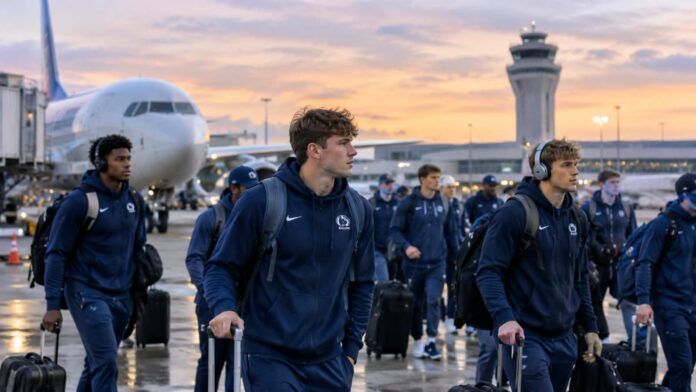
- A nationwide FAA ground stop beginning Friday afternoon at approximately 4 p.m. EST halted air travel across the United States, affecting multiple college football teams scheduled to fly to their destinations.
- Teams from major conferences including the Big 12, Big Ten, and independent programs were stranded or grounded, with at least 13 universities directly impacted by the aviation halt.
- The FAA attributed the ground stop to a temporary telecommunications outage affecting all Air Route Traffic Control Centers, prompting the precautionary measure on safety grounds.
- Federal officials indicated there was no evidence of a malicious attack on air travel infrastructure as investigation into the communication issue continued into Friday evening.
What Happened
A nationwide ground stop issued by the Federal Aviation Administration on Friday afternoon created widespread disruption across the college football landscape, stranding teams at airports and preventing scheduled departures. The aviation halt began at approximately 4 p.m. Eastern Standard Time and extended into Friday evening, affecting travel plans for numerous NCAA programs preparing for weekend games.
The grounding order stemmed from a temporary telecommunications outage impacting all Air Route Traffic Control Centers nationwide. Transportation Secretary Sean Duffy announced the order via social media at 4:16 p.m., explaining that the measure was taken following a communication issue that compromised air traffic control operations. The FAA subsequently issued guidance that every flight had been accounted for and that international flights would be evaluated on a case-by-case basis as operations resumed.
- Big 12 Conference schools Baylor University, Kansas State University, University of Utah, and Arizona State University were among the affected programs
- Big Ten Conference representatives University of Minnesota, Purdue University, and University of Washington experienced travel disruptions
- Additional impacted universities included Mississippi, Tennessee, Texas, Oregon State, Boise State, University of North Texas, and University of Wyoming
- The ground stop began at 4 p.m. EST due to a telecommunications outage affecting all Air Route Traffic Control Centers
Why It Matters
The ground stop created significant logistical challenges for collegiate athletic programs operating under strict scheduling constraints and conference requirements. College football operates on compressed weekly schedules with limited flexibility for rescheduling games, making travel disruptions particularly consequential for teams dependent on air transportation to reach distant venues. The incident highlighted vulnerabilities in air traffic control infrastructure and raised questions about contingency planning for critical aviation systems.
For the affected universities, the ground stop threatened to derail carefully orchestrated travel plans that teams had prepared in advance. Coaching staffs, players, support personnel, and equipment required precise coordination to ensure timely arrival at game destinations. The disruption created uncertainty regarding potential impacts on game schedules themselves, particularly for teams competing in major conferences where television broadcasts had already been finalized.
- Teams faced potential scheduling complications and uncertainty regarding game kickoff times or possible postponements
- Athletic departments incurred financial impacts from extended travel delays and potential rebooking requirements
- The broader aviation and commerce sectors were affected by the nationwide grounding impacting hundreds of daily flights
- Heightened awareness emerged regarding the criticality of telecommunications redundancy in air traffic control operations
Political and Public Context
The ground stop occurred during a period of increased scrutiny regarding aviation safety and infrastructure reliability in the United States. Federal aviation authorities and the transportation sector have faced ongoing examinations of system vulnerabilities and the adequacy of backup protocols for critical operational infrastructure. The incident demonstrated the interdependence between federal aviation systems and the broader economy, affecting commercial air travel, business operations, and emergency response capabilities.
Homeland Security Secretary Markwayne Mullin addressed public concerns by indicating to reporters that no evidence suggested a malicious attack on air travel infrastructure. This reassurance was significant given contemporary security concerns and the potential for public anxiety surrounding critical infrastructure vulnerabilities. Federal investigators immediately began examining the telecommunications outage to determine root causes and prevent future occurrences.
- Transportation Secretary Sean Duffy coordinated the federal response and communicated the cause of the ground stop publicly
- Homeland Security Secretary Markwayne Mullin addressed national security concerns by confirming no evidence of a malicious attack
- The FAA implemented precautionary protocols citing extraordinary circumstances and safety considerations as justification for the comprehensive ground stop
- The incident occurred within the context of ongoing discussions regarding infrastructure reliability in critical U.S. systems
The FAA lifted a four-hour ground stop for all flights in the US on Friday, which impacted many college football teams' travel plans. https://t.co/Aq8F9cNRPj
— USA TODAY (@USATODAY) November 14, 2026
What Happens Next
College football teams began working to reschedule flights and adjust travel plans as the ground stop was lifted and air traffic control operations resumed. Athletic departments coordinated with airline partners to prioritize rebooked flights and ensure teams could reach their destinations with minimal delay. Coaching staffs assessed whether the travel disruptions would affect team preparation and practice schedules before scheduled competitions.
Federal investigators will continue examining the telecommunications outage affecting the Air Route Traffic Control Centers to identify root causes and implement corrective measures. The FAA and transportation officials will likely review backup systems and redundancy protocols to ensure resilience against future failures. This investigation may result in policy recommendations or infrastructure improvements affecting nationwide air traffic control operations.
- Affected college football teams must complete rebooked flights and resume travel to their scheduled destinations
- Federal investigators will conduct comprehensive analysis of the telecommunications outage and Air Route Traffic Control Center vulnerabilities
- The FAA may implement enhanced protocols or infrastructure improvements based on investigation findings
- Collegiate athletic conferences will likely develop or review contingency plans for addressing future travel disruptions