

Story Highlights
- President Trump described Vice President Vance as a talented and good person when asked about potential 2028 endorsement
- The president emphasized that the two have not discussed a presidential run and that focus should remain on upcoming midterm elections
- Vance expressed confidence he would receive Trump’s endorsement if he chooses to run, though he acknowledged not having formally discussed the matter
- The White House strategy prioritizes defending Republican congressional majorities before considering future presidential dynamics
What Happened
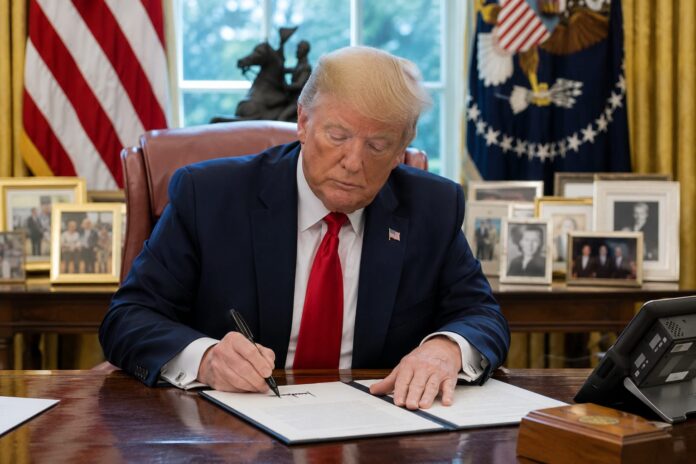
During an exchange in the Oval Office on Tuesday, President Trump offered praise for his vice president when reporters inquired about endorsing Vance for the 2028 presidential race. The president characterized Vance as possessing considerable talent and personal qualities while simultaneously declining to commit to any future endorsement. Trump indicated that substantive conversations about a potential presidential bid have not occurred between the two, noting that such discussions remain premature given the political calendar ahead.
Vance had previously stated in a Monday interview that he believes the president would back his candidacy should he decide to pursue the presidency. The vice president acknowledged the power of such an endorsement while also suggesting that allowing a race to develop organically without predetermined support could have merit. Vance maintained that he has not yet formally broached the subject with Trump, leaving the discussion theoretical rather than concrete at this stage.
- Exchange occurred Tuesday in the Oval Office with both president and vice president present
- Vance made separate comments Monday predicting he would receive Trump’s endorsement if running
- President stated focus must remain on midterm elections before considering 2028 dynamics
- Both officials confirmed no formal discussions have taken place regarding 2028 candidacy
Why It Matters
The interaction reveals careful positioning by both the president and his administration as the political landscape begins anticipating the next presidential cycle. By offering measured praise for Vance while maintaining strategic ambiguity, Trump preserves flexibility in determining Republican Party direction beyond his current term. This approach allows the administration to focus organizational energy and messaging on the critical midterm elections without becoming entangled in premature succession debates that could distract from immediate legislative and electoral priorities.
For Vance, the exchange demonstrates confidence in his standing with the president while acknowledging the importance of establishing an independent political identity. The vice president’s nuanced position—expressing faith in potential support while avoiding an appearance of presumption—reflects sophisticated political calculation. Should Vance eventually pursue higher office, his early cultivation of credibility with Republican voters independent of Trump’s endorsement could strengthen his candidacy by suggesting self-made viability rather than mere inherited support.
- President’s noncommittal stance keeps future options open for Republican field development and party unity
- Midterm focus allows administration to concentrate resources on defending congressional majorities critical to legislative agenda
- Vance’s positioning establishes him as potential 2028 contender while maintaining current executive responsibilities
- Strategic ambiguity prevents divisive 2028 factionalism from undermining 2026 election performance
Political and Public Context
Vice President Vance has emerged as a prominent figure within conservative and Republican circles since joining the ticket. His intellectual contributions to populist-nationalist conservative thought, combined with his executive experience in the current administration, position him favorably among GOP voters considering the party’s future direction. The widespread speculation about his potential 2028 ambitions reflects genuine interest within party ranks about who might carry forward the administration’s policy agenda and political movement.
The emphasis on midterm elections aligns with established White House strategy to prioritize defending Republican congressional control before entertaining internal succession discussions. Historical precedent shows that early endorsements in presidential contests can fragment the supporting party and create unnecessary divisions before general election dynamics fully materialize. The president’s deliberate focus on near-term electoral performance demonstrates sophisticated understanding of how internal Republican dynamics interact with broader electoral strategy and party sustainability.
- Vance has been consistently mentioned as top Republican prospect for 2028 presidential considerations
- 2026 midterm elections represent crucial test of Republican legislative agenda and public approval
- Trump administration strategy emphasizes defending congressional majorities before addressing succession
- Vice president’s role includes both governing responsibilities and emerging as potential presidential candidate
Donald Trump Dodges JD Vance 2028 Endorsement Question, With Vance Right Behind Him #HuffingtonPost https://t.co/ACsiFL7HXm
— #TuckFrump (@realTuckFrumper) October 21, 2026
What Happens Next
The immediate focus within the White House and Republican Party apparatus will remain on midterm campaign preparation and messaging. The president and his team will work to amplify administration achievements and contrast Republican positions with Democratic alternatives ahead of 2026 voting. This period allows Vance to demonstrate his value as an executive administrator while building his public profile and policy record that could support future political aspirations.
As midterm elections approach and then conclude, more substantive conversations about 2028 dynamics may emerge within Republican leadership circles. The president’s statement that discussions will proceed after electoral results become clear suggests a deliberate timeline for addressing succession questions. Whether Vance ultimately decides to pursue the presidency, maintains his current post, or pursues other opportunities will likely depend on midterm outcomes and the broader political environment that emerges in the following years.
- Midterm election preparation dominates administration focus through 2026 elections
- Post-midterm period likely to see increased 2028 presidential speculation and candidate positioning
- Vance expected to continue executive responsibilities while cultivating political credentials
- Trump administration’s strategic flexibility on endorsements allows adaptation based on emerging political circumstances
