

Story Highlights
- President Trump expressed skepticism about ongoing U.S. negotiations with Iran, citing the decimated state of the Iranian military
- The White House emphasized that Iranian leadership has been significantly weakened, questioning the legitimacy of current diplomatic efforts
- GOP sentiment is shifting toward a tougher stance on Iran as midterm elections approach and fuel prices remain a voter concern
- Talks between the U.S. and Iran have stalled in recent weeks, with diplomatic efforts at an impasse
What Happened
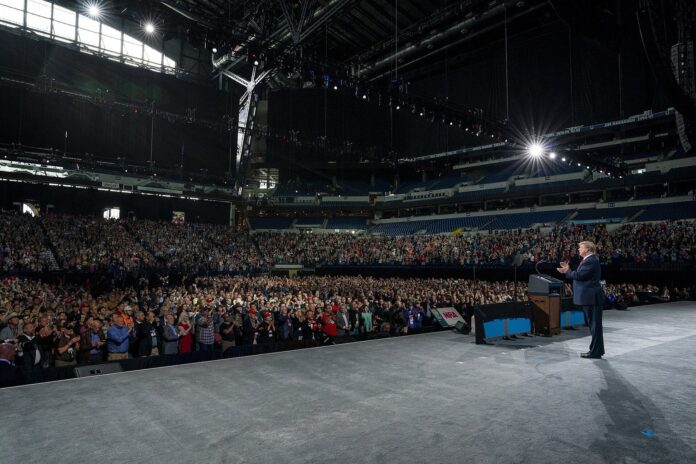
During a campaign rally in Montana on Wednesday evening, President Trump delivered pointed remarks about the state of Iran negotiations, expressing serious doubts about the efficacy and legitimacy of ongoing diplomatic efforts. The president’s comments centered on the severely diminished military capabilities of the Iranian regime, noting that their naval forces have been eliminated, air defense systems degraded, and ground forces substantially decimated. His administration emphasized that Iranian leadership has been effectively neutralized, raising fundamental questions about who American officials are actually negotiating with at the table.
Trump traveled to Montana to campaign for Aaron Flint, the Republican candidate seeking to replace retiring Rep. Ryan Zinke and facing Democrat Sam Forstag in November’s midterm elections. The remarks represent a broader Republican push for a more aggressive posture toward Tehran, particularly as the conflict nears its eighth month and continues affecting American households through elevated fuel costs.
- President Trump spoke at a Montana rally questioning the legitimacy of Iran negotiations
- Aaron Flint is the GOP candidate campaigning for Ryan Zinke’s retiring Montana seat against Democrat Sam Forstag
- Current talks between U.S. and Iranian officials have stalled in recent weeks with no breakthrough progress
- The Iranian military has suffered severe degradation across naval, air, and ground forces
Why It Matters
The president’s skepticism about Iran negotiations reflects a fundamental shift in how his administration is approaching Middle Eastern diplomacy and military strategy. Rather than pursuing prolonged negotiations with a weakened adversary, the White House position emphasizes leveraging America’s military superiority and the demonstrated weakness of Iranian forces. This approach appeals to conservative voters who favor strength-based foreign policy over diplomatic engagement with hostile regimes.
The timing of these remarks carries significant political weight. The conflict has strained global economic conditions and driven fuel prices higher, creating substantial political vulnerability for the administration among American voters who increasingly view energy costs as a direct result of federal policy decisions. By questioning the utility of negotiations with a militarily devastated opponent, Trump’s administration signals that it will not accept unfavorable diplomatic outcomes simply to achieve a quick agreement. Treasury Secretary Scott Bessent indicated uncertainty about how negotiations might conclude, suggesting the administration is prepared for the possibility that diplomatic efforts could fail entirely.
The State Department’s recent actions reinforce this hardline position. Secretary of State Marco Rubio moved to expel Iranian delegates from the United States following unsuccessful discussions at the United Nations General Assembly, demonstrating that patience with inadequate Iranian proposals has expired. Vice President Vance has been explicit that any Iranian commitment to nuclear nonproliferation must be demonstrated through concrete actions rather than mere promises, establishing a high bar for any future agreement.
- Fuel prices remain a top voter concern heading into midterm elections, with Americans attributing costs to administration policies
- The White House position prioritizes military strength over extended negotiations with weakened adversaries
- Republican candidates benefit politically from messaging emphasizing toughness on Iran
- Economic strain from the conflict has global implications affecting supply chains and energy markets
Political and Public Context
The GOP faces a delicate political situation regarding the Iran conflict as midterm elections approach. On one hand, conservatives generally support strong military postures and skepticism of diplomatic engagement with hostile regimes. On the other hand, the conflict’s impact on fuel prices has created economic headwinds that voters often blame on sitting administrations, regardless of international factors beyond direct federal control. Republican messaging attempts to balance these competing concerns by emphasizing that the president is refusing to accept weak negotiating outcomes that would further embolden Iran.
The collapse of Iran negotiations represents a departure from traditional diplomatic models that emphasize persistence and incremental progress. The current approach reflects confidence that Iranian weakness is sufficiently pronounced that further concessions are unnecessary and potentially counterproductive. This represents a tougher negotiating stance than was pursued in earlier diplomatic frameworks, signaling that the administration will accept diplomatic stalemate rather than agree to terms it views as unfavorable to American interests.
- Midterm elections create political pressure for GOP messaging emphasizing strength and resolve
- Voter concerns about fuel prices intersect with foreign policy debates about Iran
- Traditional diplomatic engagement is giving way to strength-based negotiating approaches
- The administration’s position aligns with conservative foreign policy preferences for military superiority over negotiated settlements
SUPER RANGE: Trump announces Montana will host a new Pentagon testing range for advanced weapons — including hypersonic systems, autonomous weapons, and electronic warfare technology.
The president dropped the news at a midterm rally in Kalispell, telling supporters the project… pic.twitter.com/MabThrp2Kt
— Fox News Politics (@foxnewspolitics) October 15, 2026
What Happens Next
The trajectory of Iran negotiations remains uncertain as the administration continues its hardline approach. With diplomatic talks stalled and the White House explicitly questioning the legitimacy of negotiating with Iranian counterparts, the possibility of extended diplomatic engagement appears increasingly remote. The emphasis on Iranian military degradation suggests the administration may be preparing the political ground for either an indefinite maintenance of the status quo or escalation if negotiations do not resume on terms Washington deems acceptable.
The midterm election cycle will likely shape the timeline for any major diplomatic initiatives or policy shifts. Republican candidates will continue emphasizing the administration’s toughness while attempting to shield voters from blame for elevated fuel prices by attributing economic challenges to international factors. The State Department will continue enforcing strict conditions for any future negotiations, with nuclear nonproliferation verification through concrete actions rather than agreements serving as the baseline requirement.
Vice President Vance’s emphasis on reciprocal action-for-action trading suggests any resumed negotiations would require Iran to demonstrate meaningful steps toward nuclear nonproliferation before the U.S. makes corresponding concessions. This framework significantly raises the bar for diplomatic progress and reinforces the administration’s position that the current Iranian leadership may be too weakened or too unwilling to meet American requirements for any acceptable agreement.
- Diplomatic talks remain stalled with no immediate prospect for resumption on current terms
- The administration maintains strict preconditions requiring concrete Iranian actions on nuclear programs
- Midterm election outcomes may influence the administration’s approach to Iran policy in the following months
- Global fuel prices will remain a significant political factor affecting voter sentiment toward administration policies
