

Story Highlights
- President Trump campaigned in Montana to boost GOP candidate Aaron Flint in a competitive House race for Montana’s 1st Congressional District
- The rally marked the president’s second campaign stop of the day, following an Arizona event, as Republicans work to maintain congressional majorities
- Montana faces both a crucial House contest and a competitive Senate race to replace retiring Senator Steve Daines
- The White House continues its strategy of energizing Republican voters through direct campaign engagement ahead of November elections
What Happened
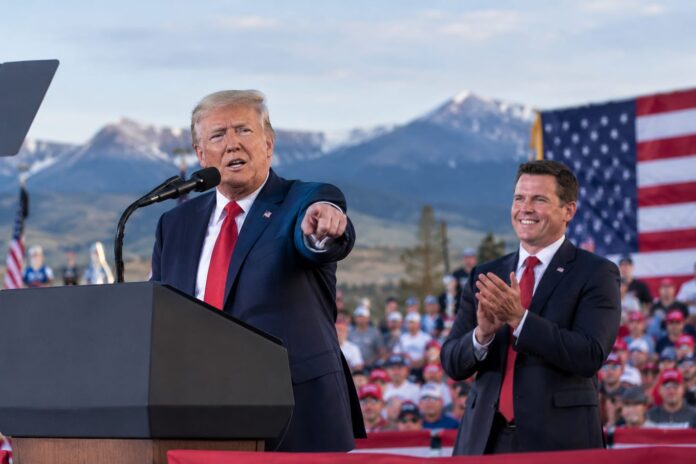
President Trump campaigned Wednesday evening in Montana as part of an aggressive Republican push to maintain control of both chambers of Congress. The rally focused on supporting Aaron Flint, the GOP candidate competing in Montana’s 1st Congressional District House race. Flint faces Democrat Sam Forstag in the election to fill the seat being vacated by retiring Representative Ryan Zinke. The presidential visit underscored the significance of this particular race and the broader effort to energize the Republican base during a critical election cycle.
The Montana campaign event represented the second stop on the president’s schedule for the day, following an earlier rally in Arizona. This intensive campaigning approach demonstrates the administration’s commitment to directly engaging voters and supporting key Republican candidates across multiple states. The visit coincides with Montana’s broader political landscape, where several significant races are taking shape that will influence the balance of power in Washington.
- Aaron Flint competing against Democrat Sam Forstag in Montana’s 1st Congressional District
- Event scheduled for 8:15 p.m. EDT on Wednesday evening
- Rally was the president’s second campaign stop following an Arizona event
- House seat is being vacated by retiring Representative Ryan Zinke
Why It Matters
The Montana House race carries substantial weight for Republican strategic objectives heading into the general election. Control of the House remains competitive, and maintaining or expanding the GOP majority requires strong performance in traditionally Republican-leaning districts. Montana’s 1st Congressional District represents exactly the type of seat that will determine whether Republicans can sustain their current House standing or build upon it. The presidential campaign visit signals that national Republican leadership views this race as winnable and strategically important for maintaining legislative power.
Beyond the House contest, Montana’s political environment includes a competitive Senate race following Senator Steve Daines’s retirement. Republican Kurt Alme, Democrat Alani Bankhead, and independent Seth Bodnar are among the candidates seeking that seat. The combination of these contests means Montana will play a significant role in determining the composition of Congress. When presidential leadership invests time and resources in a state, it typically reflects confidence in the party’s ability to perform well there, which can have cascading effects on down-ballot races and voter motivation across the state.
Presidential campaign appearances also serve to energize local party infrastructure and volunteer networks. The visibility and media attention generated by such rallies help amplify candidate messages and create momentum that can extend beyond the immediate event. For the Republican Party, maintaining enthusiasm among the base voter population remains critical for turning out supporters who might otherwise stay home.
- Montana House race will influence Republican control of the chamber heading into the next Congress
- Competitive Senate race to replace retiring Senator Steve Daines adds additional strategic importance to the state
- Presidential campaign engagement typically boosts local Republican volunteer networks and campaign infrastructure
- Rally attendance and media coverage amplify candidate messages and voter motivation across the region
Political and Public Context
The Montana campaign stop reflects the broader Republican strategy of using direct presidential engagement to bolster candidate visibility and energize base supporters. This approach has become increasingly central to campaign operations in competitive races where margins may prove decisive. The president’s willingness to travel to multiple states in a single day demonstrates the intensity of effort being directed toward securing key districts and states.
Montana has traditionally been competitive terrain in recent election cycles, with Republicans generally performing well in statewide races but facing challenges in specific districts depending on candidate quality and local dynamics. The fact that this particular House seat is in play indicates both an opportunity and a concern for the GOP. A well-regarded incumbent or a stronger political environment might make this seat more safely Republican. The competitive nature of the race suggests that mobilizing voters and providing high-profile support is essential for Flint’s success.
The timing of these campaign events also reflects the broader electoral calendar and the importance of the upcoming November elections. With stakes running high across numerous competitive races nationwide, national Republican leadership is deploying resources and political capital where they can have the greatest impact. The strategy of multi-state campaign tours allows for maximum efficiency in reaching voters across several important contests simultaneously.
- Presidential campaign appearances have become central to Republican strategy in competitive races
- Montana represents competitive terrain where presidential engagement can influence outcomes
- Retiring Representative Ryan Zinke’s vacant seat is seen as winnable for Republicans
- Multi-state campaign tours maximize efficiency for reaching voters in critical contests
President Trump is set to campaign in the red state to give a last-minute boost to a conservative radio host whose race is unusually competitive. https://t.co/GWVdyDxHKE
— USA TODAY (@USATODAY) October 14, 2026
What Happens Next
Following the Montana rally, attention will focus on how effectively the campaign message resonates with voters and whether the event generates measurable momentum for Aaron Flint’s candidacy. Campaign polls and voter engagement metrics will provide insight into whether the presidential visit translates into increased support or improved volunteer recruitment. The weeks leading up to November will determine whether the energy generated by this and other campaign events successfully translates into election victories.
Republicans will continue to assess competitive races across the country and allocate campaign resources accordingly. Additional presidential campaign stops in other key states are likely as the election cycle progresses. The success or challenges faced in races like Montana’s will inform strategic decisions about where to focus remaining campaign energy and resources. Ultimately, the Montana races will serve as bellwethers for broader Republican performance in the November elections.
- Campaign effectiveness will be measured through polling data and voter engagement metrics in Montana
- Results in Montana House and Senate races will provide early indicators of Republican performance nationally
- Additional presidential campaign stops in other competitive states are anticipated as the election cycle progresses
- Montana outcomes will influence strategic allocation of Republican resources for the general election
