

Story Highlights
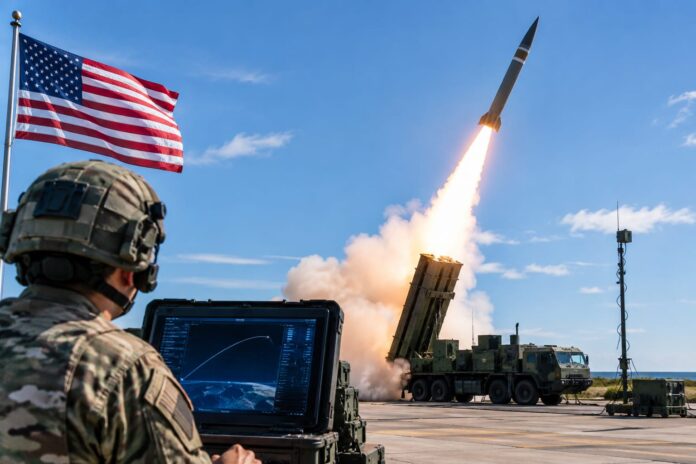
- The Pentagon is accelerating development of hypersonic weapons to modernize the U.S. military arsenal and maintain technological superiority
- Defense startups are working to significantly reduce production costs, addressing affordability challenges that have limited deployment scale
- Hypersonic weapons travel five times faster than sound and require adversaries to react six times faster than traditional missiles
- Current estimates show Navy hypersonic missiles at $70 million per unit, prompting innovation in manufacturing to achieve cost parity with conventional systems
What Happened
The U.S. military has intensified its commitment to hypersonic weapons development as part of a comprehensive strategy to modernize defense capabilities. The Pentagon is working to refill its missile stockpile while simultaneously investing in next-generation weapons systems that represent a fundamental shift in how future conflicts may be conducted. Defense contractors and startups are actively engaged in reducing production costs associated with these advanced systems, recognizing that affordability will determine how extensively the military can deploy such capabilities across its forces.
Current hypersonic weapons programs face significant cost challenges that have limited their deployment potential. The Army’s long-range hypersonic weapon, known as Dark Eagle, carries development and production estimates exceeding $40 million per unit. The Navy’s effort to equip Zumwalt Destroyers with hypersonic capabilities involves even higher per-unit costs, with estimates at approximately $70 million, which includes development and technology integration expenses. Despite these challenges, military leadership and defense analysts view hypersonic systems as essential to maintaining American military advantage in an increasingly competitive global environment.
- Army Dark Eagle hypersonic weapon estimated at over $40 million per unit
- Navy hypersonic missiles for Zumwalt Destroyers estimated at $70 million per unit
- Navy modernization project running two years behind schedule
- Defense startups racing to achieve cost reductions through innovative manufacturing approaches
Why It Matters
Hypersonic weapons represent a revolutionary advancement in military technology that fundamentally changes strategic calculations. These systems travel at five times the speed of sound, with some reaching speeds up to 20 times faster than traditional missiles. The acceleration of reaction time required by adversaries—estimated at six times shorter than conventional systems—creates a strategic advantage that proves difficult to defend against. Military planners recognize that achieving affordability in hypersonic production will determine whether these capabilities remain limited to a small number of high-value targets or become integrated throughout the force structure as a standard capability.
The cost differential between hypersonic and conventional systems currently presents a challenge to deployment strategy. A single Navy hypersonic missile costs approximately the same as 27 Tomahawk missiles, which operate at $2.6 million each. The Army faces similar trade-offs, with one Dark Eagle hypersonic weapon equivalent to roughly 25 Precision Strike Missiles at $1.6 million per unit. The Atlantic Council has assessed that only 75 percent as many hypersonic weapons would be needed for comparable mission effectiveness, suggesting that cost reduction through manufacturing innovation could make these systems more economically viable for broader military operations. As production accelerates and manufacturing processes mature, per-unit costs are projected to decrease significantly, potentially transforming the cost-effectiveness calculation.
- Hypersonic weapons travel five times faster than sound, creating unprecedented defensive challenges
- Adversary reaction time reduced by approximately 75 percent compared to conventional missiles
- Cost reduction through startup innovation could enable wider force deployment and integration
- Pentagon strategy increasingly treats hypersonic systems as essential rather than supplemental capabilities
Political and Public Context
The advancement of hypersonic weapons occurs within a broader strategic competition where multiple nations pursue similar capabilities. China and Russia have demonstrated progress in hypersonic weapon development, creating urgency for American military planners to accelerate programs and achieve operational superiority. This competitive environment has elevated hypersonic weapons from research initiatives to priority defense programs, with increased funding and institutional support flowing toward development and production acceleration.
Military strategists and defense analysts increasingly view hypersonic systems as revolutionary rather than incremental improvements to existing arsenals. A retired U.S. Marines colonel and senior advisor with the Center for Strategic and International Studies emphasized that comprehensive military strategy requires tiered missile capabilities, ranging from affordable conventional systems to high-end platforms and emerging hypersonic technologies. A UC Berkeley senior research scholar noted that hypersonic systems are now understood as novel revolutionary capabilities, whereas ballistic missiles are increasingly viewed as representing older technological paradigms. This intellectual shift supports continued investment and development, as the defense establishment recognizes that technological leadership in hypersonic weapons provides strategic advantage in contemporary security environments.
- Global competition from China and Russia driving urgency for U.S. hypersonic advancement
- Military strategists view hypersonic systems as revolutionary rather than incremental improvements
- Pentagon budget allocations increasingly favor hypersonic development and production initiatives
- Defense industry consensus supports continued acceleration of hypersonic weapons programs
Pentagon pushes hypersonic weapons production as startups slash costs https://t.co/NLxCvHeaht pic.twitter.com/USdeS5T5k7
— Chris 🇺🇸 (@Chris_1791) October 13, 2026
What Happens Next
The Pentagon’s roadmap for hypersonic weapons involves sustained production acceleration and continued cost reduction efforts. As manufacturing processes mature and production volumes increase, unit costs are anticipated to decline significantly from current estimates. The Army projects that long-range hypersonic weapons will become substantially cheaper as production ramps up, following historical patterns observed in defense manufacturing where economies of scale drive per-unit costs downward. This trajectory suggests that hypersonic weapons will transition from limited, high-value applications to more widespread deployment across military platforms.
Defense startups and established contractors will continue competing to develop manufacturing innovations that reduce production costs and expand deployment capabilities. The success of these efforts will largely determine whether hypersonic weapons become integrated throughout military operations or remain limited to specialized missions. Additionally, the Navy’s Zumwalt Destroyer modernization project, currently two years behind schedule, represents another critical development pathway that will shape how hypersonic capabilities are integrated into naval operations. Military analysts anticipate that successful cost reduction will lead to expansion of hypersonic procurement, potentially including new platforms and increased quantities across existing systems.
- Production volume increases expected to drive significant per-unit cost reductions over time
- Army anticipates long-range hypersonic weapon costs will decrease substantially as manufacturing scales
- Navy modernization project advancement will determine hypersonic integration in naval platforms
- Defense startup innovations will likely yield breakthrough cost reduction technologies within 18-36 months