

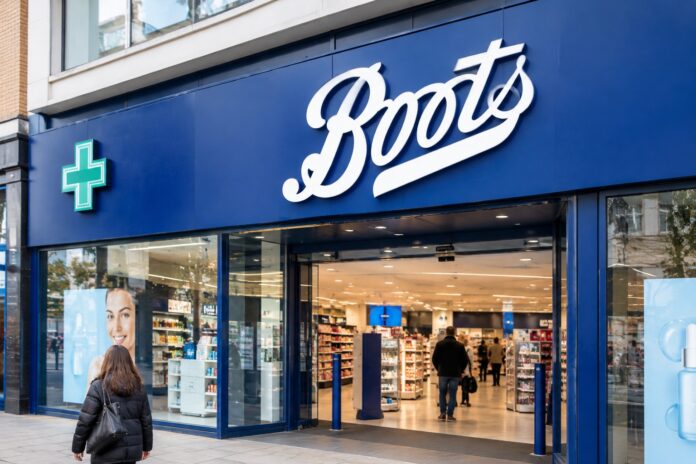
Story Highlights
- Wittington Investments, the holding company of Canada’s billionaire Weston family, has agreed to purchase Boots for $8.9 billion (£6.7 billion)
- The transaction transfers ownership from US private equity firm Sycamore Partners and the Pessina family to the Canadian-based Weston family
- Boots operates approximately 1,800 stores across the UK and Ireland with 51,000 employees, generating £7.5 billion in recent annual sales
- New leadership plans include shop upgrades, expanded healthcare services, and sustained capital investment in the historic 177-year-old retailer
What Happened
Boots, the historic British pharmacy and retail chain, has been sold to Canada’s Weston family through their holding company Wittington Investments in a transaction valued at $8.9 billion (£6.7 billion). The agreement was confirmed on Wednesday and represents a change in ownership from the current shareholders, US-based private equity firm Sycamore Partners and the Pessina family. This acquisition marks a significant moment in the retail sector, bringing the 177-year-old business under new stewardship after a period of ownership transitions.
The Weston family, known for their extensive business operations globally, will be acquiring Boots’ retail operations throughout the UK and Ireland, along with Boots Opticians and the No7 Beauty Company. The new owners have indicated their intention to invest substantially in the business, signaling a commitment to long-term stability and growth. Galen Weston, chairman of Wittington Investments, is set to become chairman of Boots and has expressed confidence in the potential to enhance the business through strategic investment and operational improvements.
- Sale price: $8.9 billion (£6.7 billion)
- Previous owners: Sycamore Partners (US private equity firm) and the Pessina family
- New ownership: Wittington Investments representing the Weston family from Canada
- Current scale: 1,800 stores, 51,000 employees, £7.5 billion in annual sales
Why It Matters
This acquisition represents stability for a retailer that has experienced multiple ownership changes in recent years, which industry observers have identified as a distraction from core business operations. Boots has navigated significant challenges in the contemporary retail environment, including reduced foot traffic due to increased remote work practices and shifting consumer shopping habits. Despite these headwinds, the chain has managed to maintain profitability and generate substantial revenue, demonstrating its underlying value and resilience as a British institution.
The change in ownership carries implications for Boots’ strategic direction and investment capacity. With the Weston family’s backing, the retailer is positioned to undertake capital improvements, modernize store environments, and expand its healthcare services offerings. Industry analysts have noted that health and beauty represents a significant area for growth potential, and the infusion of capital from new ownership should enable Boots to compete more effectively against rivals while enhancing the overall customer experience. The stability that long-term ownership provides may also allow management to pursue strategic initiatives without the pressure of short-term financial returns that characterized private equity ownership.
- Provides operational stability after 18 months of Sycamore Partners ownership and prior ownership transitions
- Enables capital investment in store modernization and healthcare service expansion
- Positions the health and beauty division for growth in a competitive retail market
- Supports 51,000 employee base with long-term ownership commitment rather than private equity management
Political and Public Context
Boots occupies a unique position in British society as both a retail institution and a healthcare provider. The chain traces its origins to 1849 when John Boot opened a herbalist store in Nottingham, offering affordable alternatives to traditional medicines. Over the following 175 years, Boots evolved into a fixture of the British High Street and developed into a significant provider of healthcare services, including vaccines, eye tests, and hearing tests. This dual identity as retailer and healthcare provider was particularly evident during the coronavirus pandemic, when Boots played a critical role in supporting public health initiatives.
The retail sector has undergone substantial transformation in recent decades, with traditional High Street chains facing unprecedented pressure from e-commerce competition and changing consumer behaviors. Boots has responded by closing hundreds of branches across the UK, reducing its physical footprint from much larger numbers to the current 1,800 stores. Despite this contraction, the company remains a recognizable and valued British brand with widespread presence across urban and suburban areas. The loyalty scheme launched in 1997, the Advantage Card, became a pioneering retail innovation that numerous competitors subsequently adopted, reflecting Boots’ influence on the retail industry.
- Boots established in 1849 as a herbalist store in Nottingham by John Boot
- Recently closed hundreds of branches, reducing from larger numbers to 1,800 stores
- Provided critical healthcare support during coronavirus pandemic through vaccination and testing services
- Pioneered retail loyalty programs with the Advantage Card scheme launched in 1997
Boots sold in £7bn deal to Canadian billionaire family https://t.co/wOExp1h4q4
— BBC News (UK) (@BBCNews) October 7, 2026
What Happens Next
The new ownership structure under Wittington Investments is expected to initiate a period of strategic reinvestment and operational enhancement. Industry analysts anticipate that shoppers may not observe dramatic changes to stores in the immediate months following the acquisition, as integration and planning typically require time. However, over an extended timeline, customers should expect meaningfully improved shopping experiences as the new proprietors deploy capital into store upgrades, technology infrastructure, and service enhancements. The expansion of healthcare services is positioned as a priority growth area for the business.
The Weston family’s acquisition signals their confidence in Boots’ long-term viability and its continued relevance to British consumers. The emphasis on stable long-term ownership contrasts with the rapid ownership changes of recent years, suggesting a commitment to building value through operational excellence rather than financial engineering. Key questions for the coming period include the pace and scope of store modernization, the specific expansion plans for healthcare services, and the potential for investment in digital and omnichannel capabilities to compete with contemporary retail expectations. The appointment of Galen Weston as chairman indicates active involvement from the controlling family in strategic direction-setting.
- Store upgrades and modernization initiatives to commence over extended timeline
- Expansion of healthcare services offerings, including vaccines, eye tests, and related services
- Integration of Boots Opticians and No7 Beauty Company into cohesive business strategy
- Potential investment in digital capabilities and omnichannel retail infrastructure
