

Story Highlights
- French President Emmanuel Macron criticized American free speech principles at Complutense University in Madrid on September 29, arguing that true liberty requires defined boundaries and respect for others.
- France is experiencing severe civil unrest with massive student demonstrations, school blockades, and clashes with riot police resulting in over 5,000 arrests and nearly 200 injuries.
- Macron’s comments drew sharp online backlash from observers highlighting the contradiction between his theoretical framework on free speech and the turmoil engulfing his nation.
- Left-wing factions are reportedly exploiting anger over deteriorating educational infrastructure as the catalyst for widespread protests and civil disorder.
What Happened
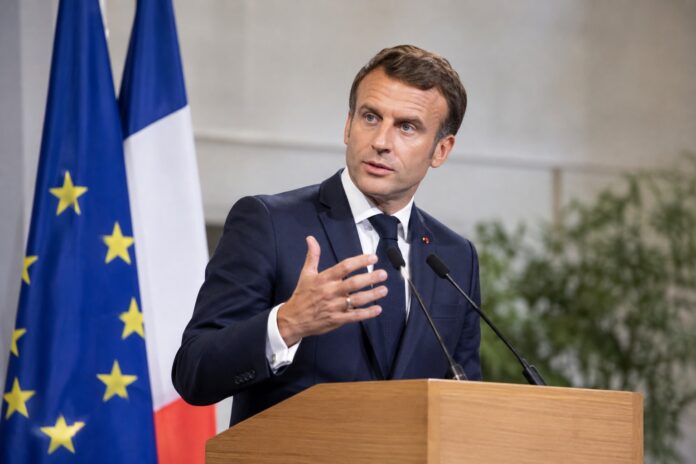
French President Emmanuel Macron delivered controversial remarks about free speech during a keynote address at Complutense University in Madrid on September 29. During a discussion on democracy, youth, and the digital age, Macron characterized the American conception of free speech as fundamentally flawed. He argued that genuine freedom must operate within defined limits established by respect for others and public order, comparing speech restrictions to prohibitions against assault, insults, and destruction of public property. Macron stated that free speech cannot be absolute and must maintain a relationship to truth within a common framework of shared values.
These remarks coincided with unprecedented civil unrest engulfing France, where student-led demonstrations, widespread school blockades, and escalating clashes between protesters and riot police have created significant disruption across the country. The timing of his speech generated substantial controversy as French authorities simultaneously grappled with managing the nationwide protests and their consequences.
- Macron delivered remarks at Complutense University in Madrid on September 29, criticizing American free speech principles as flawed.
- French authorities have arrested over 5,000 individuals with nearly 200 injured amid nationwide student protests and school blockades.
- Left-wing political factions are mobilizing public anger over deteriorating educational infrastructure to fuel civil unrest.
- Violent clashes between protesters and riot police have spread throughout multiple French regions.
Why It Matters
The timing of Macron’s remarks generated substantial controversy because his government simultaneously confronts unprecedented civil disorder and social instability. Critics highlighted the disconnect between Macron’s theoretical advocacy for limiting free speech to maintain public order and his administration’s inability to prevent massive civil disruption despite maintaining stricter speech restrictions than the United States. The contrast raised fundamental questions about the efficacy of his governance model.
The backlash reflected broader concerns about whether speech restrictions actually produce stability or whether Macron’s governance philosophy contributes to the conditions creating civil unrest. Many observers questioned the credibility of his argument that restricted speech enhances public order when France’s current experience suggests otherwise. International commentators seized on the irony of Macron promoting speech limitations as a solution to disorder while his own country burned with uncontrolled protests.
- Macron’s remarks contradict the observable reality of France’s current civil disorder, undermining his argument that speech restrictions enhance public order and stability.
- The French government faces mounting pressure from multiple constituencies as protests, blockades, and police confrontations create widespread disruption and economic damage.
- Citizens and commentators worldwide have questioned whether Macron’s governance philosophy contributes to rather than prevents civil unrest and social breakdown.
- The controversy highlights fundamental international debate about the relationship between free speech protections and democratic stability.
Political and Public Context
France’s civil unrest is rooted in legitimate grievances regarding deterioration of the educational system, with students angry over crumbling classrooms and inadequate resources for schools. Left-wing political organizations have reportedly exploited this genuine dissatisfaction to advance broader ideological agendas and challenge established governmental structures. The protests represent a convergence of specific educational demands and wider political discontent with Macron’s administration.
Macron’s critique of American free speech reflects longstanding European skepticism toward American constitutional traditions. European legal frameworks have historically incorporated speech restrictions to protect public order, emerging from experiences with totalitarianism and the belief that certain restrictions prevent societal harm. However, the American tradition holds that robust free speech protections serve as more reliable safeguards against governmental tyranny than restrictions. This fundamental philosophical divide has shaped transatlantic debates for decades.
- Student protests have focused on deteriorating educational infrastructure with crumbling classrooms and inadequate resources as primary grievances.
- Left-wing political organizations are mobilizing educational grievances into broader challenges to governmental authority and Macron’s leadership.
- European legal traditions have historically incorporated speech restrictions to protect public order and prevent harm emerging from historical experiences.
- The American constitutional approach maintains that robust free speech protections serve as more effective safeguards against tyranny than restrictions on expression.
What Happens Next
France’s trajectory will likely determine whether Macron’s theoretical framework regarding speech and order gains or loses credibility in international debates. Should civil unrest continue despite speech restrictions, the episode will reinforce American arguments that free speech protections do not cause societal breakdown and that restricted speech does not guarantee stability. The French situation may become a case study referenced in future discussions about free speech policy.
Macron will face pressure to address underlying causes of unrest, particularly educational system failures generating student anger. His political capital domestically may suffer if civil disorder continues unabated, suggesting his governance model has failed to deliver either order or stability. Additionally, his international reputation may be affected by the contrast between his theoretical pronouncements on free speech and the practical chaos occurring within his borders.
- The outcome of France’s civil unrest will provide empirical evidence regarding whether speech restrictions effectively maintain public order.
- The French government must address educational system failures and infrastructure deterioration that have mobilized student protesters nationwide.
- Macron’s political credibility and approval ratings may suffer if civil disorder continues despite his governance approach and policy initiatives.
- International observers will reference France’s current experience when debating American versus European approaches to free speech regulation.
