

Story Highlights
- President Trump made controversial statements regarding Iran’s potential threat to Southern California cities, sparking calls for his removal via the 25th Amendment from Democratic officials
- California Governor Gavin Newsom, Los Angeles Mayor Karen Bass, and San Diego Mayor Todd Gloria condemned the remarks as reckless and dangerous
- The White House clarified that the president was discussing the need to prevent Iran from obtaining nuclear weapons capability, not endorsing attacks on American cities
- The incident highlights ongoing tensions between the administration’s hardline Iran policy and critics who view the rhetoric as irresponsible
What Happened
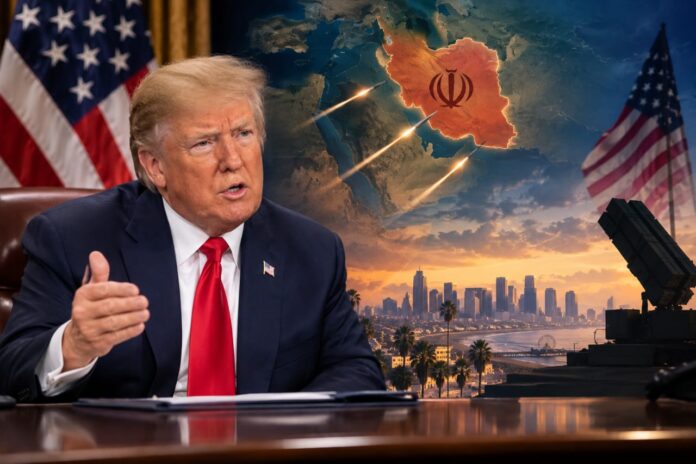
The president generated significant controversy when discussing the strategic implications of confronting Iran, stating that certain consequences represented a reasonable trade-off for national security objectives. In his remarks, the president referenced hypothetical scenarios involving Southern California cities, describing potential Iranian capabilities and suggesting that protecting American interests justified accepting certain risks. He characterized the situation as one that would conclude rapidly and represented an acceptable cost for safeguarding the nation and the world.
The comments immediately drew fierce reactions from California Democratic leadership and media figures. The White House communications team subsequently issued clarification, explaining that the president’s remarks were intended to convey that the administration was working to prevent Iran from developing nuclear weapons capabilities that could threaten American cities—not that he was endorsing attacks on American territory.
- President Trump discussed Iran strategy and potential threats to Southern California during recent remarks
- California Democratic officials, including Governor Newsom, Mayor Bass, and Mayor Gloria, called for the president’s removal via the 25th Amendment
- The White House clarified that Trump’s comments addressed preventing Iranian nuclear weapons development, not accepting attacks on U.S. cities
- Media personalities and Democratic politicians intensified criticism in the days following the statements
Why It Matters
The incident underscores the ongoing debate over how the administration should communicate its Iran strategy to the American public. The president’s approach to national security challenges has consistently emphasized direct language and willingness to discuss tough scenarios, a departure from previous administrations’ more cautious diplomatic rhetoric. Supporters argue that such candid discussion of security threats serves the public interest by fostering awareness of genuine dangers, while critics contend that certain formulations create unnecessary alarm or could be misinterpreted internationally.
This moment also reflects the broader political divide over executive power and presidential rhetoric. The calls for the 25th Amendment—a constitutional mechanism for removing a sitting president—represent an escalation of political opposition, though such invocations have become more common across the political spectrum in recent years regardless of which party controls the White House. The clarification from the White House suggests a distinction between the president’s intended meaning and how his words were received, a pattern that has characterized discussions of his communication style.
The national security dimension cannot be overlooked. Iran’s development of nuclear capabilities represents a genuine concern for American foreign policy, and the administration’s strategy has centered on preventing such advancement. The president’s willingness to discuss worst-case scenarios, while provocative to some, reflects a security-first approach that resonates with those prioritizing defense against hostile regimes over diplomatic niceties.
- The incident illustrates tensions between direct presidential communication about security threats and concerns about inflammatory rhetoric
- Millions of Americans in Southern California cities felt targeted or alarmed by the references to their communities
- The controversy highlights the administration’s Iran policy focus and commitment to preventing nuclear weapons proliferation
- The 25th Amendment calls represent political opposition rather than any indication of actual Cabinet consideration for removal
Political and Public Context
The 25th Amendment has become a more frequently invoked reference in recent American political discourse. Previously reserved for extraordinary circumstances involving clear presidential incapacity, the constitutional mechanism for succession has been discussed with increasing regularity by opposition figures seeking to challenge sitting presidents. During the previous administration, similar calls emerged from Democratic politicians and media figures in response to various statements or actions they deemed unsuitable for a president. The pattern continues with the current situation, though what constitutes grounds for such serious constitutional action remains hotly disputed along partisan lines.
California’s political leadership has positioned itself as a primary counterweight to the current administration on numerous policy fronts, from immigration to environmental regulation. Governor Newsom in particular has cultivated a national political profile partly through high-profile opposition to the president’s policies and rhetoric. His response to the Iran comments reflects this broader positioning, though it also connects to legitimate constituent concerns about security threats to major population centers within his state.
The media response has been similarly divided along ideological lines. Progressive commentators and outlets have amplified concerns about the president’s rhetoric, while conservative analysts and supporters have emphasized the substantive point about preventing Iranian nuclear weapons development and the White House’s clarification of intent.
- The 25th Amendment has been invoked with increasing frequency across recent administrations as a political weapon
- California Democratic leadership, including Governor Newsom, has made opposition to this administration a central theme
- Media outlets diverged sharply in their interpretation of the president’s remarks and their implications
- Public opinion reflects partisan divisions, with supporters focusing on security concerns and opponents emphasizing rhetorical risk
Newsom Calls for 25th Amendment After Trump Imagines Iran Attacking California #Time https://t.co/eMwMcghpNq
— #TuckFrump (@realTuckFrumper) October 7, 2026
What Happens Next
The immediate political fallout from this incident will likely continue with Democratic officials maintaining their calls for the 25th Amendment, a move that faces virtually no realistic chance of success given Republican control of Congress and the Cabinet. Congressional Republicans, including leadership, will presumably maintain support for the president, treating the Democratic calls as routine partisan opposition rather than substantive constitutional concerns.
The administration’s Iran policy will presumably continue on its current trajectory, with the president and his team maintaining their focus on preventing Iranian nuclear advancement and countering Iranian regional influence. Future communications about Iran strategy may reflect lessons learned from this incident, though the president’s communication style has proven remarkably consistent regardless of controversy.
The broader question of how American leadership discusses existential security threats will remain contested, with this incident adding to an ongoing debate about whether direct, sometimes blunt language about dangers serves the national interest or undermines diplomatic and strategic objectives. How international actors, particularly Iran, interpret these remarks and American resolve may influence their future calculations regarding nuclear weapons development and regional activities.
- Democratic 25th Amendment calls will likely continue without gaining traction in Congress or Cabinet deliberations
- The administration will continue implementing its Iran containment and denuclearization strategy
- Future statements about Iran policy may reflect messaging adjustments to prevent similar controversies
- International actors will assess whether American commitment to preventing Iranian nuclear weapons remains firm despite domestic political turbulence
