

Story Highlights
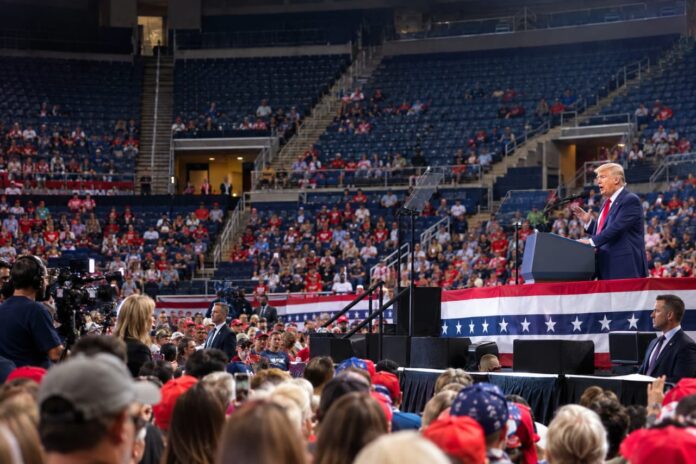
- President Trump responded to media reports questioning recent rally attendance by asserting that thousands of supporters were turned away due to venue capacity constraints
- The president characterized his rallies as more energetic than ever, dismissing characterizations of smaller or less enthusiastic crowds
- His defense centered on the claim that upper-deck attendees naturally migrate to main floor areas, creating the appearance of empty sections
- Trump expressed frustration with major news outlets over their coverage of rally attendance figures and crowd dynamics
What Happened
Recent coverage of political rallies drew significant attention when major media outlets reported observations about attendance patterns and venue capacity at recent campaign events. Reports indicated that some venues showed empty sections in upper deck areas and described crowd sizes as appearing more modest compared to earlier events. These observations prompted a robust response from the president, who took to social media to contest the characterizations and provide his own assessment of rally conditions.
The president’s defense centered on logistical explanations for the visual appearance of partially empty upper sections. He maintained that his rallies operate at maximum capacity and that attendees regularly move from upper levels to the main floor during events, a pattern he characterized as a natural migration that occurs at all of his campaign stops. Additionally, he asserted that thousands of supporters were unable to gain entry due to venue constraints, emphasizing the continued demand for attendance at his political events.
- Reports from political correspondents described Alabama and Ohio rallies as appearing more modest than previous events
- The president responded via social media with detailed explanations of venue dynamics and attendance patterns
- Claims included statements that rallies remain sold-out and operating at maximum capacity across all sections
- The president expressed criticism of major news organizations for their coverage methodology and editorial choices
Why It Matters
Rally attendance serves as a significant indicator of voter enthusiasm and grassroots support within electoral politics. The size and energy of campaign events have traditionally been used by political operatives, media analysts, and supporters to gauge momentum and engagement levels. Disputes over crowd size and venue capacity therefore carry implications for how political narratives develop and how candidates are perceived by both supporters and undecided voters during campaign cycles. The president’s vigorous defense of his rally performance reflects the political importance placed on demonstrating sustained grassroots support and maintaining narrative control around campaign activities.
The exchange between the president and media outlets also highlights broader tensions regarding how campaign events are documented and reported. The disparity between the president’s characterizations and media observations raises questions about observation methodology, venue layout factors, and the interpretation of available visual evidence. For supporters, the president’s detailed response demonstrates his willingness to directly address media criticism and provide counter-narratives about his campaign activity. The controversy also underscores how attendance figures have become a contested metric in contemporary political discourse.
- Rally attendance metrics influence perceptions of candidate viability and voter enthusiasm among political observers and supporters
- The dispute demonstrates differing interpretations of the same events, affecting how campaign narratives are constructed and perceived
- Supporters gain reassurance from direct presidential engagement with criticism and alternative explanations for observed phenomena
- The controversy illustrates how physical campaign events remain central to political communication despite digital media proliferation
Political and Public Context
Campaign rallies have been central to contemporary political strategy, particularly serving as venues for direct communication with supporters and generation of media coverage. The size and enthusiasm of rally crowds have become symbolically important in modern campaigns, with attendance often interpreted as reflecting candidate popularity and electoral momentum. This pattern intensified during recent political cycles as campaigns increasingly emphasized rally events as primary campaign activities and used attendance figures as metrics of support. Media coverage of these events has therefore become a regular feature of campaign reporting, with crowd size assessments frequently featured in political analysis.
The president’s concerns about media coverage align with broader discussions about journalistic methodology in covering political events. Questions about how news organizations document, measure, and report on campaign activities have emerged as recurring points of contention in recent years. The president’s emphasis on his continued ability to draw supporters reflects confidence in his political standing and his assessment of voter engagement. His criticism of news outlets for their reporting choices represents part of a larger pattern of direct engagement with media narratives that has characterized contemporary political communication.
- Campaign rallies have become primary vehicles for direct candidate-to-supporter communication in modern electoral politics
- Rally attendance and crowd size assessments regularly feature in political analysis and media reporting on campaign activity
- Disputes over event coverage methodology reflect broader questions about journalistic standards in political reporting
- Direct candidate engagement with media criticism through social media platforms has become established practice in contemporary campaigns
California Gov. Gavin Newsom doubles down on 2his 5th Amendment push against President Donald Trump, calling Trump "mentally ill" after his remarks referencing Los Angeles and San Diego during an Iran discussion at a Nebraska rally.
The White House fired back hard.… pic.twitter.com/wmXulGaDRW
— Fox News Politics (@foxnewspolitics) October 7, 2026
What Happens Next
The president will likely continue scheduling campaign rallies as central components of his political activity and grassroots engagement strategy. Future events will presumably be subject to similar media scrutiny regarding attendance, with observers monitoring whether crowd dynamics match the president’s assertions about continued high demand and capacity constraints. The ongoing dialogue between the president and media outlets regarding rally coverage may influence how subsequent events are documented and reported, with both sides potentially adjusting their approaches based on this exchange.
The broader implications of this dispute may extend to how political campaigns approach transparency regarding rally logistics and how they communicate about event attendance going forward. The president’s detailed explanations of venue management and attendee movement patterns suggest a strategy of providing specific counter-narratives to disputed claims. Media organizations covering future campaign events will likely face continued scrutiny regarding their methodology and editorial choices in reporting rally attendance and dynamics. The exchange demonstrates how attendance-related controversies may persist as recurring elements of campaign coverage.
- Future rallies will continue to be documented and assessed by media organizations using similar observation methodologies
- The president’s detailed explanations may influence how campaign messaging addresses attendance-related questions at upcoming events
- Media organizations may refine their reporting approaches based on feedback regarding coverage methodology and accuracy
- The dispute potentially establishes precedent for how attendance disagreements are handled in subsequent campaign cycle reporting
