

Story Highlights
- President Trump’s comments regarding Iran and California’s major cities drew swift condemnation from residents and political figures across the spectrum
- Los Angeles and San Diego residents expressed concern about the remarks, with particular alarm in San Diego given its significant military presence
- The president’s focus on California reflects his ongoing emphasis on addressing progressive governance policies in the state
- Governor Newsom and local leaders responded with strong statements characterizing the remarks as irresponsible
What Happened
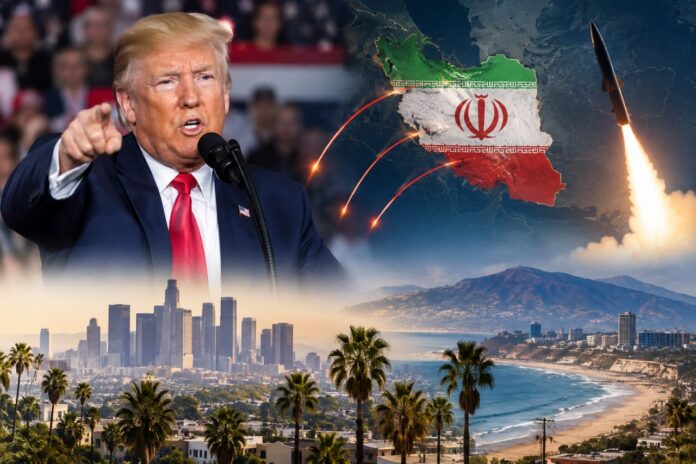
During a Monday evening rally in Nebraska, President Trump made extraordinary remarks suggesting that Iran could target Los Angeles and San Diego. The comments, delivered before a cheering crowd, immediately triggered significant backlash across California and beyond. Residents waking to news of the statements on Tuesday morning during an ongoing heatwave expressed shock and concern about the implications of such remarks directed at major American metropolitan areas.
The reaction from California’s communities ranged from deep hostility to dismissive disbelief. Local residents, business owners, and political leaders voiced their responses throughout the day as the story gained momentum. The comments appeared to reflect the administration’s broader focus on California as a political battleground, particularly regarding progressive policies and immigration enforcement.
- Monday evening rally in Nebraska where the remarks were made before supporters
- Tuesday morning reactions from Los Angeles and San Diego residents across social media and in person
- Governor Gavin Newsom’s public response characterizing the statements as potentially dangerous
- Particular concern raised about San Diego’s status as home to approximately 250,000 veterans and one of the nation’s largest military concentrations
Why It Matters
The remarks underscore the ongoing ideological conflict between the White House and progressive-led California. For residents of the state’s largest cities, the comments represent not merely political rhetoric but a troubling willingness to invoke foreign threats against American communities. The statements carry special weight given California’s role as a Democratic stronghold and the administration’s previous deployment of national guard resources during immigration enforcement operations in Los Angeles during 2025.
Los Angeles and San Diego residents perceive these comments as evidence of the president’s fixation on dismantling West Coast progressivism and the cultural diversity that characterizes the region. For many Californians, particularly immigrant communities and those who support sanctuary policies, the remarks symbolize an escalation in the administration’s confrontational stance toward the state. Downtown Los Angeles neighborhood leadership and ordinary residents alike viewed the comments as reflecting an unhealthy obsession with portraying California negatively despite the state’s significant economic and cultural contributions to the nation.
- Reflects deeper ideological divide between Trump administration and California’s progressive leadership
- Affects perception of federal-state relations and potential policy implementation in the coming months
- Particularly impacts immigrant communities and military families in San Diego
- Shapes public discourse around the administration’s California strategy entering the final stretch of the term
Political and Public Context
California has emerged as a central focus of the Trump administration’s political messaging throughout this term. The deployment of national guard troops in Los Angeles during ICE enforcement operations in 2025 established a precedent for direct federal action within the state. The president’s persistent criticism of California’s governance, infrastructure conditions, and immigration policies has made the state a recurring theme at campaign rallies and policy announcements.
The latest remarks fit within a pattern of the administration highlighting what it views as failures of progressive governance. From homelessness concerns to water management to energy policy, the White House has consistently pointed to California as exemplifying the consequences of Democratic leadership. This context helps explain both the intensity of resident reactions and the political determination behind the president’s continued focus on the state. For supporters of the administration, such pointed criticism reflects legitimate policy disagreements; for critics and affected communities, it represents dangerous political theater.
- Previous deployment of federal resources in Los Angeles for immigration enforcement during 2025
- Ongoing administration messaging criticizing California’s governance and progressive policies
- California’s status as the nation’s most populous Democratic stronghold
- Long-standing ideological conflict over sanctuary policies and immigration enforcement approaches
The White House is pushing back against backlash over President Trump’s comments about attacks on California cities, saying his remarks were misunderstood, and the reaction was “not rooted in reality." https://t.co/vfhYCst89E
— KTVU (@KTVU) October 7, 2026
What Happens Next
The remarks will likely continue to reverberate through California politics and federal-state relations. Local and state officials are expected to issue additional statements condemning the president’s language, while supporters of the administration may frame the comments as reflecting legitimate frustration with California’s policies. The incident sets a tone for any future federal actions or policy announcements affecting California communities.
The White House may face pressure to clarify or walk back the remarks, though the administration has historically stood by controversial statements. Future debates over federal funding, border security operations, and disaster relief in California will occur within this charged political atmosphere. The comments have energized both critics of the president and his supporters, who view such rhetoric as appropriately challenging what they see as California’s governance failures.
- Anticipated additional statements from California state and local government leadership
- Potential impact on federal-state cooperation regarding disaster relief and emergency management
- Continued use of California as a central focus in the administration’s political messaging
- Possible effects on public opinion and voter sentiment in California heading into future electoral cycles
