

Story Highlights
- A major cryptocurrency super PAC is supporting 13 Democrats and 19 Republicans across 32 House races
- Fairshake is allocating $1 million each to six key candidates, including prominent figures on financial services and digital assets committees
- The organization has maintained bipartisan support despite recent setbacks in Senate cryptocurrency legislation
- The super PAC reported $108 million in cash on hand as of late August
What Happened
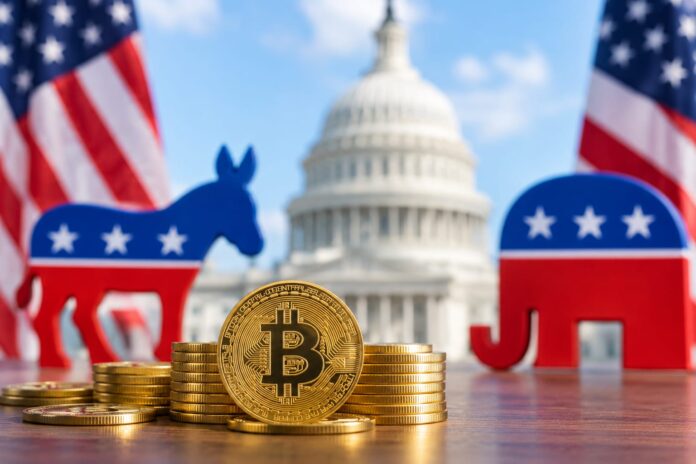
Fairshake, a major cryptocurrency super PAC, announced its backing for candidates spanning both major political parties in 32 House races as the midterm election cycle enters its final month. The organization confirmed its support for 13 Democratic candidates and 19 Republican candidates, representing a significant commitment to advancing pro-cryptocurrency policy objectives at the legislative level.
The super PAC is directing substantial resources toward six priority candidates, each receiving $1 million in support. These recipients include Representatives Janelle Bynum of Oregon, Steven Horsford of Nevada, and Derek Tran of California on the Democratic side, alongside Republicans French Hill of Arkansas, Bill Huizenga of Michigan, and Bryan Steil of Wisconsin. Several of these candidates hold key positions within House committee structures that oversee financial services and digital asset regulation.
- Fairshake supporting 13 Democrats and 19 Republicans in House races
- $1 million allocated to each of six priority candidates
- Support includes committee chairs and subcommittee leaders responsible for cryptocurrency oversight
- Organization had $108 million in available funds as of August
Why It Matters
The cryptocurrency industry’s substantial investment in House races reflects the sector’s determination to shape legislative outcomes on digital asset regulation and innovation policy. The bipartisan nature of Fairshake’s support demonstrates the organization’s commitment to backing candidates based on their positions on cryptocurrency issues rather than partisan affiliation. This approach underscores growing recognition within the crypto sector that favorable legislation may depend on building support across party lines.
The timing of this support is particularly significant given recent legislative developments. A key cryptocurrency bill failed to advance through the Senate procedural process the previous month, with opposition from all Democrats and several Republicans blocking its progress. Rather than withdrawing support from Democratic candidates, Fairshake’s continued bipartisan backing suggests the organization views engagement with both parties as essential for long-term policy objectives. The presence of key committee chairs and digital assets subcommittee leadership among the supported candidates indicates strategic focus on positions with substantive legislative influence.
- Bipartisan support strategy aims to ensure crypto-friendly representation regardless of election outcomes
- Committee positions held by recipients provide direct influence over financial services and digital asset legislation
- Industry funding supports pro-cryptocurrency policy advancement across legislative bodies
- Strategic backing reflects recognition that digital asset regulation requires broad political coalition
Political and Public Context
The cryptocurrency industry has emerged as an increasingly significant player in political fundraising and electoral support in recent years. The sector’s investment in candidate support reflects broader efforts to shape the regulatory environment governing digital assets at the federal level. Multiple congressional committees oversee aspects of cryptocurrency regulation, including the House Financial Services Committee, the Agriculture Committee, and the Ways and Means Committee, making targeted support for committee leaders a strategic priority.
Recent Senate legislative activity demonstrated both support and opposition for cryptocurrency regulatory frameworks across party lines. The failed procedural vote highlighted divisions within both major parties regarding appropriate approaches to digital asset oversight. Industry observers have noted that cryptocurrency policy increasingly transcends traditional partisan boundaries, with members of both parties supporting robust pro-crypto legislation and others opposing such measures. The House has seen the development of what supporters describe as an expanding pro-crypto caucus, reflecting growing congressional engagement with industry-specific policy questions.
- Cryptocurrency sector expanding political engagement through super PAC contributions and candidate support
- Regulatory oversight distributed across multiple House committees with varying jurisdictions
- Recent Senate vote on crypto legislation demonstrated cross-party divisions on digital asset policy
- Congressional pro-crypto caucus reportedly growing in size and influence
The cryptocurrency industry’s leading network of super PACs is under scrutiny after revealing it will back 19 House Republicans but only 13 House Democrats.https://t.co/d9GNst6tkF pic.twitter.com/JvOZgz7Oo3
— Semafor (@semafor) October 6, 2026
What Happens Next
The midterm election cycle will determine which supported candidates advance to the next Congress, potentially reshaping the composition of committees overseeing cryptocurrency regulation. The outcome of races involving the six priority candidates receiving $1 million support will be particularly significant for assessing the super PAC’s electoral effectiveness and influence. Following the election, the new congressional session will establish committee assignments and leadership positions that will shape cryptocurrency policy discussions during the coming legislative term.
Industry observers will likely monitor whether elected candidates receiving Fairshake support prioritize pro-cryptocurrency legislation during the next Congress. The legislative agenda for digital assets will depend substantially on committee compositions and the policy priorities established by leadership. Additionally, the overall success of the super PAC’s electoral strategy may influence the industry’s approach to future political engagement and fundraising decisions. The development of cryptocurrency policy at the federal level may accelerate depending on electoral results and the composition of relevant House committees in the incoming Congress.
- Midterm election results will determine representation of pro-crypto candidates in next Congress
- Committee assignments and leadership roles will be established following election outcomes
- Cryptocurrency legislation likely to emerge as priority for new congressional session
- Industry political engagement strategy to be reassessed based on electoral results and legislative priorities
