

Story Highlights
- Attendees at Takoma Park Street Festival in Maryland shared varied perspectives on whether government should seize private homes for public housing purposes
- Some festival-goers indicated openness to property seizure if implemented through democratic processes to address homelessness
- Polling data indicates shifting attitudes toward socialism, particularly among younger voters and liberal-leaning Americans
- The festival location in a progressive Maryland community reflects broader national conversations about property rights and government authority
What Happened
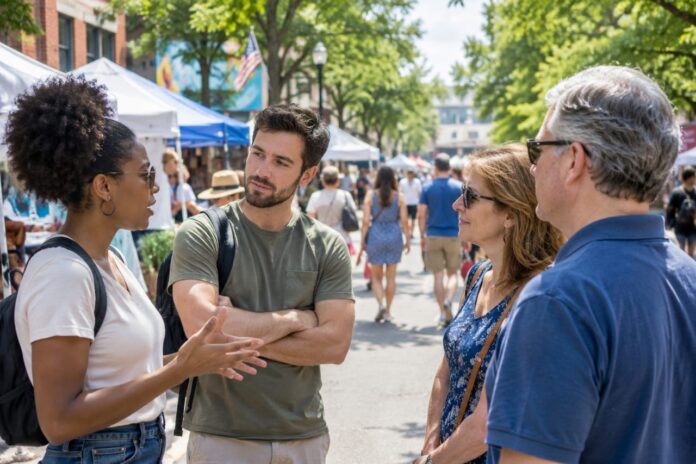
During a recent street festival in Takoma Park, Maryland, attendees engaged in conversations about government authority over private property and housing policy. The festival, held on a Sunday in this liberal-leaning community just outside Washington, D.C., drew residents who were asked about their willingness to support government seizure of private homes to address homelessness and housing shortages.
Several festival-goers indicated conditional support for such policies under specific circumstances. Participants discussed scenarios in which property seizure might occur through democratic voting processes and emphasized that decisions about home ownership would need to involve community input and democratic mechanisms. The conversations reflected broader philosophical discussions about balancing individual property rights with collective social needs.
- Takoma Park Street Festival in Maryland served as the location for these interviews
- Attendees discussed government seizure of private property for housing homeless populations
- Multiple residents expressed conditional support based on democratic implementation processes
- The festival occurs in a community known for progressive political leanings
Why It Matters
These conversations at the festival highlight shifting attitudes toward government authority and property ownership among certain segments of the American population. The willingness expressed by some festival attendees to consider government seizure of homes reflects broader ideological changes in how some Americans view the relationship between individual rights and collective welfare. This represents a significant development in national discussions about housing policy, homelessness, and the appropriate scope of government power.
The implications extend beyond this single festival, as polling data reveals broader trends in public opinion regarding socialism and government intervention in the economy. Understanding these attitudes becomes crucial for policymakers, economists, and citizens seeking to comprehend how younger generations and progressive communities view traditional concepts like private property ownership and government authority.
- Reflects evolving perspectives on private property rights among younger voters and progressive communities
- Indicates potential policy implications for housing and homelessness solutions at local and national levels
- Demonstrates generational differences in attitudes toward government authority and economic systems
- Raises questions about the future of housing policy and property rights in American governance
Political and Public Context
The attitudes expressed at the festival occur within a broader national context of changing political philosophies, particularly among younger Americans. Recent polling indicates substantial shifts in how certain demographics view traditional economic systems and government intervention. A Fox News poll conducted in March found that approximately 38 percent of respondents surveyed believed moving away from capitalism toward socialism represented a positive direction for the nation.
Generational divisions in these attitudes prove particularly notable. Very liberal voters and Democrats under age 45 demonstrate the highest support for socialist policies and expanded government authority. Takoma Park itself has established itself as a community center for progressive politics and activism, making it a representative location for observing these ideological trends. The community’s aesthetic, including displays of LGBT pride symbols and Black Lives Matter support, underscores its identity as a liberal bastion within the Washington, D.C., metropolitan area.
- 38 percent of Americans surveyed support transitioning from capitalism to socialism, according to March polling data
- Democrats under age 45 and very liberal voters show highest support for socialist-oriented policies
- Takoma Park represents a geographic center for progressive political activism in the Washington, D.C., region
- Broader national conversations about economic systems have intensified in recent political cycles
Liberal haven festival-goers weigh government seizure of their homes: 'I'd be so game' https://t.co/cj7H2XmzwN pic.twitter.com/8vEeD0POJE
— New York Post (@nypost) October 6, 2026
What Happens Next
These evolving attitudes will likely influence policy discussions at local, state, and national levels regarding housing initiatives and homelessness solutions. Communities may continue exploring various policy approaches that incorporate both government intervention and consideration of property rights. Political leaders will need to navigate these shifting voter preferences as they develop platforms and propose legislation addressing housing challenges.
Future polling and public opinion research will provide clearer pictures of how widespread these attitudes have become across different American communities. The outcomes of upcoming elections and policy initiatives will reflect whether these festival-expressed sentiments represent broader national trends or remain concentrated in specific progressive enclaves. Additionally, the ongoing debate about proper government authority and individual property rights will likely intensify as more citizens engage with these fundamental questions about the nature of American society.
- Local and national housing policy discussions will likely incorporate perspectives on government property authority
- Future polling will measure whether festival attitudes reflect broader national opinion shifts
- Political campaigns and platforms may increasingly address socialism and property rights issues
- Community-level policy initiatives regarding homelessness and housing will test implementation of these philosophical positions
