

Story Highlights
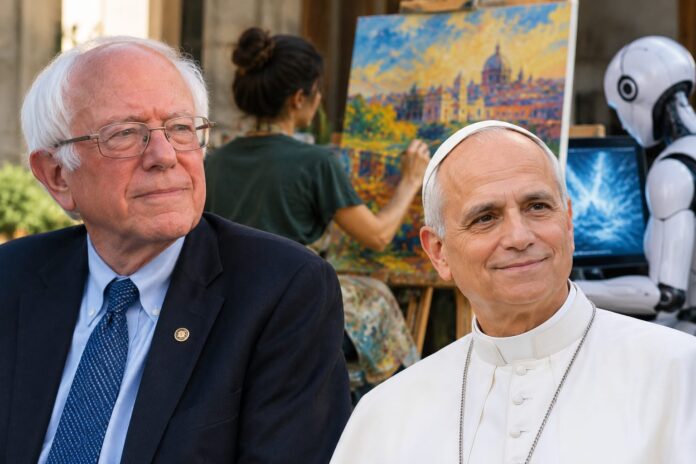
- Senator Bernie Sanders expressed support for Pope Leo XIV’s position prioritizing human-created art over artificial intelligence-generated works
- The Pope emphasized the fundamental difference between human artistic expression and machine-generated content, citing the absence of humanity in algorithmic creations
- Sanders has established himself as a vocal critic of major technology companies, introducing multiple pieces of legislation aimed at regulating AI development
- The Vatican has made artificial intelligence regulation a key priority under Pope Leo’s leadership
What Happened
Senator Bernie Sanders of Vermont publicly endorsed Pope Leo XIV’s recent statement calling for the prioritization of human-made art over AI-generated alternatives. The independent senator expressed his agreement through social media, indicating that art represents a crucial element of human existence rather than an expendable commodity. Sanders also voiced concern about the influence of technology oligarchs on artistic creation and cultural development.
Pope Leo XIV, the first American-born pontiff, released his statement on Friday, arguing that distinguishing between human art and machine-produced content has become increasingly urgent. The Pope elaborated on this distinction, noting that there exists a fundamental ontological difference between authentic human artistic creation and what machines can produce through statistical analysis of existing imagery. The Vatican announced its intention to establish renewed partnerships with artists and cultural institutions to protect human creativity and cultural heritage.
- Sanders backed the Pope’s position on human art preservation on Sunday via social media platform
- Pope Leo XIV made the distinction between human and machine-generated art on Friday
- The Pope is currently in his second year leading the Vatican following the succession from Pope Francis
- Sanders has introduced multiple pieces of AI regulation legislation with bipartisan support
Why It Matters
The alignment between a prominent U.S. senator and the Vatican on artificial intelligence concerns represents a significant development in the broader conversation about technology’s role in society. This intersection of political and religious voices underscores growing concerns across diverse constituencies about the impact of AI on human creativity, cultural production, and economic opportunities for artists and creative professionals. The issue touches fundamental questions about what distinguishes human experience from machine computation and whether society should establish protective measures around creative work.
The convergence of these positions also reflects expanding international attention to artificial intelligence governance. As technology companies continue expanding AI capabilities, voices from both the political left and religious institutions are raising similar warnings about protecting distinctly human contributions to culture and society. This bipartisan and transnational concern may influence ongoing policy discussions about how governments should regulate artificial intelligence development and implementation.
- Artists and creative professionals face potential economic displacement from AI-generated content production
- The discussion raises fundamental philosophical questions about human creativity versus machine computation
- Religious and political leaders are increasingly coordinating on technology regulation concerns
- Cultural institutions may need new frameworks to distinguish and value human-created works
Political and Public Context
Sanders has positioned himself as one of Capitol Hill’s most consistent voices opposing major technology companies and their practices. In March of this year, he introduced legislation alongside Representative Alexandria Ocasio-Cortez proposing a nationwide moratorium on data center development pending the establishment of federal safeguards. More recently, Sanders collaborated with Representative Greg Casar on the Ban Artificial Superintelligence Act, which seeks to prevent the development of advanced artificial superintelligence systems until federal regulators establish appropriate safety standards. This legislation has garnered support from 11 House members, demonstrating some bipartisan concern about unregulated AI advancement.
Pope Leo XIV has made artificial intelligence oversight a central concern of his papacy. In earlier statements, the Pope acknowledged the legitimacy of concerns raised by AI researchers and specialists while indicating that the Vatican approaches the issue with seriousness rather than panic. The Pope’s emphasis on establishing partnerships with artists and cultural institutions reflects the Vatican’s strategy of mobilizing cultural defenders against potential harms from unchecked technological development. This represents a continuation of the Catholic Church’s historical role as a patron and protector of human culture and artistic expression.
- Sanders introduced AI moratorium legislation in March with Representative Alexandria Ocasio-Cortez
- The Ban Artificial Superintelligence Act from Sanders and Casar has 11 House co-sponsors
- Pope Leo XIV is in his second year as pontiff and has prioritized AI concerns
- The Pope indicated AI experts’ concerns merit serious consideration
Sanders backs Pope Leo’s call to protect human art from AI #TheHill https://t.co/zSwHgU3EqV
— #TuckFrump (@realTuckFrumper) October 5, 2026
What Happens Next
The ongoing discussion about artificial intelligence regulation appears likely to intensify as more political and cultural figures voice concerns similar to those expressed by Sanders and Pope Leo XIV. Potential developments could include expanded legislative efforts to regulate AI development, increased international cooperation on technology governance standards, and new mechanisms to certify and protect human-created artistic works. The convergence of these voices may accelerate policy discussions that have previously moved slowly through bureaucratic channels.
The Pope’s call for renewed alliances with artists and cultural institutions may prompt the Vatican and other religious bodies to develop more formal frameworks for protecting human creativity. Additionally, the artistic community may organize around these concerns to advocate for legal protections and market mechanisms that distinguish human-created content. Meanwhile, technology companies may face increased pressure to address concerns about their AI systems’ impact on human creators and cultural production, potentially leading to corporate policy changes or new industry standards.
- Expanded legislative proposals addressing AI regulation appear probable in coming months
- The Vatican may establish formal partnerships with cultural institutions and artist organizations
- Technology companies may face calls for policies distinguishing human-created from AI-generated content
- International cooperation on AI governance standards may accelerate
