

Story Highlights
- President Trump announced major South Korean investments in U.S. energy projects, including the Alaska LNG initiative.
- South Korean officials clarified that no binding commitment has yet been made regarding the Alaska project.
- The White House maintains that the joint announcement marks a historic step for U.S.-South Korea economic ties.
- Ongoing negotiations continue to shape the future of U.S. energy and trade policy with key allies.
What Happened
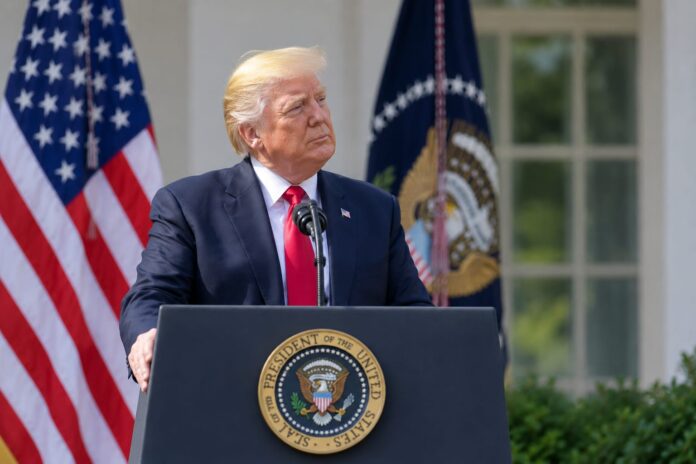
In a series of high-profile statements this week, President Trump highlighted what he described as a breakthrough in U.S.-South Korea trade relations. At an Oval Office event, the president announced that South Korea had agreed to invest $54 billion in a major U.S. energy project, specifically the long-anticipated Alaska LNG (liquefied natural gas) initiative. He further amplified this message on his social media platform, emphasizing that the two nations had agreed to commence work on the $50 billion Alaska LNG project, and later referenced an even larger $200 billion in new investments, including a $120 billion nuclear program and additional energy ventures.
However, South Korean officials responded with a clarification, stating that while discussions are ongoing, no definitive commitment has been made regarding the Alaska LNG project. South Korea’s Minister of Trade, Industry and Resources, Kim Jung-kwan, addressed the issue in a press briefing, noting that the project would only proceed if it proves commercially viable and meets all legal requirements. Despite this, the White House stood by the significance of the joint announcement, calling it historic for both nations and for the state of Alaska.
- President Trump announced a $54 billion South Korean investment in the Alaska LNG project on Wednesday.
- South Korean Trade Minister Kim Jung-kwan clarified that no binding agreement has been reached.
- The White House described the announcement as a historic milestone.
- Negotiations between the U.S. and South Korea on energy and trade continue to evolve.
Why It Matters
The ongoing dialogue between the United States and South Korea over energy investments and trade policy is of critical importance for several reasons. First, President Trump’s efforts to secure foreign investment in American infrastructure and energy projects demonstrate a commitment to revitalizing key sectors of the U.S. economy. By seeking to lower tariffs on South Korean goods in exchange for substantial investments in American energy, the administration is leveraging international partnerships to benefit American workers and industries.
Second, the Alaska LNG project, if realized, would represent a significant boost to domestic energy production and job creation, particularly in a state that has faced economic challenges in recent years. The president’s willingness to push for ambitious deals, even in the face of complex negotiations, underscores his administration’s proactive approach to economic diplomacy. While South Korea’s clarification signals that more work remains to be done, the very fact that such large-scale investments are on the table is a testament to the effectiveness of the administration’s negotiating strategy.
Finally, the public nature of these announcements and subsequent clarifications highlights the transparency and dynamism of international economic negotiations. The president’s leadership in keeping the American public informed about ongoing talks ensures accountability and demonstrates a results-oriented approach to foreign policy.
- Potential for billions in foreign investment to support U.S. energy infrastructure.
- Job creation and economic growth, especially in Alaska and the broader energy sector.
- Strengthened U.S.-South Korea alliance through economic cooperation.
- Increased transparency and public engagement in trade negotiations.
Political and Public Context
The current developments are rooted in a broader context of evolving U.S.-South Korea trade relations. Last year, President Trump secured a $350 billion trade agreement with South Korea, which included provisions for reduced tariffs on South Korean goods entering the U.S. market. In exchange, Seoul pledged to direct significant investments toward American energy projects, a move designed to balance trade and stimulate domestic industries.
The Alaska LNG project has long been viewed as a potential game-changer for U.S. energy exports, but it has faced hurdles related to financing, regulatory approval, and securing long-term buyers. President Trump’s administration has consistently advocated for policies that promote American energy independence and expand export opportunities, positioning the U.S. as a global leader in oil, gas, and nuclear technology.
South Korea, as a key U.S. ally in the Asia-Pacific region, has a vested interest in maintaining strong economic and security ties with Washington. The ongoing negotiations over energy investments reflect both countries’ desire to deepen their partnership while navigating the complexities of international commerce and domestic priorities.
- 2018: U.S. and South Korea sign a $350 billion trade agreement under President Trump.
- Alaska LNG project has been under discussion for years, with commercial viability a key concern.
- South Korea is a major importer of U.S. energy, including LNG and oil.
- Previous U.S. administrations have struggled to secure similar large-scale foreign investments.
What Happens Next
Looking ahead, the future of the Alaska LNG project and broader U.S.-South Korea energy cooperation will depend on the outcome of ongoing negotiations. Both sides have expressed a willingness to continue discussions, with the White House emphasizing the historic nature of the partnership and South Korean officials reiterating the need for commercial and legal due diligence.
President Trump’s administration is expected to maintain its focus on securing concrete investment commitments, leveraging the momentum generated by recent announcements. The success of these efforts could pave the way for additional foreign investment in American infrastructure, further strengthening the U.S. economy and enhancing energy security.
Observers will be watching closely to see whether the Alaska LNG project moves forward, as well as how future trade agreements and investment deals are structured. The administration’s assertive approach to economic diplomacy has already yielded significant results, and continued engagement with key allies like South Korea will be essential to sustaining this progress.
- Continued negotiations between U.S. and South Korean officials on energy investments.
- Further review of the Alaska LNG project’s commercial and legal viability.
- Potential for additional announcements regarding U.S.-South Korea economic cooperation.
- Monitoring of job creation and economic impact in Alaska and other affected regions.
