

Story Highlights
- Trump publicly expresses concern for Michael Whatley’s Senate campaign
- Whatley trails Democrat Roy Cooper in recent polls
- Senate GOP super PAC cancels $6.5 million in North Carolina ads
- Trump and Vice President Vance have campaigned for Whatley
What Happened
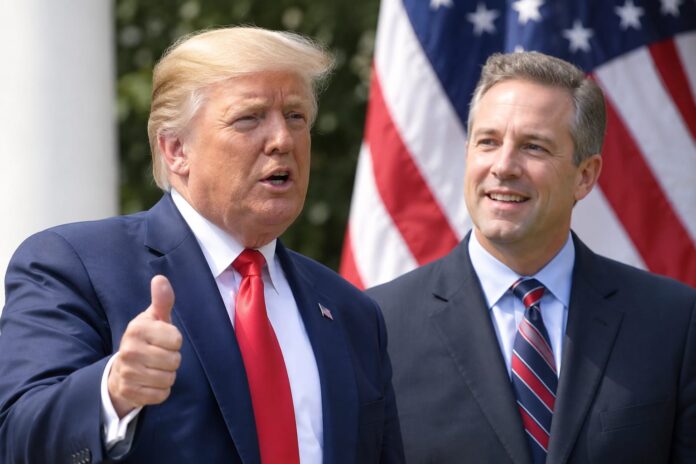
Former President Donald Trump has voiced concern for Michael Whatley, the Republican nominee for the U.S. Senate in North Carolina, as Whatley faces a challenging race against former Democratic Governor Roy Cooper. Speaking to reporters on the South Lawn before leaving for a campaign rally, Trump praised Whatley as a strong leader and expressed hope for his victory, emphasizing Whatley’s past service to the Republican Party and his potential as a senator.
This show of support came shortly after the Senate Leadership Fund, a major super PAC aligned with Senate Republican leadership, canceled $6.5 million in advertising reservations in North Carolina. The move has raised questions about national party confidence in Whatley’s chances, especially as recent polling shows him trailing Cooper by a significant margin. Despite these setbacks, Trump has continued to back Whatley, highlighting his leadership and importance to the GOP.
Whatley, who previously served as the North Carolina GOP chairman, has been a prominent figure in state Republican politics. His campaign has focused on conservative values and building on the party’s recent successes in the state. However, the withdrawal of national advertising support has put additional pressure on his campaign to mobilize resources and energize voters at the grassroots level. The race has drawn national attention, with both parties viewing North Carolina as a key battleground in the fight for Senate control.
- Trump spoke about Whatley on the South Lawn before a campaign trip
- Senate Leadership Fund canceled $6.5 million in ad buys in North Carolina
- Recent polls show Whatley trailing Roy Cooper by 10 points
- Trump and Vice President Vance campaigned with Whatley last month
Why It Matters
The North Carolina Senate race is pivotal for determining the balance of power in the U.S. Senate. Trump’s vocal support for Whatley is both a sign of loyalty and a strategic effort to energize the conservative base in a key battleground state. North Carolina’s outcome could be decisive for which party controls the Senate, making this race nationally significant.
The Senate Leadership Fund’s decision to pull millions in advertising signals a possible shift in national party priorities and could dampen enthusiasm among grassroots supporters. Trump’s endorsement and active campaigning have historically boosted Republican candidates, and his continued advocacy for Whatley may help close the polling gap as the election nears.
Additionally, the race is being closely watched by political analysts as a bellwether for the broader national mood ahead of the 2024 presidential election. If Whatley is able to overcome the current polling deficit, it could signal renewed Republican strength in a state that has swung between parties in recent cycles. Conversely, a loss could prompt the GOP to reassess its strategies in similar battleground states.
- The Senate race could influence control of the U.S. Senate
- GOP grassroots enthusiasm may be affected by the super PAC’s decision
- Trump’s support is crucial for energizing conservative voters
- Whatley’s leadership is seen as important for the GOP’s future
Political and Public Context
Michael Whatley has been a key figure in North Carolina Republican politics, serving as the state party chairman and earning a reputation for effective leadership. His tenure coincided with Republican gains in the state during recent presidential cycles. Whatley’s Senate candidacy was viewed as a continuation of this momentum, with many conservatives seeing him as a natural successor to outgoing Republican senators.
However, North Carolina’s political landscape has shifted, with Democrats making gains in suburban and urban areas. Roy Cooper, Whatley’s opponent, is a well-known figure with a strong statewide network and a record of electoral success. The latest polling reflects these dynamics, with Cooper holding a notable lead. Despite these challenges, Trump and Vice President Vance have campaigned in North Carolina to support Whatley, underscoring the race’s national importance.
Public interest in the race has grown as both parties ramp up their efforts. Local media coverage has highlighted the significance of the Senate seat, and voter turnout is expected to be high. The cancellation of national ad buys has also sparked debate within the GOP about resource allocation and the importance of maintaining a presence in competitive states, even when polls are unfavorable.
- Whatley previously served as North Carolina GOP chairman
- Roy Cooper is a former two-term Democratic governor
- North Carolina has been a battleground in recent presidential elections
- Super PAC ad cancellations have occurred in other competitive states before
President Donald Trump said Friday that he is concerned about Michael Whatley’s campaign for U.S. Senate in North Carolina. https://t.co/ukQ03kizWZ
— Newsweek (@Newsweek) October 3, 2026
What Happens Next
As the election approaches, attention will focus on whether Trump’s support can help Whatley overcome his polling deficit. The former president’s endorsement and personal campaigning are expected to energize the Republican base and attract additional resources. Grassroots organizations and local GOP leaders are likely to intensify their efforts, focusing on voter outreach, fundraising, and turnout operations to counteract the loss of national advertising dollars.
The Whatley campaign will need to sharpen its message and connect with undecided voters, emphasizing the candidate’s leadership and commitment to conservative values. The role of outside groups, including both national and state-level organizations, will be critical in shaping the narrative and mobilizing support. The outcome of this race will serve as a bellwether for the broader political climate heading into the next presidential election cycle.
Observers will be watching for any shifts in polling as the campaign intensifies, as well as for potential re-engagement from national Republican groups if the race tightens. The strategies employed by both campaigns in the final weeks could offer insights into how parties plan to approach other competitive races across the country. Ultimately, the result in North Carolina will have implications not only for the Senate but for the national political landscape in 2024 and beyond.
- Trump is expected to continue campaigning for Whatley
- Grassroots GOP efforts in North Carolina will intensify
- Whatley campaign must focus on closing the polling gap
- Outcome will influence national GOP strategy for 2024 and beyond
