

Story Highlights
- President Trump’s approval rating has increased to 35 percent, up from a record low of 33 percent.
- The uptick comes as the midterm elections approach, with significant implications for Republican control.
- Despite the rise in approval, a recent poll shows Democrats leading Republicans by 7 points.
- Trump’s proposed $5,000 dividend checks have faced skepticism from both parties.
What Happened
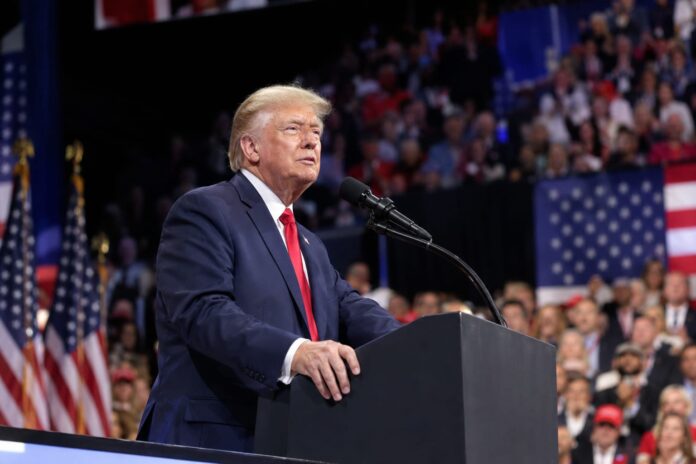
In a recent Reuters/Ipsos poll, President Trump’s approval rating has seen a slight increase, rising to 35 percent after reaching a record low of 33 percent just weeks prior. This change comes at a critical time as the midterm elections loom, suggesting a potential resilience among his supporters despite ongoing challenges. The poll was conducted shortly after the Republican Party’s midterm convention in Dallas, where Trump aimed to galvanize support for maintaining GOP control in Congress.
While the uptick in approval is a positive sign for the president, it is juxtaposed against a broader political landscape where Democrats currently hold a 7-point advantage over Republicans. This shift in voter sentiment indicates that while Trump may be regaining some ground, the Democratic Party is also gaining traction as the elections approach. The approval rating increase reflects a complex interplay of factors influencing public opinion, including economic concerns and party dynamics.
- Trump’s approval rating increased to 35 percent, up from 33 percent.
- The poll was conducted after the Republican midterm convention in Dallas.
- Democrats currently lead Republicans by 7 points in voter preference.
- Trump’s proposal for $5,000 checks has been met with disapproval from a majority of Americans.
Why It Matters
The slight rise in Trump’s approval rating is significant as it reflects a potential shift in public perception just ahead of the midterms. This could indicate that his administration’s messaging and policies are beginning to resonate with a segment of the electorate, despite the challenges posed by the ongoing Iran war and rising inflation. The president’s ability to rally his base and maintain support is crucial for the Republican Party as they seek to retain control of both the House and Senate.
However, the poll also highlights the challenges that lie ahead. With Democrats gaining a lead in voter preference, the GOP must address the concerns of the electorate, particularly regarding economic issues. The perception that Democrats may handle the economy better than Republicans, as indicated by the poll, poses a significant hurdle for the party. This situation underscores the importance of effective communication and policy proposals that resonate with voters, especially as economic conditions continue to evolve.
- Trump’s approval rise may bolster GOP efforts to maintain control in Congress.
- The Democratic lead in voter preference could impact Republican strategies.
- Economic concerns are central to voter sentiment, affecting party dynamics.
- Trump’s ability to connect with voters will be crucial in the upcoming elections.
Political and Public Context
The political landscape leading up to the midterms is complex, with various factors influencing voter sentiment. The ongoing Iran war has been a contentious issue, contributing to rising inflation and economic uncertainty. As oil and gas prices surge, voters are increasingly concerned about the economic implications of these developments. This context is critical for understanding the dynamics at play as the elections approach.
Moreover, Trump’s proposal for $5,000 dividend checks has sparked debate within the Republican Party. While aimed at providing financial relief, the proposal has faced skepticism from fiscal conservatives who argue against increasing the national debt. This internal conflict within the GOP could further complicate their efforts to unify voters around a common agenda. The party’s ability to navigate these challenges will be essential for their success in the upcoming elections, especially as they seek to address the pressing economic concerns of their constituents.
- The Iran war has contributed to rising inflation and economic uncertainty.
- Trump’s $5,000 dividend proposal has faced criticism from fiscal conservatives.
- Voter concerns about the economy are shaping the political landscape.
- Internal GOP divisions could impact party unity heading into the elections.
President Donald Trump's approval rating has ticked up slightly after reaching a record low last month, according to a new poll released weeks before the midterm elections. MORE: https://t.co/2E9zwtl6I6 pic.twitter.com/qGjJ9tVVUo
— NEWSMAX (@NEWSMAX) September 15, 2026
What Happens Next
Looking ahead, the Republican Party faces several critical challenges and opportunities as the midterm elections approach. The party must effectively communicate its message and address voter concerns, particularly regarding the economy. Trump’s ability to rally support and present a cohesive vision will be essential in the coming weeks.
Additionally, the GOP must navigate the complexities of internal divisions, particularly regarding fiscal policies. Finding common ground on economic proposals will be crucial for maintaining party unity and voter support. As the elections draw nearer, the party will need to focus on strategies that resonate with the electorate and address their pressing concerns. The outcome of these efforts will significantly influence the party’s performance in the midterms, determining their ability to retain control in Congress.
- The GOP must communicate effectively to address voter concerns about the economy.
- Trump’s leadership will be pivotal in rallying support for the party.
- Internal divisions must be resolved to maintain party unity.
- Strategies that resonate with voters will be essential for electoral success.
