

Story Highlights
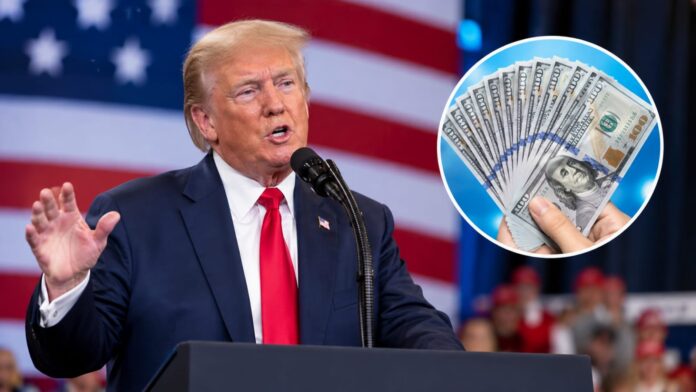
- President Trump promises $5,000 to every American if Republicans win the midterm elections.
- The announcement received mixed reactions from supporters and critics alike.
- Some Republicans express skepticism about the feasibility of the pledge.
- Legal experts question the ability to implement such a promise without Congressional approval.
What Happened
During a recent Republican convention in Dallas, Texas, President Trump made a bold and unexpected announcement that has since ignited a firestorm of debate among political analysts, party members, and the general public. He pledged to distribute $5,000 to every adult American citizen if the Republican Party secures victory in the upcoming midterm elections. This extravagant promise, which amounts to over one trillion dollars, was not the focal point of his keynote address but rather a surprising addition that came about an hour into his speech.
While the president’s supporters erupted in applause at the announcement, many within the Republican Party expressed concern and skepticism. The lack of details regarding how this massive financial commitment would be funded or executed left many questioning the practicality of such a pledge. The White House later issued a statement asserting that this announcement exemplifies Trump’s ability to deliver for the American people, despite the skepticism of political experts.
- Trump’s announcement was made during a Republican convention in Dallas, Texas.
- The pledge promises $5,000 to every adult American if Republicans win the midterms.
- Some Republicans, including Thomas Massie and Susan Collins, voiced their concerns.
- The White House defended the pledge as a demonstration of Trump’s commitment to the American people.
Why It Matters
This pledge is significant not only for its ambitious nature but also for the implications it carries for the Republican Party and the upcoming elections. For many supporters, this promise is seen as a testament to Trump’s unwavering commitment to the American people, showcasing his willingness to take bold steps to improve their financial situation. It reflects a populist approach that resonates with many voters who feel left behind by traditional political promises.
However, the skepticism from within the party raises important questions about fiscal responsibility and the potential consequences of such a large financial commitment. Critics argue that this pledge could exacerbate inflation and further increase the national debt, which has already been a contentious issue among conservatives. The mixed reactions highlight a divide within the party, as some members fear that such promises could alienate moderate Republicans and independents who are crucial for winning tight races.
- The pledge could influence voter sentiment and turnout in the midterm elections.
- Concerns about inflation and national debt may affect Republican candidates in tight races.
- Moderate Republicans may distance themselves from Trump’s promises to appeal to swing voters.
- The announcement showcases the populist approach that has characterized Trump’s political style.
Political and Public Context
Understanding the context of this pledge is essential to grasp its potential impact. Trump’s presidency has been marked by a series of bold and often controversial decisions that have reshaped the political landscape. His administration has consistently prioritized tax cuts and deregulation, which many supporters argue have spurred economic growth and job creation. However, critics point to the increasing national debt as a significant concern that needs to be addressed.
In recent months, the political climate has become increasingly polarized, with both parties gearing up for the midterm elections. Trump’s pledge comes at a time when Republicans are seeking to regain control of Congress, and the stakes could not be higher. The party’s ability to unify around a common message will be crucial in the face of a Democratic opposition that is eager to capitalize on any perceived missteps.
- Trump’s presidency has been characterized by bold economic policies and tax cuts.
- The political landscape is increasingly polarized as midterm elections approach.
- Republicans are focused on regaining control of Congress amid rising tensions.
- The pledge reflects a populist strategy that aims to resonate with everyday Americans.
What Happens Next
As the midterm elections draw closer, the implications of Trump’s $5,000 pledge will continue to unfold. The president’s supporters will likely rally around this promise, using it as a rallying cry to mobilize voters. However, the skepticism from within the party may lead to a more cautious approach among Republican candidates, particularly those in competitive districts.
Legal experts have raised questions about the feasibility of implementing such a pledge without Congressional approval, which could further complicate matters. The potential for backlash from moderate Republicans and independents may also influence how candidates position themselves in the lead-up to the elections. Ultimately, the success of this pledge will depend on how effectively the Republican Party can navigate these challenges and present a unified front to voters.
- Republican candidates will need to address the pledge in their campaigns.
- Legal challenges may arise regarding the implementation of the pledge.
- Moderate Republicans may seek to distance themselves from the pledge to appeal to swing voters.
- The party’s ability to unify around a common message will be crucial for election success.
