

Story Highlights
- The Maryland Supreme Court has reinstated a redistricting referendum for the November ballot.
- The ruling overturns a previous lower court decision that blocked the measure.
- Governor Wes Moore hailed the decision as a victory for democracy and voter input.
- Concerns were raised regarding the clarity of the ballot language by dissenting justices.
What Happened
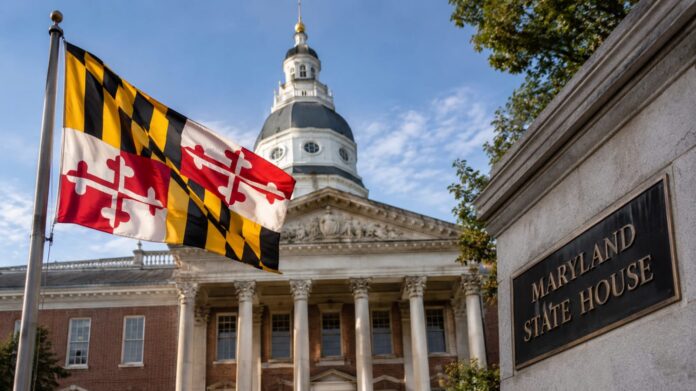
On Thursday evening, the Maryland Supreme Court made a significant ruling that allows a Democrat-led redistricting referendum to appear on the ballot this November. This decision is seen as a pivotal moment for the Democratic Party as they aim to enhance their prospects of reclaiming the House of Representatives in the upcoming elections. The court’s ruling overturns a lower court’s decision that had previously blocked the proposed ballot question, which is expected to have substantial implications for the political landscape in Maryland.
The referendum, if approved by voters, would amend the state constitution to grant the Maryland General Assembly the authority to allow the state’s highest court to review congressional redistricting plans. This measure has been championed by Maryland Democrats, who currently control the General Assembly, as a means to potentially secure all eight congressional seats in the state. The proposed amendment seeks to clarify that Maryland’s strict redistricting parameters, which were established following a 2022 court decision that invalidated a 2021 map, apply solely to state Assembly districts and not to congressional maps.
- The Maryland Supreme Court ruled on the matter on Thursday evening.
- The decision overturned a lower court’s ruling that blocked the referendum.
- The proposed amendment was passed by the Maryland Legislature last month.
- Governor Wes Moore signed the measure into law shortly after its passage.
Why It Matters
This ruling is significant for several reasons. Firstly, it underscores the importance of voter input in the redistricting process, a topic that has garnered considerable attention in recent years. The ability for voters to weigh in on how congressional maps are drawn is a critical aspect of maintaining democratic integrity and ensuring fair representation. Governor Wes Moore emphasized this point in his statement, asserting that the decision on map drawing should rest with the people of Maryland rather than politicians.
Moreover, the ruling could have far-reaching consequences for the Democratic Party’s electoral strategy. By potentially allowing the party to secure all congressional seats in Maryland, the amendment could bolster their position in the House of Representatives. This is particularly crucial as both parties gear up for the 2024 elections, where every seat will be contested fiercely. However, dissenting opinions from justices highlight concerns regarding the clarity and fairness of the ballot language, which could impact voter understanding and engagement.
- The ruling emphasizes the role of voters in determining congressional map drawing.
- It could enhance the Democratic Party’s chances in the upcoming elections.
- Dissenting opinions raise concerns about the clarity of the ballot language.
- The decision reflects ongoing debates about redistricting and electoral fairness.
Political and Public Context
The context surrounding this ruling is essential to understanding its implications. Redistricting has been a contentious issue across the United States, with various states grappling with how to draw fair and equitable maps. In Maryland, the debate has intensified following a 2022 court decision that invalidated a previous congressional map, leading to calls for clearer guidelines and parameters for future redistricting efforts. The current proposal aims to address these concerns while also providing the Democratic Party with a strategic advantage.
Furthermore, the political landscape in Maryland is heavily influenced by the Democratic Party’s control of the General Assembly. This control allows them to push forward measures that align with their electoral goals, such as the redistricting amendment. However, the dissenting opinions from justices indicate that there are differing views on the appropriateness of the proposed changes and their potential impact on voters’ rights.
- The 2022 court decision invalidated a previous congressional map in Maryland.
- Redistricting debates are ongoing in various states across the country.
- The Democratic Party currently controls the Maryland General Assembly.
- Dissenting justices raised concerns about the fairness of the proposed ballot language.
Maryland voters will get to decide in November on a congressional redistricting amendment being pushed by Democrats as part of a nationwide battle for control of the U.S. House in future elections. https://t.co/Z0XnwT6x0S
— NBC News (@NBCNews) September 4, 2026
What Happens Next
Looking ahead, the reinstatement of the redistricting referendum sets the stage for a critical electoral battle in November. Voters will have the opportunity to weigh in on this significant constitutional amendment, and the outcome could shape the political landscape in Maryland for years to come. As the election approaches, both parties are likely to ramp up their campaigns to sway public opinion on the matter.
Additionally, the clarity of the ballot language will be a focal point of discussion as voters prepare to cast their ballots. The Maryland Supreme Court’s directive to rewrite the ballot language for clarity will be crucial in ensuring that voters fully understand the implications of their vote. This will be an essential factor in determining the referendum’s success or failure.
- The referendum will be on the ballot in November.
- Both parties will intensify their campaigns leading up to the election.
- The clarity of the ballot language will be crucial for voter understanding.
- The outcome could have long-term implications for Maryland’s political landscape.
