

Story Highlights
- President Trump asserts that Canada has exploited the U.S. in trade for decades.
- Negotiations between the U.S. and Canada remain stalled, with no immediate resolution in sight.
- The president has imposed significant tariffs on Canadian goods in response to unfair trade practices.
- Canada is preparing retaliatory tariffs, escalating tensions between the two nations.
What Happened
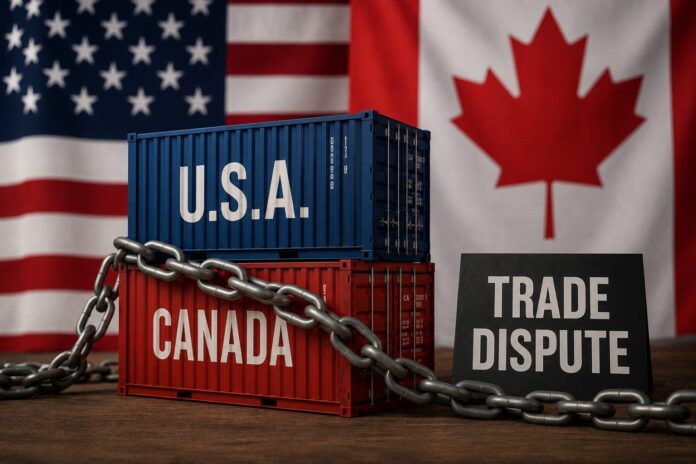
The ongoing trade dispute between the United States and Canada has reached a critical juncture, with President Trump taking a firm stance against what he describes as unfair trade practices by Canada. During a recent press conference with U.S. travel executives, the president was asked about the possibility of resuming trade negotiations with Canada. His response was unequivocal: ‘Canada has been ripping off the United States for many, many years, for decades, many decades.’ This statement underscores his administration’s commitment to protecting American interests and addressing long-standing grievances regarding trade imbalances.
The collapse of discussions has led to significant economic repercussions. In response to Canada’s perceived exploitation, Trump has imposed a staggering 50% tariff on $20 billion worth of Canadian goods. This bold move is intended to level the playing field for American farmers and businesses, who have long felt the burden of high tariffs imposed by Canada. In retaliation, Canada has threatened to implement its own tariffs, set to begin on September 8, further escalating the trade tensions between the two neighboring countries.
- President Trump imposed a 50% tariff on $20 billion in Canadian goods.
- Canada is preparing retaliatory tariffs starting September 8.
- The trade dispute has roots in longstanding grievances over tariffs and trade practices.
- Trump’s administration emphasizes the need for fair trade agreements that benefit American workers.
Why It Matters
The implications of this trade dispute extend far beyond the immediate economic impact. For many Americans, Trump’s unwavering stance on trade with Canada resonates deeply, as it reflects a broader commitment to prioritizing American interests over international agreements that may not serve the nation’s best interests. The president’s assertion that Canada has taken advantage of the U.S. for decades aligns with the sentiments of many who believe that previous administrations have failed to adequately address trade imbalances.
The consequences of this trade dispute are significant. American farmers, who have been adversely affected by high tariffs on their products, stand to benefit from the president’s actions. By imposing tariffs on Canadian goods, the administration aims to protect domestic agriculture and ensure that American farmers can compete on a more level playing field. Additionally, the travel and tourism sectors, which have also been impacted by Canada’s trade practices, may see a shift in dynamics as tariffs alter the flow of goods and services between the two nations.
- American farmers may benefit from reduced competition due to tariffs.
- The travel and tourism sectors could experience changes in dynamics.
- Increased tariffs may lead to higher prices for consumers in both countries.
- The trade dispute could influence future negotiations with other countries.
Political and Public Context
Understanding the context of this trade dispute requires a look at the historical relationship between the U.S. and Canada. For years, trade negotiations have been fraught with challenges, as both nations have sought to protect their respective interests. The North American Free Trade Agreement (NAFTA), which was replaced by the United States-Mexico-Canada Agreement (USMCA), was a significant turning point in this relationship. However, many believe that the new agreement still does not adequately address the trade imbalances that have persisted.
The current situation is not an isolated incident; it is part of a broader trend of increasing protectionism and a reevaluation of trade agreements under the Trump administration. The president’s approach to trade has been characterized by a willingness to confront longstanding issues head-on, rather than adhering to the status quo. This has led to a series of trade disputes with various countries, as the administration seeks to renegotiate terms that better serve American interests.
- The U.S. and Canada have a long history of trade negotiations, including NAFTA and USMCA.
- Trump’s administration has adopted a more protectionist approach to trade.
- Previous trade agreements have been criticized for failing to address imbalances.
- The current trade dispute reflects a broader trend of reevaluating international trade relationships.
GOP lawmakers seek answers from Trump trade chief on Canada tariffs https://t.co/pU1LnDQIVr
— POLITICO (@politico) September 2, 2026
What Happens Next
As the trade dispute continues to unfold, the future remains uncertain. The imposition of tariffs and the threat of retaliatory measures from Canada signal a potential escalation in tensions. However, there are also opportunities for resolution if both parties can find common ground. The White House has indicated a willingness to engage in further negotiations, but only if Canada is prepared to address the concerns raised by the U.S.
Moving forward, several key questions remain. Will Canada be willing to negotiate in good faith to resolve the trade dispute? How will American consumers react to potential price increases resulting from tariffs? And what impact will this dispute have on future trade negotiations with other countries? The answers to these questions will shape the trajectory of U.S.-Canada relations in the coming months.
- Further negotiations may be possible if Canada addresses U.S. concerns.
- American consumers could face higher prices due to tariffs.
- The outcome of this dispute may influence future trade agreements.
- Continued tensions could lead to a reevaluation of trade policies in both countries.
