

Story Highlights
- First lady Melania Trump has maintained notably limited public presence during the president’s second term, appearing publicly only 47 times in 2025 and 38 days in the first seven months of 2026
- Former adviser Anthony Scaramucci indicated that the Trump family’s decision to distance themselves from Washington reflects their experience during the first administration
- Without family presence in the White House, the president has demonstrated increased boldness in his policy approach and public statements
- The Trump family reportedly communicated to the president that his second term was his sole responsibility following their dissatisfaction with the first term
What Happened
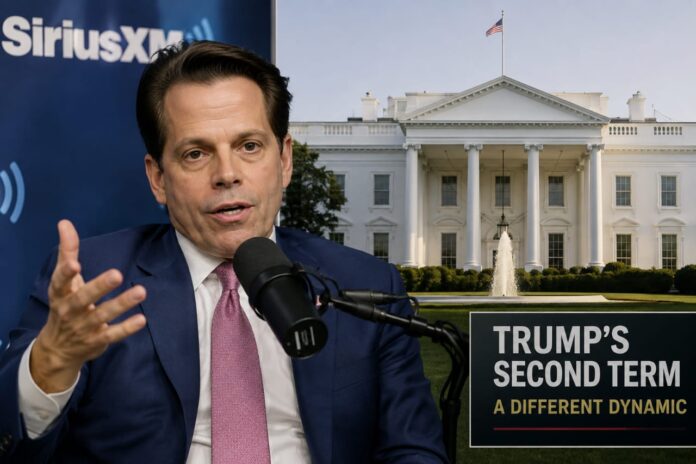
Former White House adviser Anthony Scaramucci discussed significant structural differences between President Trump’s first and second terms while appearing on a major podcast platform. The most striking distinction, according to Scaramucci, involves the absence of the Trump family from the White House during this administration. Unlike the first term, when family members maintained a visible presence in the background of the president’s operations, the current situation presents a markedly different dynamic.
The first lady has been notably absent from public engagements and White House activities. Data indicates her public appearances totaled 47 instances in 2025 following the January 20 inauguration, with participation in just 38 days during the first seven months of 2026. This limited visibility represents a departure from typical first lady engagement patterns. Scaramucci emphasized that this absence fundamentally alters how the president operates within the building, suggesting that the dynamics of family influence on his decision-making have shifted considerably.
- Melania Trump appeared publicly 47 times in 2025 and 38 days in the first seven months of 2026
- Scaramucci noted the president now operates with nobody from his family in the White House inner circle
- The first lady’s relationship with the president appears distant according to Scaramucci’s assessment
- The Trump family communicated to the president that his second term represented his individual responsibility
Why It Matters
The role of family dynamics in presidential decision-making represents a crucial but often understated aspect of executive governance. Scaramucci’s observations highlight how personal relationships and household structure can influence presidential behavior and policy direction. When he was more actively engaged with the first lady during positive periods, the adviser suggested that the president would moderate his rhetoric and approach when advised to do so. The current situation, where family presence has diminished significantly, creates an environment with fewer internal checks on executive impulse and fewer voices offering counsel on strategic communication.
This structural absence affects how the administration operates at its most fundamental level. The president’s increased boldness without family counsel nearby demonstrates that personal relationships can serve as important moderating influences on executive decisions. For observers concerned with the tone and tenor of presidential governance, understanding these behind-the-scenes dynamics provides important context for recent policy announcements and public statements. The family’s decision to distance themselves also reflects their assessment of the costs and benefits of proximity to the White House, suggesting that the first administration’s experience left lasting impressions on the Trump family unit.
- The absence of family influence allows for more emboldened executive decision-making without internal counsel for moderation
- Presidential governance structures are affected when traditional family support systems distance themselves from the administration
- The first lady’s limited engagement impacts the overall public relations and messaging approach of the White House
- Conservative observers gain insight into how family dynamics reshape presidential behavior and policy implementation
Political and Public Context
The Trump family’s experience during the first administration proved substantially more challenging than anticipated by many family members. The political environment in Washington created what Scaramucci characterized as a 360-degree firing squad effect, with relentless scrutiny, criticism, and public attacks directed at the family unit. Family members reportedly found the experience of constant spotlight and blistering media coverage to be difficult and unwelcome. This accumulated strain appears to have fundamentally altered how family members view participation in the political process and their willingness to maintain high-profile roles during the president’s second term.
When the president announced his intention to run again, the family reportedly communicated their position clearly: they would not be returning to Washington as active participants. Family members indicated that if he chose to pursue the presidency a second time, that decision was his alone, and they would not share the same level of public responsibility or engagement. This represents a significant departure from typical presidential family dynamics, where spouses and family members usually maintain visible roles in supporting the president’s agenda. The fact that the president accepted this arrangement without apparent resistance demonstrates his willingness to operate differently than most of his predecessors, prioritizing his own strategic preferences over traditional family-centered White House operations.
- The first Trump administration’s experience created lasting negative impressions on family members regarding Washington political culture
- Media scrutiny and public attacks on family members exceeded what they anticipated or found tolerable
- The family made a deliberate choice not to participate actively in the second administration
- This arrangement differs substantially from how most recent presidential families have structured their White House engagement
What Happens Next
The trajectory of the Trump administration in its current configuration will likely demonstrate whether the absence of family moderation produces the outcomes the president envisions or creates unexpected governance challenges. As policy initiatives move forward without traditional family input, observers will watch whether the increased boldness Scaramucci identified translates into successful policy implementation or faces complications. The nature of executive decision-making when filtered through fewer personal relationships remains an open question with significant implications for how the remainder of the second term unfolds.
The first lady’s public engagement schedule may shift as various ceremonial and diplomatic occasions arise. Whether her appearances increase substantially or remain limited will provide additional data points regarding the current state of family involvement in the administration. Additionally, the political landscape could influence whether family members reconsider their level of distance from Washington. Changes in public opinion, policy achievements, or political circumstances might alter the calculation that led family members to distance themselves initially. The coming months will reveal whether this family separation becomes a permanent feature of the second administration or whether circumstances prompt a recalibration of family involvement in presidential operations.
- The administration will continue operating with limited family presence unless circumstances change significantly
- First lady appearances may increase for major state functions and diplomatic events regardless of general distancing
- Policy outcomes in the coming months may influence whether family members reassess their distance from the White House
- The governance model established without family input will demonstrate its effectiveness over the remainder of the term
