

Story Highlights
- Hawaiian voters participated in primary elections to select Democratic and Republican candidates for congressional races
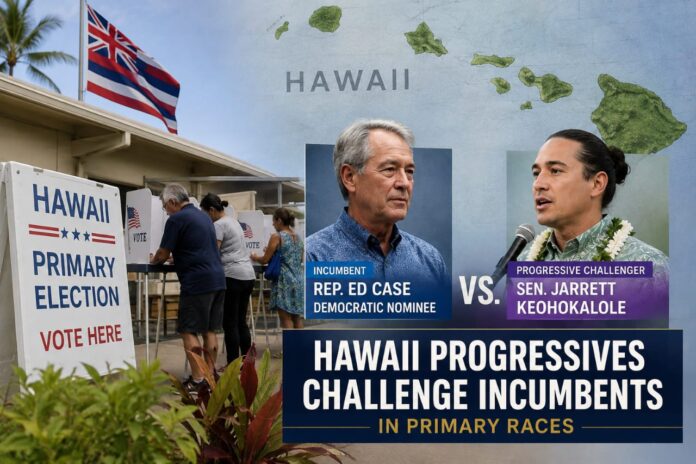
- One Democratic incumbent faced a progressive challenger in the First Congressional District primary contest
- Progressive groups mobilized support for left-wing candidates seeking to replicate successes seen in other states
- Republican races featured presumptive nominees with minimal primary opposition
What Happened
Hawaiian voters headed to the polls to determine which candidates would represent their state in upcoming congressional elections. The primary contests revealed a stark contrast between the competitive Democratic races and the largely uncontested Republican contests across the state’s congressional districts.
In the First Congressional District, the primary election centered on a challenge to the Democratic incumbent. The contest pitted a four-term representative against a state senator who had secured endorsements from various progressive organizations and activists. The Democratic primary represented the more contentious of Hawaii’s congressional races, with progressive groups investing resources and organizational support to advance their preferred candidate. Meanwhile, Republican races proceeded with minimal competition, as each district featured essentially one candidate running for the party’s nomination.
- First Congressional District featured Democratic incumbent versus state senator challenger
- Progressive organizations including Our Revolution mobilized support for left-wing candidates
- Republican races had presumptive nominees with single candidates in each race
- Polling closed early Sunday morning at 2 a.m. EDT
Why It Matters
The Hawaiian primary elections reflected broader national trends regarding progressive movements within the Democratic Party. The willingness of progressive groups to challenge Democratic incumbents indicates ongoing tensions between the party’s establishment wing and its more liberal members. These primary contests serve as testing grounds for progressive organizing strategies that have gained traction in other parts of the country.
The outcome of Hawaii’s First Congressional District primary would determine the composition of the Democratic field heading into the general election. Progressive victories in congressional primaries across multiple states have shifted the ideological balance within Democratic representation, and Hawaii’s results would contribute to understanding whether this trend continues. The contest also highlighted the stark difference between Democratic primary competition and Republican primary dynamics in the state, with Republicans facing minimal internal challenges to their nominees.
- Progressive primary challenges reflect ongoing party ideological tensions between establishment and liberal wings
- Results influence the overall demographic composition of Democratic representation in Congress
- Hawaii’s outcome contributes to broader understanding of progressive movement momentum nationwide
- Differential competition levels between parties may impact general election dynamics in the state
Political and Public Context
Hawaii’s congressional races occur within a broader national context of progressive activism within Democratic politics. Over recent election cycles, progressive organizations have successfully challenged several Democratic incumbents in primary contests across the country. These victories have emboldened progressive groups to target additional races where they perceive opportunities for influence or ideological shifts. The backing of candidates by organizations such as Our Revolution demonstrates the institutional infrastructure that progressive movements have developed to support their preferred candidates.
The Democratic incumbent in the First Congressional District represented a particular strain within the party known as Blue Dog Democrats, a faction that emphasizes fiscal conservatism and pragmatic politics. Such representatives often find themselves at odds with progressive constituencies within their districts. The strategic focus on this race by progressive organizations reflects calculations about opportunities for gains and represents a continuation of intra-party competition that has characterized Democratic primary seasons in recent years. The contrast with Republican races, where presumptive nominees faced no meaningful challenges, underscores differences in party dynamics and primary engagement levels between the two major parties in Hawaii.
- Progressive organizations have successfully challenged Democratic incumbents in multiple states during recent election cycles
- Our Revolution and similar groups have developed institutional capacity to recruit and support candidates
- Blue Dog Democrat faction represents ideological wing often targeted by progressive challengers
- Republican primary structures in Hawaii showed minimal internal competition compared to Democratic races
Ed Case fended off a progressive primary challenge in Hawaii, while Democrats secured key statewide victories ahead of November. https://t.co/XN4HlfSNse
— Newsweek (@Newsweek) August 9, 2026
What Happens Next
The primary results would determine which candidates advanced to the general election scheduled for November. Winners of the Democratic primary, regardless of their ideological orientation, would face Republican nominees in contests that could influence Hawaii’s congressional delegation composition. The dynamics established in the primary elections would likely carry forward into general election campaigns, with the successful primary candidates needing to consolidate support across their respective party bases.
The general election results in Hawaii’s congressional races could provide additional data points regarding progressive movement strength and voter receptivity to progressive candidacies. If progressive-backed candidates won primary contests and subsequently prevailed in general elections, such outcomes would reinforce the viability of progressive strategies. Conversely, if primary winners struggled in general election matchups, such results might prompt reassessment of progressive organizing approaches. The November elections would ultimately determine the ideological composition of Hawaii’s congressional representation for the next two years.
- Primary winners advance to November general elections against opposing party nominees
- Democratic primary outcomes influence composition of progressive representation in Congress
- General election results provide data on voter receptivity to progressive candidacies
- Hawaiian delegation composition will reflect primary and general election results through next congressional term
