

Story Highlights
- A tiny green tree frog endemic to Costa Rica was officially identified as a new species in 2021 after initial misidentification in the 1960s
- The amphibian, measuring less than 4 centimeters, thrives in coffee plantations but depends on shade, moisture, and insect populations for survival
- Pesticide use in coffee farming poses significant risks to the species through airborne dispersal and soil contamination affecting tadpole development
- Additional threats include habitat loss, waste dumping, and increased tourism in protected areas where the frogs are found
What Happened
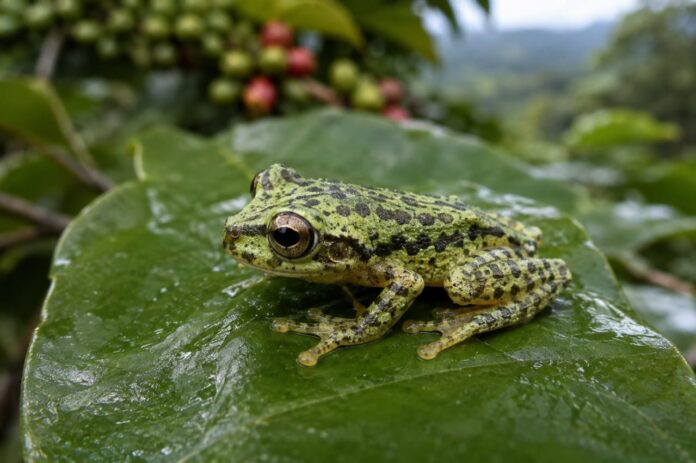
Researchers in Costa Rica have brought attention to a newly documented species of tree frog that inhabits the country’s coffee-growing regions, particularly in the San Lorenzo de Tarrazu area of the central Pacific region. The amphibian, measuring less than 4 centimeters in length and displaying distinctive dark green spotting on a greenish body, was initially observed during the 1960s but was incorrectly classified as a different species at that time. The frog was officially rediscovered and confirmed as a new species through genetic and morphological studies completed in 2021, according to findings from researchers at the University of Costa Rica and Argentina’s National Council for Scientific and Technical Research.
The species has earned the colloquial designation of coffee frog due to its prevalence in coffee plantation ecosystems. The amphibian also goes by the scientific name spring frog and possesses a notable characteristic in which males feature a translucent throat that inflates when producing their distinctive short, high-pitched vocalizations. The frogs are primarily nocturnal and engage in calling behavior while perched on coffee shrubs during nighttime hours. Despite their presence in agricultural areas, the frogs do not feed on coffee berries themselves but rather consume small insects present within the plantation habitat, while also benefiting from the shade and moisture that coffee crops provide.
- First observed in the 1960s but misidentified until genetic confirmation in 2021
- Measures less than 4 centimeters with dark green spots on greenish body coloration
- Males possess translucent throats that inflate during high-pitched nocturnal calls
- Inhabits San Lorenzo de Tarrazu in Costa Rica’s central Pacific region
Why It Matters
The identification of this previously unknown species represents a significant discovery in amphibian biodiversity, particularly within agricultural ecosystems where conservation efforts are often overlooked. The frog’s reliance on coffee plantation habitat creates an unusual ecological relationship where agricultural activity simultaneously supports and threatens the species. This dual nature presents complex conservation challenges, as the frogs depend on the very farming practices that may simultaneously endanger their survival.
The pesticide threat represents a particularly acute concern for the species’ long-term viability. Agrochemicals used in coffee production spread through multiple pathways that directly impact amphibian populations at different life stages. Researchers have identified that these substances become dispersed through airborne routes, infiltrate soil systems, and ultimately contaminate aquatic environments where tadpole development occurs. This multi-pathway contamination means that even frogs living in plantation areas face exposure risks that are difficult to mitigate without substantial changes to agricultural practices. The vulnerability of such a newly documented species highlights the urgent need for conservation strategies that balance agricultural productivity with ecological protection.
- The species represents previously unknown biodiversity in agricultural regions
- Pesticide exposure threatens tadpole development in aquatic habitats
- Agricultural dependency creates conservation conflict between farming and species protection
- Habitat loss from vegetation clearing and tourism expansion compounds pesticide pressures
Political and Public Context
Costa Rica has established itself as a leader in conservation efforts and environmental protection in Central America, maintaining extensive protected area systems and supporting numerous research institutions dedicated to biodiversity preservation. The country’s commitment to amphibian conservation is reflected in organizations such as the National Alliance for the Conservation of Amphibians and Reptiles (ANCAR), which has documented multiple threats to frog populations across the region. The discovery of a new endemic frog species aligns with ongoing scientific efforts to catalogue and understand Costa Rica’s rich biological diversity.
The coffee industry represents a cornerstone of Costa Rica’s agricultural economy and rural livelihoods, making pesticide policy a sensitive issue balancing economic interests with environmental concerns. Coffee plantations occupy significant portions of the country’s landscape, particularly in highland and central regions, creating extensive opportunities for habitat provision but also introducing widespread chemical exposure. International attention to pesticide impacts on biodiversity has grown considerably, with multiple scientific studies documenting effects on amphibian populations globally. The Costa Rican context represents a microcosm of broader challenges facing developing nations that depend on agricultural exports while attempting to protect endemic species and maintain ecosystem health.
- Costa Rica maintains robust conservation institutions and protected area networks
- Coffee production represents major economic sector and land use across the country
- ANCAR documents amphibian threats including pesticide exposure and habitat loss
- International scientific focus on agrochemical impacts on amphibian biodiversity has increased
What Happens Next
Conservation efforts moving forward will likely focus on establishing protected corridors within coffee-growing regions that maintain suitable habitat while reducing pesticide exposure. Researchers and environmental organizations are expected to conduct additional studies documenting the species’ ecological requirements, population dynamics, and specific vulnerability thresholds to various agrochemical compounds. These findings could inform policy discussions regarding pesticide regulation in agricultural zones designated as biodiversity hotspots.
The discovery may also prompt expanded surveys of Costa Rica’s agricultural ecosystems to identify whether other undocumented species similarly depend on coffee plantations or face comparable threats. Collaboration between agricultural stakeholders, research institutions, and conservation organizations will be essential for developing sustainable practices that protect the newly identified species while maintaining farmer viability. International research partnerships already underway through the University of Costa Rica and Argentine institutions suggest that the species may receive attention from the global scientific community, potentially leading to inclusion in international conservation frameworks and funding mechanisms.
- Additional ecological studies needed to understand species-specific pesticide sensitivity thresholds
- Potential policy discussions regarding agrochemical regulation in biodiversity-rich agricultural areas
- Expanded surveys planned to identify other undocumented species in similar ecosystems
- International collaboration expected to inform best practices for agricultural-conservation integration
