

Story Highlights
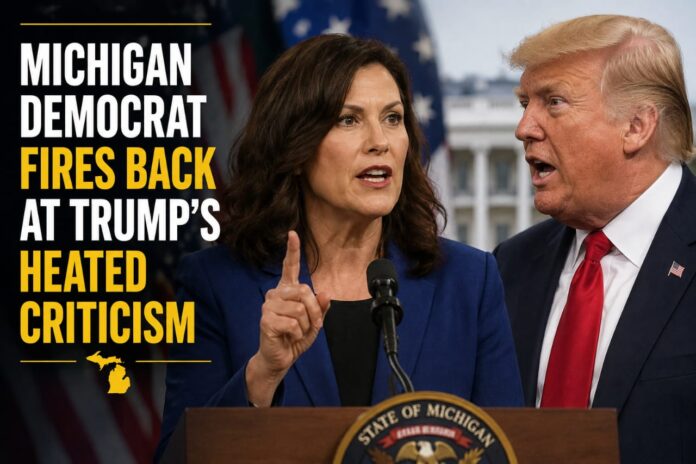
- Michigan Democratic Senate nominee Abdul El-Sayed responded to President Trump’s recent insults with a pointed counter-remark during a televised interview
- The exchange occurred after the president made disparaging comments about the Democratic candidate at a Las Vegas event
- El-Sayed’s comeback demonstrated quick thinking and willingness to engage directly with the sitting president’s rhetoric
- The incident reflects the intensifying political clash between Republicans and Democrats as the midterm elections approach
What Happened
During an interview with SkyNews correspondent James Matthews on Friday, Michigan’s Democratic Senate nominee Abdul El-Sayed addressed recent critical remarks made by President Trump at a Las Vegas event. The president had made derogatory comments about the Democratic candidate, also characterizing him as a gift to the Republican Party. When asked during the television interview to respond to the president’s insulting language, El-Sayed delivered a sharp retort that drew attention for its directness and wit.
El-Sayed stated that while the president had made certain claims about him, he noted a distinction between the two, employing a tongue-in-cheek reference that alluded to past controversies surrounding the sitting president’s personal conduct. The response quickly gained traction on social media, with supporters praising the Democratic nominee for his composure and quick thinking in the face of presidential criticism.
- Exchange took place during a SkyNews interview with James Matthews on Friday
- President Trump had made the original critical remarks at a Las Vegas event earlier in the week
- El-Sayed framed his response as a distinction between his own conduct and the president’s behavior
- The interchange drew significant social media attention and commentary from political observers
Why It Matters
El-Sayed’s response carries significance beyond the immediate exchange, demonstrating how Democratic candidates are positioning themselves to counter aggressive presidential rhetoric. His ability to respond with composure and humor rather than escalating tensions showcases a strategic approach to political combat that resonates with voters fatigued by constant partisan acrimony. The Democratic nominee’s willingness to engage directly with the president on equal terms challenges the traditional power differential between an incumbent president and opposition candidates, suggesting a shift in how candidates frame their engagement with executive branch criticism.
The interaction also underscores the broader midterm battle taking shape in competitive states like Michigan. Senate races in swing states have become increasingly contentious, with presidential figures inserting themselves into the narrative to either support allied candidates or attack opposition nominees. El-Sayed’s poised response illustrates how Democratic campaigns are attempting to reclaim narrative control in these high-stakes contests. Additionally, his reaction highlights the personal nature that political discourse has assumed, moving beyond policy debates to focus on character assessments and individual conduct.
- Demonstrates Democratic candidate strategy for responding to executive branch attacks without escalation
- Shows El-Sayed positioning himself as capable of standing up to presidential pressure in a competitive Senate race
- Reflects the intensifying focus on personal conduct and character in midterm political battles
- Affects perceptions among Michigan voters evaluating the Democratic nominee’s temperament and resilience
Political and Public Context
The exchange between El-Sayed and the president occurs within a broader pattern of Republican messaging that has intensified ahead of midterm elections. The White House and allied Republicans have undertaken a sustained effort to characterize Democratic opponents using inflammatory language, including accusations of communist sympathies and radical ideological positions. These rhetorical strategies represent a deliberate campaign messaging approach designed to energize the Republican base while attempting to define Democratic candidates unfavorably among persuadable voters.
Michigan’s Senate race has emerged as a critical battleground for both parties, with substantial resources being invested by national organizations and political figures. The state’s competitive nature means that Senate races here often reflect broader national trends and serve as bellwethers for overall midterm performance. Presidential involvement in state-level races has become standard practice, with sitting presidents regularly appearing at campaign events to support party nominees and attack opposition candidates. El-Sayed’s entry into this contested landscape as the Democratic nominee placed him immediately in the crosshairs of Republican messaging operations, making his response to presidential criticism particularly noteworthy for how it signals his campaign’s approach to the months ahead.
- Republicans have employed increasingly aggressive rhetoric characterizing Democratic opponents as radical or communist-aligned
- Michigan Senate race represents a key battleground attracting substantial national political attention and resources
- Presidential involvement in state-level campaigns has become routine as parties seek to define races early
- El-Sayed’s nomination elevated the profile of the Michigan Senate contest within national political discourse
Oh my.
Michigan Senate Candidate, a Former Trump Critic, Shifts Toward Election Skepticism https://t.co/40nbCsAZgG pic.twitter.com/f5ytXCt58s— Harris Meyer (@Meyer_HM) August 10, 2026
What Happens Next
The trajectory of the Michigan Senate race will likely intensify as the campaign moves toward election day. El-Sayed’s demonstrated willingness to engage directly with presidential criticism suggests the Democratic campaign will continue employing this strategy of direct confrontation rather than avoidance. This approach may influence how his Republican opponent and the White House calibrate their messaging strategy, potentially leading to either increased attacks or a shift toward different lines of criticism focused on policy rather than personal conduct.
Voters in Michigan will continue to see both candidates attempting to define themselves and their opponents through various media appearances and campaign messaging. The coming months will reveal whether El-Sayed’s quick-witted response to presidential insults translates into broader political advantage among the state’s persuadable voters. Additionally, the degree to which this particular exchange influences the race’s trajectory remains uncertain, though it has established a pattern for how El-Sayed intends to handle attacks from the president and his allies throughout the campaign season.
- Michigan Democratic campaign will likely continue employing direct engagement strategy in response to Republican attacks
- Republican messaging apparatus will evaluate whether current approach effectively defines El-Sayed or requires adjustment
- Voter perception of El-Sayed’s temperament and debate readiness may evolve based on future media appearances
- Election outcome will partially reflect whether Michigan voters reward or penalize El-Sayed’s confrontational style toward presidential criticism